A 7-day dopamine detox challenge works — but only if you know what to actually do each day, what the hard moments will feel like, and how to get through them with a plan already in place. Most articles tell you to "avoid screens and do meaningful activities." That's not a plan. This is a plan.
The neuroscience behind it is straightforward: modern life delivers a relentless stream of effortless dopamine hits that desensitize your reward system to ordinary life. A structured reset retrains your brain to find value in lower-stimulation experiences — focus, boredom, creative work, real conversation — by temporarily withdrawing the easy stuff. Here's exactly how to do it.
Before Day 1: The Setup That Determines Whether You Finish
Most dopamine detox attempts fail not on day one but in the hours before day one. Specifically, they fail because the person doesn't set up their environment before starting — and then when the urge hits on day two, the path of least resistance leads straight back to the phone.
Pre-detox setup checklist:
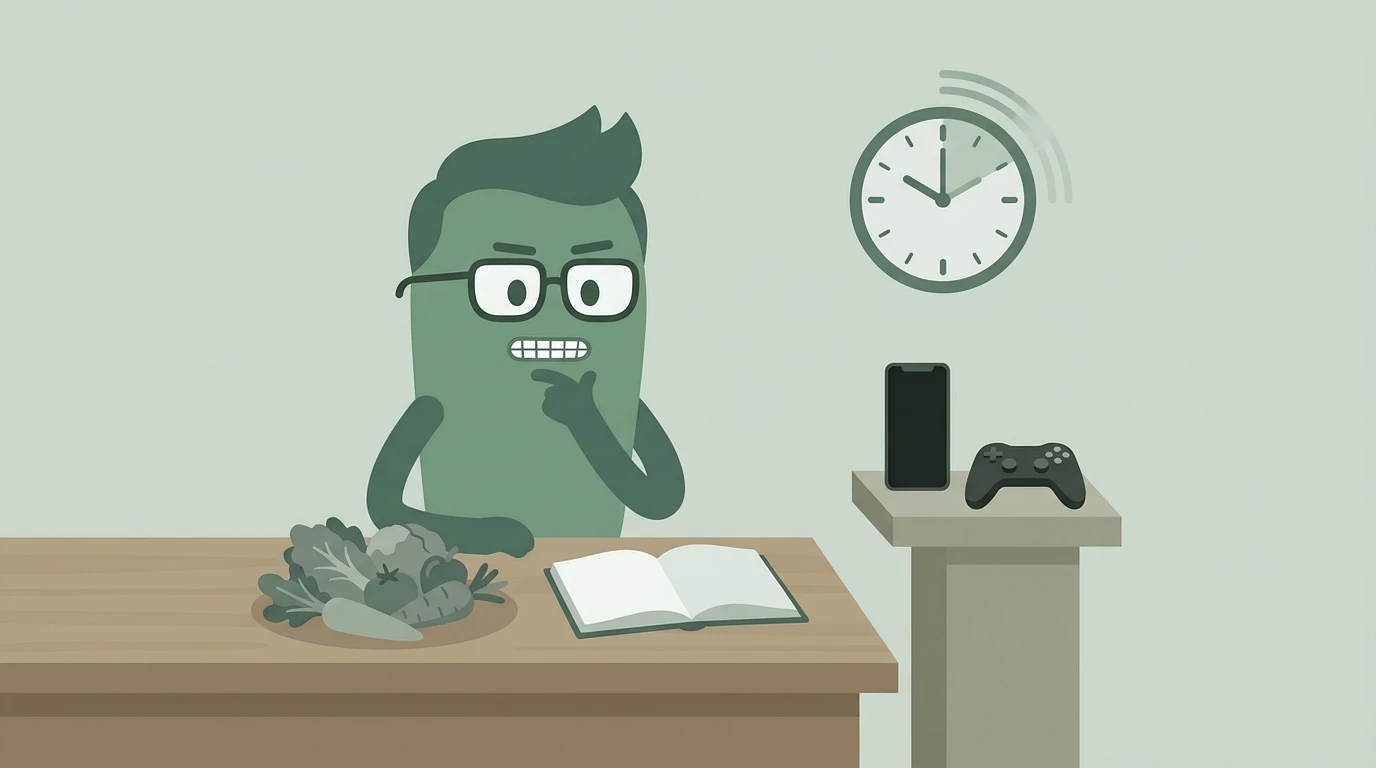
Remove friction to bad habits. Delete social media apps from your phone (not just mute notifications — delete them). Move your phone charger to a room that isn't your bedroom. Put gaming consoles in a closet. Make the low-quality dopamine source physically harder to access.
Add friction-free access to good alternatives. Put your running shoes by the door. Have a book on your nightstand. Identify three things you will do when boredom hits — write them on a physical note card. The key word is before: these decisions must be made before the urge, because in-the-moment ADHD executive function (and honestly, anyone's executive function when dopamine-deprived) will not generate good alternatives.
Tell one person. This is the most underrated part of the setup. Research by Sheeran et al. on social accountability shows that simply declaring your intention to a specific person significantly increases follow-through. Send a text tonight: "I'm starting a 7-day dopamine detox tomorrow. I'll check in with you each morning." That's your accountability structure.
Day 1: The Experiment Begins (Expect: Restlessness and Boredom)
Day one usually starts well. Motivation is high, the novelty of the challenge provides its own dopamine hit. Most people get through the morning without much difficulty.
What to do: Wake up without checking your phone. Do a 20-30 minute walk or workout before anything else. This is not optional — it primes your dopamine system for the day and reduces the intensity of withdrawal symptoms that will arrive by afternoon.
What to expect by afternoon: Restlessness. An itchy, unfocused feeling. The hand reaching for the phone out of pure habit. Difficulty concentrating on any single thing for more than a few minutes.
This is normal. You are not failing. You are experiencing the first signs that your reward system is beginning to recalibrate. Dr. Anna Lembke's research describes this as the "pain side" of the pleasure-pain balance asserting itself after being masked by constant stimulation.
Day 1 anchor activity: Identify one project — cooking a new recipe, starting a journal, a short creative project — that requires your hands and gives you a tangible output. The hands-busy element reduces restlessness significantly.
Day 2: The Hardest Day (Expect: Doubt and Irritability)
Day two is, for most people, the hardest day of the entire challenge. The novelty of day one has worn off. The early benefits haven't arrived yet. Your brain is in active protest.
What to expect: Irritability. Difficulty sleeping the night before (common, usually resolves by day 3-4). A persistent low-grade feeling that this is pointless. The urge to check social media is at its neurological peak.
What to do: Do not negotiate. The negotiation — "I'll just check once" — almost always ends the detox. Your brain will generate extremely convincing arguments for why a single exception is fine. It is lying to you.
Exercise again. On day two especially, a 30-minute aerobic session is not about fitness — it's directly increasing dopamine availability to get through the afternoon. Sharma and Couture's research confirms that a single aerobic session produces immediate, measurable improvements in dopamine and norepinephrine signaling.
Day 2 anchor activity: Outdoor time. Even a 20-minute walk in natural light (not listening to a podcast, just walking) produces measurable mood improvement. The combination of movement, light exposure, and novel visual stimulation hits multiple neurological levers at once.
Check in with your accountability person. This is the day the check-in matters most. The knowledge that someone is expecting to hear from you is a neurological nudge toward completion that pure willpower doesn't provide.