External Time Anchors
Visual timers, such as the Time Timer or a simple phone countdown, make elapsed time visible instead of abstract. Place one in the kitchen and one in the bathroom. The visual countdown creates an external proxy for the internal urgency that ADHD brains do not generate on their own.
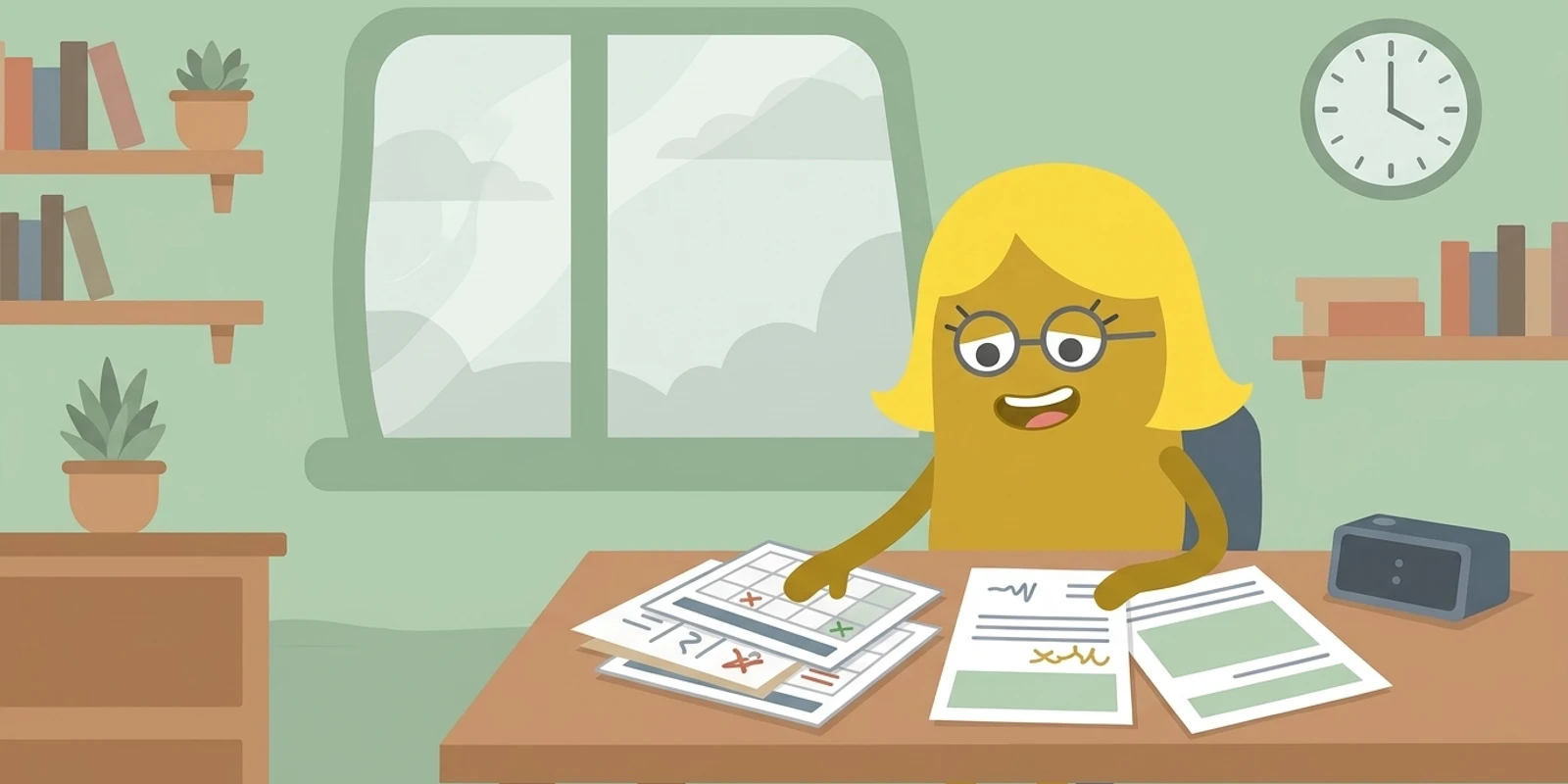
Time stamps on routine charts do more work than task lists. "Shoes on by 7:30" creates urgency that "put on shoes" does not. The goal is to move time information out of your working memory and onto a surface where it cannot be forgotten.
Alarms for transitions, not just wake-up, also help considerably. An alarm at 7:15 labeled "OUT THE DOOR IN 15" is more functional than trying to track the clock while also managing a child.
Pre-Loading Decisions the Night Before
Kreider and colleagues (2019) found that people with ADHD manage time and task demands better when they reduce the number of decisions required during high-stakes moments. For parents, the night-before ritual matters as much as the morning one. Bags packed, clothes chosen, lunches prepared. Every decision you remove from morning is one fewer thing that can break the sequence.
This is not a trick or a hack. It is a direct application of what the research says about decision overhead and ADHD. The morning is not when you problem-solve logistics. The morning is when you execute logistics that were already decided.
The 10-Minute Rule
If a task will take less than 10 minutes and has a defined destination (the library bag goes by the door, the permission slip goes in the folder), do it now or set a specific time for it. Vague commitments like "I will get to that later" are invisible to the ADHD brain. Barkley's executive function framework notes that ADHD involves impairment in using time to bridge the gap between information and action. You cannot rely on internal time awareness the way most standard parenting advice assumes you can.
Emotional Regulation: When You Need to Calm Down First
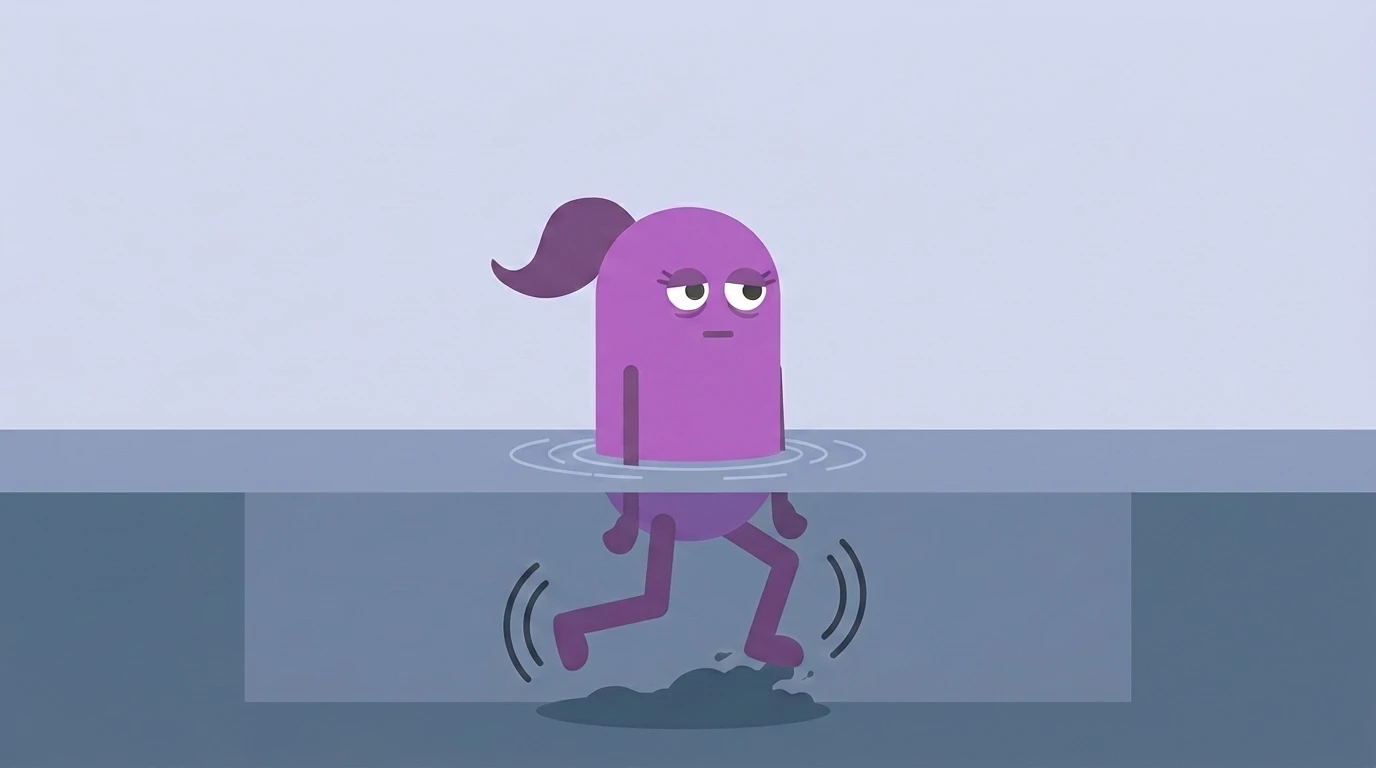
Dr. William Dodson (2017) has written about rejection sensitive dysphoria (RSD) as one of the most painful and least-understood features of adult ADHD: an extreme emotional sensitivity to perceived criticism or failure that can arrive without warning and feel disproportionate to the trigger. For parents, this shows up when a child says "I hate you" or throws a tantrum, and the emotional response feels bigger than the situation warrants, because it is landing on a nervous system that processes social rejection at unusually high intensity.
This is not weakness. It is wiring. Understanding that changes the frame from "what is wrong with me" to "what does my nervous system need right now."
Hallowell and Ratey (2011) in Driven to Distraction emphasize that emotional dysregulation is a core feature of ADHD, not a side effect. The practical implication for parents: your regulation is upstream of your child's regulation. If you are flooded, you cannot co-regulate. The sequence is always: calm yourself first, then address the behavior.
The Pause Protocol
When you feel the early physiological signs of flooding (raised voice coming, jaw tightening, thoughts narrowing), build in a physical exit. "I need one minute" is a complete sentence. Leaving the room for 60 seconds to breathe is not abandonment. It is modeling the exact regulation skill you want your child to develop.
Children under eight rarely understand the cause of a parent's emotional escalation. What they remember is whether it happened and whether it was repaired. A pause prevents the escalation. A repair addresses the aftermath.
Self-Compassion as a Practical Tool
Dr. Kristin Neff's research on self-compassion shows that treating yourself with the same care you would extend to a friend produces better behavioral outcomes than self-criticism does. For ADHD parents, this matters because shame responses after parenting mistakes often make the next interaction worse, not better. As Neff describes the practice: mindfulness, common humanity, and self-kindness are the three components, and you can cycle through all three in under two minutes after a difficult moment.
The goal is not to excuse the behavior. The goal is to restore enough emotional capacity to do something useful about it.
Building Household Systems That Actually Stick
Barkley's framework on executive function and self-regulation makes the case that ADHD is a disorder of doing, not knowing. Parents with ADHD almost always know what should happen. The gap is between knowing and doing, and motivation does not reliably bridge that gap. Systems do.
The Command Center
A physical location (a wall, a whiteboard, a dedicated bulletin board near the door) that holds all the information the family needs to function: the week's schedule, the morning checklist, the after-school sequence, emergency phone numbers. The goal is to move decision-making out of your working memory and onto a surface that anyone can read.
Working memory deficits are among the most consistent features of ADHD according to Barkley's executive functioning research. Every piece of information you offload to a visible surface is one less item competing for limited cognitive space during high-demand moments.
Routine Cards Instead of Verbal Instructions
Verbal instructions to children require the adult to remember to give them, the child to remember to follow them, and both to agree on what was said. Routine cards (laminated cards with visual steps for morning, after school, and bedtime sequences) remove the adult from the loop for tasks the child can self-manage. This is not a shortcut. It is reducing the number of working-memory interactions the household requires of you each day.
Children who follow visual routines independently are also building executive function skills themselves, which is a secondary benefit if your child shares your neurology.
One Decision, Made Once
Meal planning reduces the daily decision overhead that executive function research identifies as particularly costly for ADHD brains. You do not need an elaborate plan. You need a repeating weekly template where most meals are decided in advance and the ingredients are stocked. The goal is to eliminate the "what is for dinner" decision, which, small as it sounds, consistently arrives at the exact moment of peak cognitive depletion.
Kreider et al. (2019) found that environmental and habit-based strategies were among the most effective approaches for managing daily demands with ADHD. Meal templates are one application. Others include: a single weekly grocery run with a standing list, pre-sorted school supplies, and a charging station where all devices go at a fixed time each night.
Talking to Your Kids About Your ADHD
At some point, explaining your ADHD to your children becomes both honest and useful. The age to start is younger than most parents expect. Children as young as five can understand that a parent's brain sometimes needs extra help switching between tasks, or that the alarm on the phone helps the family leave on time. That framing normalizes the tools without requiring clinical detail.
Hallowell and Ratey (2011) note that one of the strongest protective factors for children who have ADHD themselves is having a parent who models self-understanding and self-advocacy rather than shame. If your child sees you use a timer without embarrassment, name your own attention lapses without self-criticism, and build systems when a strategy is not working, they absorb a framework for their own neurology. That is some of the most direct parenting intervention available.
Age-appropriate framing by developmental stage:
- Ages 4 to 7: "My brain sometimes needs extra reminders to switch between things. That is why we use timers."
- Ages 8 to 12: "I have ADHD, which means my brain handles time and transitions differently. The charts and timers help our whole family."
- Teens: A more direct conversation about what ADHD is, how you manage it, and how it has shaped some of the household systems they have grown up with.
This also interrupts the shame cycle at the family level. When ADHD is named and explained, children are less likely to interpret parental inconsistency as rejection.
Frequently Asked Questions
Can ADHD make you a worse parent?
ADHD creates specific challenges for parents: time blindness, emotional reactivity, and difficulty sustaining routines. None of those make someone a bad parent. They create predictable friction that evidence-based systems can reduce. Parents with ADHD who understand their symptoms tend to build more explicit household structures, which can benefit all family members, including children who do not have ADHD.
How do I handle the guilt after losing my temper?
Repair quickly and specifically. "I raised my voice and that was not okay. I am sorry." Then use the incident as information: what triggered the flooding, what might help next time. Dr. Kristin Neff's self-compassion research suggests treating yourself as you would a close friend rather than running a shame spiral that depletes the emotional resources you need for the next interaction with your child.
My child might also have ADHD. How do I parent them when I have it myself?
This is one of the most common scenarios and one of the least discussed openly. The key insight is that you are building systems for two ADHD brains, which means they need to be simpler, more visual, and more external than systems designed for a neurotypical household. Hallowell and Ratey note that structure matters more than effort. Design the environment so the default behavior is the right behavior, and the system carries the weight instead of attention and memory.
Is medication the only evidence-based approach for ADHD parenting challenges?
Medication is one evidence-based approach, not the only one. Environmental modifications (visual timers, routine cards, command centers), behavioral strategies, and self-compassion practices all have research support. For most adults, the most effective approach combines medication if clinically appropriate with structural changes that reduce the working-memory load of daily parenting life.
How do I stop feeling like I am constantly failing my kids?
Barkley's work makes clear that ADHD is a disorder of doing, not knowing. You are not failing because you lack knowledge or love. You are working with a brain that makes certain kinds of consistency genuinely harder than it is for other parents. The most useful reframe: you are not trying harder and falling short. You are building systems that compensate for specific deficits, and that is exactly what the evidence recommends.
---
If you have been relying on motivation and good intentions to hold your parenting routines together, you already know that is not a stable foundation with ADHD. GetMotivated.AI's ADHD stress resilience challenge is built for this exact situation: structured daily habits and accountability that work even when motivation is low and the week has already gone sideways. The challenge gives you the external scaffolding that ADHD brains actually need, so consistency becomes something you build rather than something you borrow from tomorrow.