Make the Next Action Visible
The ADHD brain is strongly biased toward whatever is in front of it right now. Use this instead of fighting it. Leave your running shoes by the door the night before. Put the book you need to read on your keyboard. Park the document you need to finish on your desktop rather than buried in a folder. The goal is to reduce the friction between intention and action to near zero.
This aligns with what Kreider, Medina, and Slamka (2019) found when studying college students with ADHD and learning disabilities: successful strategies were largely about changing the environment to prompt behavior, rather than relying on internal motivation or memory. Reframing tasks and building external cues were among the most consistently effective tools.
Reduce Transition Costs
Every shift between activities costs ADHD brains more than neurotypical brains. You can reduce this by batching similar tasks into the same block of time, creating a consistent shutdown ritual that ends each major activity, and leaving a visible breadcrumb at the end of a work session: a sticky note that says exactly where you left off and what the very next step is.
Externalize Your Working Memory
ADHD impairs working memory, the mental workspace you use to hold information while acting on it (Barkley, n.d.). Paper, whiteboards, sticky notes, and phone reminders are not crutches; they are prosthetics that compensate for a specific deficit. Use them without embarrassment. The goal is not to improve your memory. The goal is to get things done.
Taming Time Blindness
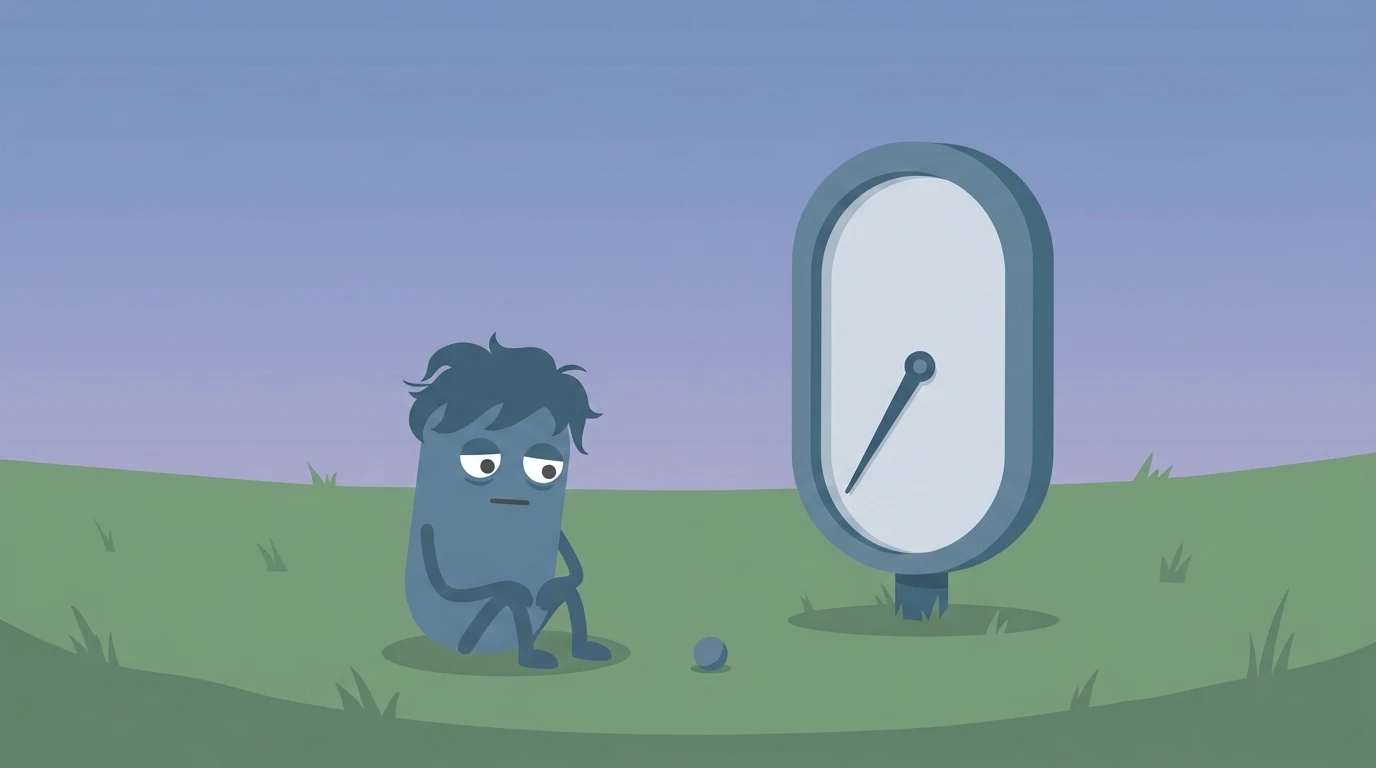
One of the most disabling symptoms of ADHD is time blindness: the inability to accurately sense time passing or to feel the urgency of a future deadline until it is almost too late. Ptacek (2019) reviewed clinical research showing that ADHD impairs both duration estimation and the subjective experience of time, which explains why ADHD adults consistently underestimate how long tasks take and overcommit to what they can accomplish in a given window.
Make Time Visible
Analog clocks, time timers (clocks that show elapsed time as a shrinking colored arc), and countdown apps all make time visible in a way that digital clock readouts do not. Put a large clock in your workspace. Use a 25-minute timer for work sprints. Make time a physical, present thing in the room rather than an abstraction you carry in your head.
Time Blocking With Flexibility Built In
Leslie Josel, writing for ADDitude Magazine, addresses the common ADHD resistance to rigid schedules by reframing structure as a flexible scaffold rather than a cage (Josel, n.d.). Instead of scheduling every hour precisely, time blocking means reserving broad chunks for categories of work: deep focus, admin, exercise, recovery. Within each block, you choose the specific task. This preserves the ADHD need for autonomy while providing enough structure to keep the afternoon from disappearing.
Use Habit Anchors Instead of Clock Times
Attach tasks to existing anchors in your day rather than abstract clock times. Instead of "exercise at 7 a.m.," try "exercise right after I make coffee." Instead of "review emails at 3 p.m.," try "review emails right before I close my laptop." These habit stacks reduce the activation energy needed to initiate the task because the preceding anchor does the triggering automatically.
Exercise, Sleep, and Nutrition as Brain Support
Exercise: The Closest Thing to a Non-Prescription Stimulant
Aerobic exercise increases dopamine and norepinephrine in the prefrontal cortex, the same neurotransmitters that stimulant medications target. Research consistently shows that 20 to 30 minutes of moderate aerobic activity, running, cycling, swimming, or brisk walking, improves attention, impulse control, and working memory for several hours afterward.
Hallowell and Ratey (2011) have long advocated exercise as a central pillar of ADHD management, not a nice-to-have. For people not taking medication, this matters even more. If you can do only one thing from this entire post, make it this: exercise before your most cognitively demanding work of the day.
Sleep: Non-Negotiable for Executive Function
ADHD and sleep problems are tightly linked. Many adults with ADHD have delayed sleep phase syndrome, where the circadian clock naturally pushes sleep later. Chronic sleep deprivation makes every ADHD symptom worse because it directly impairs prefrontal cortex function, the same area already under strain from ADHD.
Practical starting points: set a consistent wake time even on weekends, use bright light exposure in the first hour of your day to anchor your circadian rhythm, stop screens 60 minutes before bed to reduce blue-light melatonin suppression, and keep your room cool and dark. These are not complicated, but they compound. A few weeks of better sleep changes the baseline you are working with every day.
Nutrition: Blood Sugar Stability as a Floor
No specific diet cures ADHD, but blood sugar swings amplify symptoms reliably. Large refined-carbohydrate meals cause attention crashes 90 to 120 minutes later. Protein at breakfast, regular meals throughout the day, and limiting high-sugar snacks can stabilize the energy and attention floor you operate from. This is not a silver bullet; it is removing an easily avoidable obstacle.
Accountability, Emotion Regulation, and Self-Compassion
Body Doubling and Social Accountability
One of the most reliable ADHD productivity techniques requires almost no explanation: work alongside another person. The presence of another human activates a social attention system in the brain that ADHD does not disrupt as severely as solitary task initiation. This is called body doubling, and it works whether the other person is in the room, on a video call, or sitting silently in a coffee shop.
Virtual coworking communities, study halls, and focus groups have grown specifically because of this effect. If you cannot maintain a task alone, you are not weak. You are responding correctly to a genuine neurological reality.
Social accountability also addresses the motivation structure of ADHD directly. As Barkley (1997) argues, ADHD brains respond best to consequences that are immediate, frequent, and certain. External accountability structures create exactly that: a real social consequence for not doing the thing you committed to, which is far more motivating than a distant internal consequence.
Reducing the Shame Cycle
ADHD frequently produces a shame cycle: the symptom causes a failure, the failure produces shame, shame depletes motivation and executive function, and more failures follow. CHADD notes that chronic executive function challenges can generate persistent feelings of inadequacy that make it harder to sustain any management system at all. Shame is not a character flaw in this context; it is a predictable response to years of being told you are not trying hard enough when you are.
Dr. Kristin Neff's research on self-compassion, applied to ADHD in work published by ADDitude Magazine (Neff, n.d.), offers a practical antidote. The practice involves noticing self-criticism after an ADHD-related failure, recognizing that ADHD struggles are common among people with the condition (you are not uniquely broken), and responding to yourself the way you would respond to a close friend in the same situation. Research indicates that self-compassion supports the resilience needed to sustain long-term behavioral strategies, precisely because it reduces the emotional cost of setbacks enough to keep trying.
Build Systems That Do Not Depend on Remembering
The systems that last are the ones that do not require you to remember to use them. Use automatic phone reminders for everything, not just big tasks. Set up recurring calendar blocks that appear without any action on your part. Ask a partner, friend, or coach to check in on specific commitments at a specific time. Use habit-tracking apps that send a notification at the same moment each day. The goal is to build an external structure that holds shape so your internal regulation system does not have to carry all the weight on its own.
Putting It Together
Managing ADHD without medication is not about trying harder. It is about designing smarter: changing the environment so your brain encounters fewer of the friction points that derail it, externalizing the working memory and time perception your brain handles unreliably, and building social structures that replace internal motivation with external accountability.
None of these strategies works well in isolation. The research on multi-modal approaches consistently shows that combining exercise, environmental design, behavioral systems, and emotional regulation support produces better outcomes than any single intervention. Start with one or two changes that address your biggest current obstacle. Add from there.
---
Frequently Asked Questions
Can ADHD be managed effectively without medication?
Yes, for many people. Research supports a range of behavioral, environmental, and lifestyle strategies that reduce symptoms meaningfully. Medication remains the most studied intervention, but many adults manage well with structured external supports, exercise, and cognitive tools.
What is the best non-medication treatment for ADHD in adults?
No single strategy works for everyone. The strongest evidence points to a combination of behavioral coaching, exercise, sleep optimization, and externalized organizational systems. Cognitive behavioral therapy adapted for ADHD also has solid research support.
How do I stop procrastinating with ADHD without medication?
Procrastination in ADHD is rooted in time blindness and motivation deficits tied to dopamine, not laziness. Breaking tasks into two-minute starting steps, using body doubling, and making the next action physically visible are among the most effective approaches.
Does exercise actually help ADHD?
Yes. Aerobic exercise increases dopamine and norepinephrine in the prefrontal cortex, the same neurotransmitters targeted by stimulant medications. Studies show 20 to 30 minutes of moderate aerobic activity improves attention and impulse control for several hours afterward.
Why do ADHD management systems keep falling apart?
Most systems fail because they require consistent executive function to maintain. A better approach is to design systems that do not depend on memory or motivation, embed triggers in the environment, and add social accountability so someone else holds the structure when yours gives out.
---
Try It With Structure Behind You
Reading about ADHD strategies and actually building them into your day are two different things. GetMotivated.AI offers accountability-based challenges built for people who do better with external structure and a community holding them to commitments. From focus sprints to habit-building tracks, you can get the body-doubling effect without having to find a dedicated coworking partner on your own. Browse ADHD-friendly challenges at GetMotivated.AI to find one that matches where you are right now.