Is ADHD burnout the same as regular job burnout
Not exactly. A 2026 qualitative study in Frontiers in Psychology analyzed 277 workplace discussion threads from a large ADHD-focused online community, using the Job Demands-Resources framework researchers use to study burnout generally. It found that the same workplace conditions, meetings, deadlines, disclosure decisions, weren't experienced as uniformly stressful or supportive. What mattered was context: how much autonomy someone had, how work was structured, and what the researchers termed "invisible labor," the unpaid cognitive work of managing ADHD symptoms well enough that colleagues never notice.
That invisible labor is the piece regular burnout advice doesn't account for. A neurotypical colleague under deadline pressure is dealing with the deadline. You may be dealing with the deadline, the executive-function cost of starting the task, the social cost of staying quiet about how hard starting was, and the anticipation of being judged if any of it shows. Generic burnout advice, "take a vacation," "set boundaries", assumes one layer of strain. ADHD burnout usually has three or four.
Why does ADHD burnout come with so much shame
Because the disorder itself is stigmatized in ways that turn struggling into a referendum on your character. A systematic review in Frontiers in Psychiatry, covering 17 studies of stigma in adults with ADHD, found that greater symptom severity was consistently linked to more internalized stigma, meaning people took society's negative assumptions about ADHD and turned them against themselves. That internalized stigma was in turn linked to worse functional impairment, lower self-esteem, and reduced quality of life. The review also documented self-stigma showing up specifically as self-deprecating labels and devaluing your own diagnosis, exactly the "I'm just lazy" or "I'm just bad at adulting" self-talk that shows up when burnout hits.
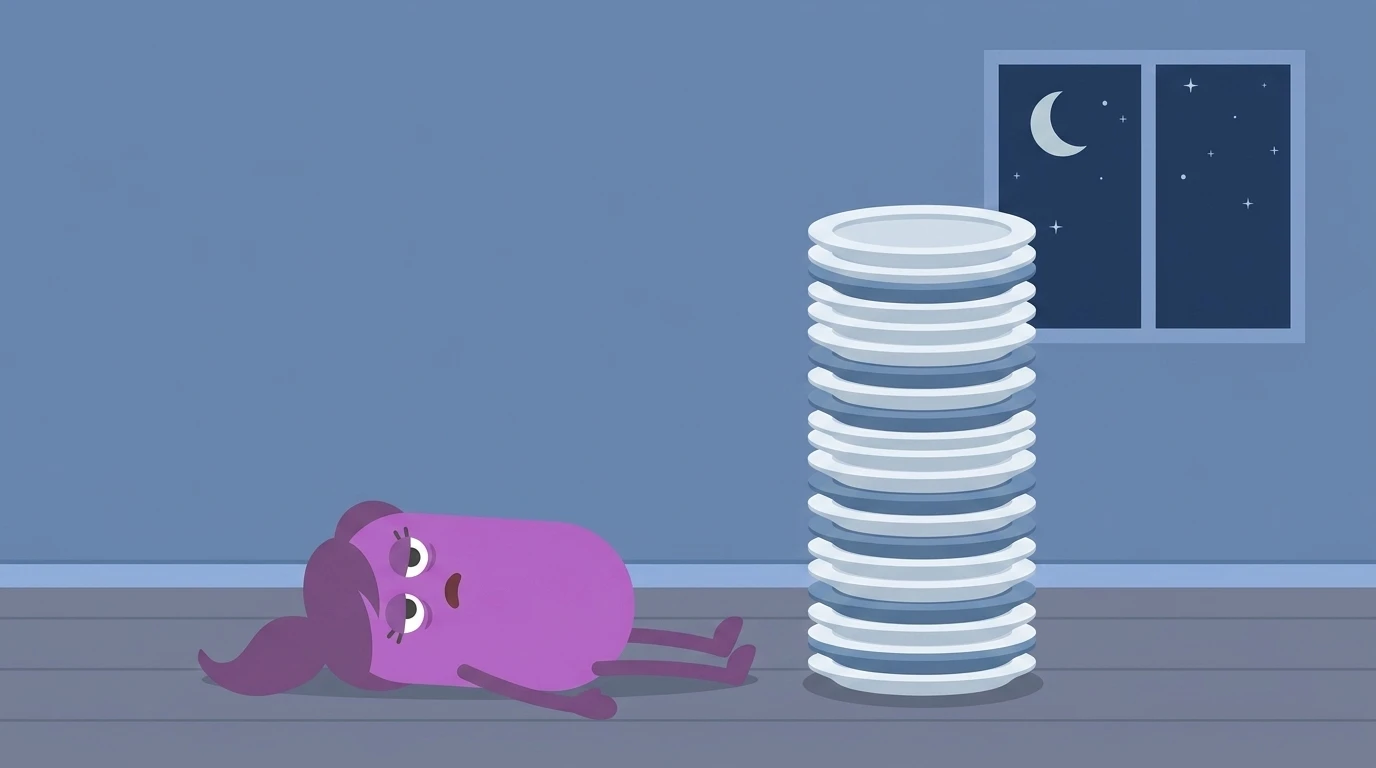
This matters because shame doesn't just feel bad. It actively works against recovery. If part of you believes the exhaustion proves you're defective rather than depleted, you're more likely to push harder instead of pulling back, which is the opposite of what actually helps.
What actually helps you recover from ADHD burnout
The honest answer from the research is reduction, not resilience. The autistic-burnout study found that recovery strategies centered on withdrawal followed by what researchers called "gentle re-engagement," easing back in through low-demand, people-adjacent activities rather than jumping straight back to full output. Being near other people without the pressure to perform for them helped participants reconnect without triggering the same masking response that caused the collapse.
Translated into a normal week, that looks like a few concrete moves:
Cut the load before you try to rebuild energy. Burnout is a demand-resource mismatch. Rest alone doesn't fix a mismatch if the demands snap right back to where they were. Look at what's on your plate and remove or delegate whatever isn't essential for the next few weeks, even if it means disappointing someone.
Let the mask down somewhere, even briefly. The dual-masking research suggests that concealing burnout on top of concealing ADHD traits is what stretches recovery out. Find one relationship or one space, a friend, a support group, a therapist, where you don't have to perform competence. That's not a luxury. It's part of the mechanism that shortens burnout.
Treat invisible labor as real labor. If you're in a job where disclosure feels risky, you don't have to announce a diagnosis to reduce the hidden work. Externalizing tasks, using reminders instead of memory, and structuring meetings or workflows around how your attention actually functions, strategies the workplace research found adults with ADHD already use, cut the second, unpaid job of managing symptoms silently.
Re-enter gradually, not all at once. Gentle re-engagement means picking activities with almost no performance pressure first: sitting with someone without needing to talk, doing one small task with no deadline attached, showing up somewhere low-stakes. Build back from there instead of aiming straight for your old pace.
Name it accurately, out loud, to yourself. Given how strongly internalized stigma tracks with impairment and low self-esteem, correcting the story you tell yourself is not a soft step. Replacing "I'm lazy" with "I'm depleted from carrying more than was sustainable" is a factual correction, and the research suggests it's also a functional one.
None of this requires a full stop to your job, your relationships, or your goals. It requires choosing, on purpose, which pieces come first while you rebuild. A support system that already understands the mechanics of masking and invisible labor makes that choosing easier, because you're not also explaining ADHD from scratch to every person around you.
You didn't get here because you didn't try hard enough. The research is fairly clear that people who burn out this way are usually the ones who tried hardest, for the longest, with the least visible support. Recovery isn't about finding more grit. It's about giving yourself permission to carry less for a while, so the effort you do spend can actually rebuild something instead of just holding the line. That's not a lesser way to live with ADHD. It's the version that lets you keep going.