What Happens to Your Brain When You Check Your Phone Constantly?
Three changes occur with sustained heavy use:
Baseline dopamine drops. Your brain calibrates its dopamine sensitivity based on what it receives. Constant high-stimulation input from rapid content switching, notifications, and social validation signals raises the threshold for what feels satisfying. Ordinary activities — reading, a conversation, a walk — feel flat by comparison because they don't trigger the same spike pattern.
The prefrontal cortex weakens. The prefrontal cortex governs impulse control and the ability to delay gratification. Research by Montag et al. (2018) in Computers in Human Behavior found that compulsive smartphone use is associated with reduced functional connectivity in prefrontal circuits — meaning the brain's ability to override the urge to check gets structurally weaker with repeated use.
Withdrawal-like states emerge. When heavy users attempt to reduce use, many report restlessness, difficulty concentrating, irritability, and strong urges — symptoms that parallel mild substance withdrawal. This is not metaphorical. Dr. Anna Lembke, a Stanford psychiatrist and author of Dopamine Nation, argues that the neurological mechanisms of behavioral addiction and substance addiction are functionally equivalent in their effect on the dopamine system.
Key Stat: The average person touches their phone 2,617 times per day and checks it 96 times — once every 10 minutes during waking hours. — Source: Asurion 2023 Survey
How Long Does It Take to Break Social Media Addiction?
Research gives a more specific timeline than most people expect.
A controlled study by Tromholt (2016) — one of the first rigorous experiments on social media abstinence — found that one week off Facebook produced measurable improvements in reported life satisfaction, positive emotion, and focus compared to the control group. Seven days. The brain begins recalibrating quickly when the stimulation pattern is interrupted.
For deeper dopamine resensitization — restoring baseline satisfaction from ordinary activities — the evidence points to 30-90 days of substantially reduced use. This matches what recovery programs observe with behavioral addictions generally: the first two weeks are the hardest (high urge intensity), weeks three through eight show progressive normalization, and the 90-day mark typically represents a stable new baseline.
The caveat: "reduced use" matters. Cutting from four hours to two is not the same neurological input as cutting from four hours to twenty minutes. The degree of change determines the speed of recovery.
Why You Keep Checking Even When You Don't Want To
This is the most commonly searched question about social media compulsion — and the answer is frustrating: the urge to check is generated before you consciously decide to check.
Compulsive checking is driven by dopamine anticipation signals that fire automatically, below conscious awareness. By the time you notice you're opening Twitter for the fourth time in an hour, your brain has already begun the dopamine anticipation cycle. Willpower is being applied after the impulse, not before it — which is why "just try harder" fails as a strategy.
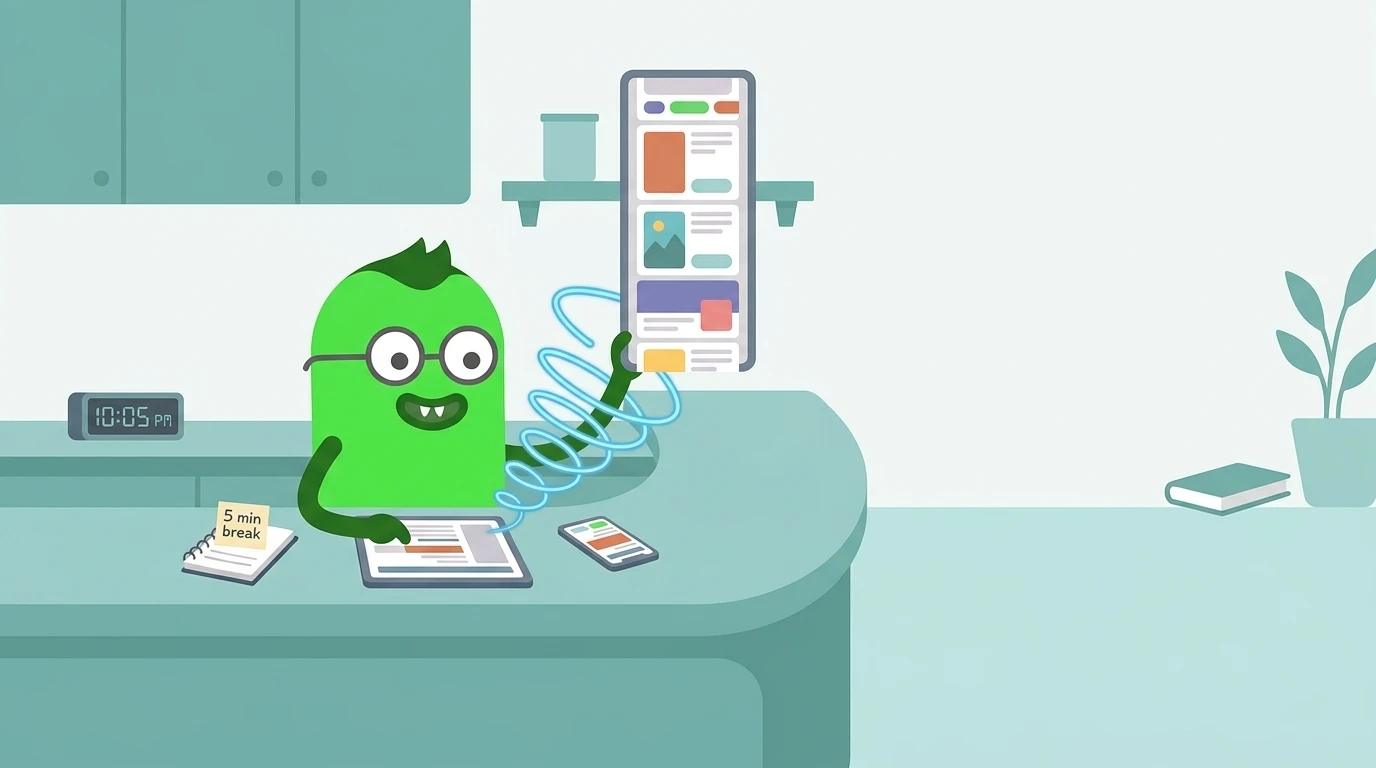
What works instead is friction intervention: placing obstacles between the urge and the behavior that give the prefrontal cortex time to override. This is the principle behind apps like One Sec (which inserts a pause before opening social apps) and Freedom (which blocks sites for scheduled periods). The research on friction interventions is consistent: even small delays of 3-5 seconds reduce compulsive phone use significantly.
The limitation of friction-only approaches is that they don't address the underlying dopamine recalibration. They slow the behavior without changing what drives it.
How to Break the Social Media Dopamine Loop
Evidence-based approaches work at two levels: behavioral interruption and neurological reset.
Behavioral Interruption
Scheduled access. Instead of restricting to a time limit, designate specific windows for social media (example: 12:00-12:30 PM and 6:00-6:30 PM). Outside those windows, apps are off. This works better than time limits because it removes the ambiguity of "how much is too much" and eliminates the dopamine anticipation that unlimited access creates throughout the day.
Notification elimination. Every notification is a dopamine trigger that pulls your attention without your consent. Turning off all social media notifications is a prerequisite, not an enhancement. Apps like Opal and Screen Zen automate this by managing notification settings on a schedule.
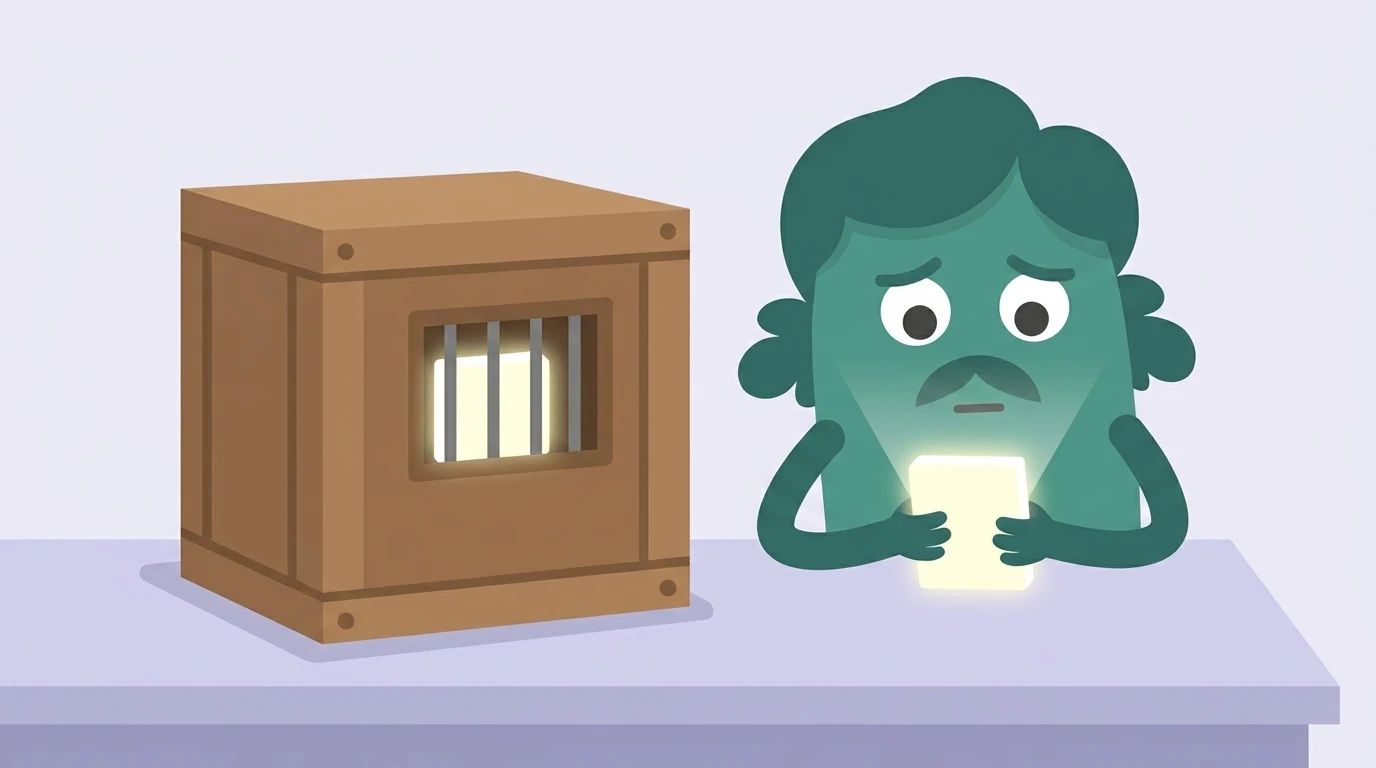
Phone-free zones. Research consistently shows that the mere presence of a smartphone on a desk reduces cognitive performance, even when the phone is face-down and silent. Removing the phone from physical proximity during focus work is more effective than willpower-based restraint.
Neurological Reset
7-day baseline reset. A structured week with zero or near-zero social media is enough to begin restoring dopamine sensitivity, according to Tromholt's research. This isn't permanent abstinence — it's a reset that makes subsequent moderated use less compulsive.
Replace with non-dopamine-spiking activities. Physical exercise, in-person conversation, cooking, reading physical books — these activities engage reward circuits without triggering the variable-reward spike pattern. They feel boring initially because your dopamine system is calibrated to a higher stimulus threshold. The boredom is the recalibration working.
Accountability structure. The research on behavior change consistently shows that accountability to another person is the single strongest predictor of sustained change. Self-imposed rules break when temptation is high. External accountability creates a cost to breaking the pattern.
Key Stat: Participants who took a one-week break from Facebook reported significantly higher life satisfaction and positive emotion compared to control groups who continued using it — with effects visible within 7 days. — Source: Tromholt, Cyberpsychology, Behavior, and Social Networking, 2016
What Apps Like One Sec and Opal Miss
Apps that create friction (One Sec), block access (Freedom, Opal), or track screen time are useful tools. They make the behavioral interruption layer easier to execute. But they share a structural limitation: they don't provide the social accountability and community structure that behavior change research identifies as essential for long-term habit transformation.
You can block Instagram on your phone and be on it within twenty minutes via a browser. You can turn off restrictions when the urge gets strong enough. Any tool that relies solely on friction eventually fails when motivation is low — which is exactly when you need support most.
Platforms like GetMotivated.ai take a different approach. Rather than creating obstacles between you and social media, they provide a competing source of social reward — one that supports your goals rather than undermining them. GetMotivated.ai's structured digital detox challenges pair you with an accountability buddy, set daily check-ins, and track your progress through a 30-day dopamine reset program. The social connection that social media exploits gets redirected toward the behavior change itself.
The distinction matters: friction apps reduce the behavior. Accountability structures replace the underlying need that the behavior was meeting — connection, stimulation, validation — with something that actually satisfies it.