Personal Development
Growth, learning, and work that engages you. This area asks whether your days include things that stretch and interest you. A sense of progress and purpose in what you do is protective for mental health, not a luxury on top of it. That can be a class, a skill you're building, or simply work you find meaningful rather than merely tolerable.
Family, Friends, and Co-workers
The relationships that support you. Connection is one of the strongest predictors of long-term wellbeing, and one supportive relationship can steady several other areas. Isolation, conversely, quietly undermines them. This is also the area most wellness plans forget, and the one that most amplifies the rest: a person who eats well and exercises alone, with no one checking in, tends to lose the habit faster than one who has even a single standing accountability check-in.
Spirit and Soul
Meaning, purpose, and connection to something larger than yourself. This looks different for everyone: faith, nature, service, art, or a sense of contribution. When this area is strong, hard stretches in the other areas become more bearable, because they're carried by a why. It's also frequently the area people neglect first when life gets busy, even though it's what makes the rest of the effort feel worthwhile.
Surroundings
The physical and emotional spaces you live and work in. Light, clutter, noise, safety, and beauty all shape how you feel day to day. Surroundings is a reminder that health isn't only internal. The room you're in is part of the system, which is why something as simple as clearing one cluttered surface or opening a window can measurably shift your mood before you've changed anything else.
Power of the Mind
The mind's capacity to influence the body through breath, relaxation, guided imagery, and focused attention. This isn't positive thinking. It's a set of trainable, mind-body skills that measurably affect the stress response, pain, and sleep. A few minutes of slow, deliberate breathing before a stressful meeting is a small, concrete example of this dimension in action, not a mood you're trying to talk yourself into.
The Outer Rings: Professional Care and Community
The circle doesn't stop at self-care. Two outer rings complete it.
Professional care, your medical team and conventional treatment, stays firmly in the picture. Whole person health includes medicine rather than rejecting it. The self-care areas surround professional care; they don't replace it. Community is the wider ring: the neighborhoods, groups, and systems of support around you. Together these rings make clear that a whole-person plan is not a solo project. It's built with clinicians and held up by people.
This is one of the more common misreadings of the model, so it's worth being direct about it. Whole person health is not an argument against medicine, and it isn't a substitute for a diagnosis or a prescription when one is needed. The eight self-care areas exist inside a circle that has professional care built into its structure, not outside it. A person managing high blood pressure still needs their medication and their doctor. The self-care areas are what happens around that treatment, in the hours, days, and choices between appointments, and they're often what determines whether the treatment actually works as intended.
Why the Dimensions Are Drawn as a Circle
The single most important feature of the model is its shape. The areas aren't a list or a ladder. They're a circle, because they act on each other continuously.
Improve sleep and you often improve mood, movement, and focus. Strengthen one relationship and stress drops across the board. Add meaning and the hard areas become easier to sustain. This interconnection is what makes the whole-person approach efficient: you don't have to move all eight areas at once, because a real gain in one ripples into several.
It also explains a pattern many people recognize but rarely name: why a plan that only targets one area, a diet with nothing else changed, a workout routine layered onto five hours of sleep, so often stalls. The circle isn't decoration. It's a claim about how the areas actually behave, and it's exactly why a connected plan tends to hold where a single-focus one doesn't.
That claim isn't just theory. A 2026 randomized clinical trial, wHOPE, tested a coordinated Whole Health Team, working several of these dimensions at once, against group cognitive behavioral therapy and usual primary care in 764 veterans with chronic pain. After 12 months, the coordinated, multi-dimension approach produced significantly less pain interference than either single-track comparison, improving more than CBT (-0.58 points) and more than usual care (-0.77 points). Source: VA San Francisco Health Care, "Landmark Clinical Trial...", May 2026*
Key insight: You can't improve "wellbeing" in the abstract. You improve one area, sleep, a walk, one honest conversation, and let the connections carry it into the rest. Pick a leverage point, not a checklist.
Where to Start
The map is only useful if it leads to a first step, and the first step should tie back to the center.
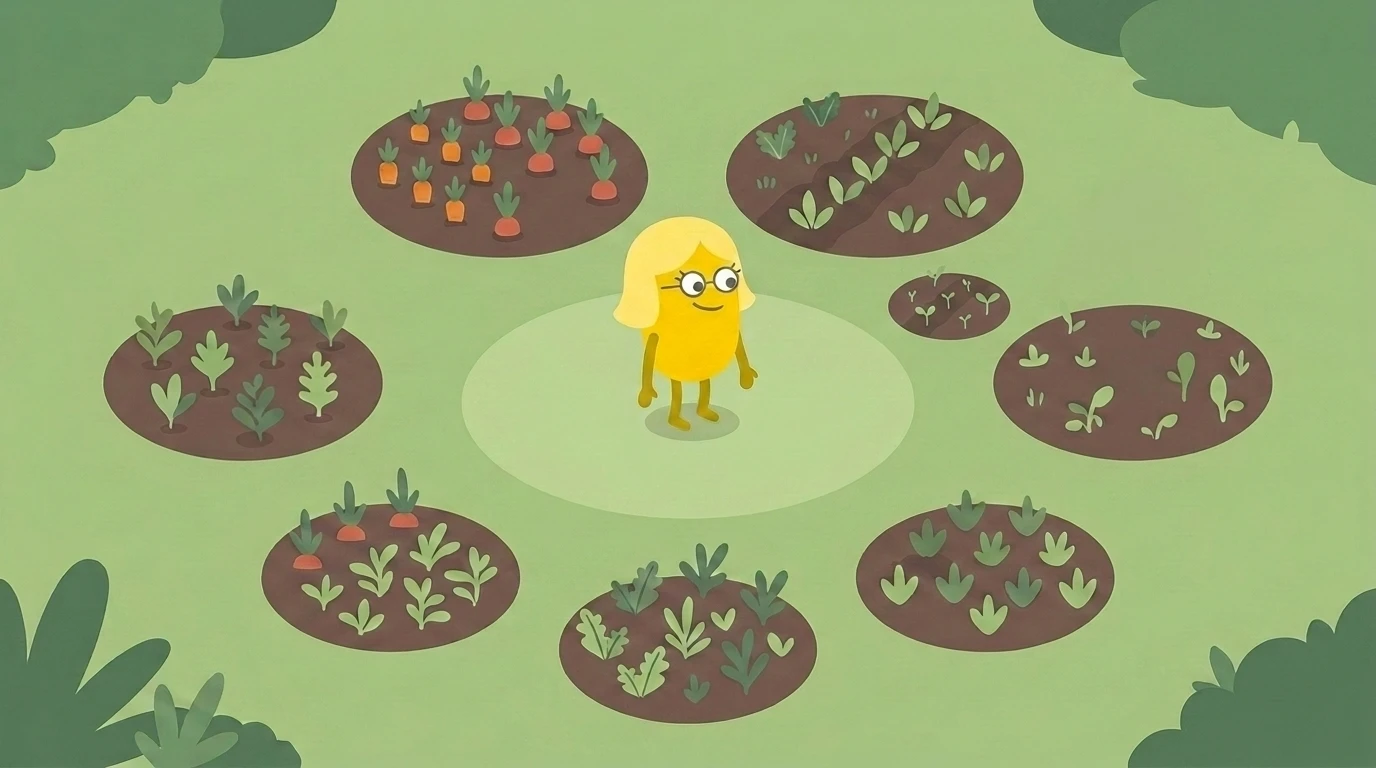
Name one thing that matters to you, something you want your health to let you do. Then scan the eight areas and ask which one, improved a little, would move you toward it. It's usually one of the unglamorous ones: sleep, a short daily walk, a standing check-in with someone who matters. Start there, keep it small, and let the circle do the rest. If you want the reasoning behind why small changes stick better than big ones, [the behavioral science of change](/blog/behavior-change-science-what-actually-works) lays it out.
A useful test, if you're not sure which area to pick: think back over the last two weeks and ask which dimension you'd be most embarrassed to describe honestly to a doctor. That discomfort is usually pointing at the highest-leverage area, not the most obvious one. It's rarely the dimension people expect to name first, and that's exactly why it tends to move the others when you finally address it.
If you'd like a structured read on where you stand across your own health at once, which areas are strong and which are quietly holding you back, the [Whole Person Health Index](/blog/whole-person-health-index) turns this kind of thinking into a personal starting line.
How GetMotivated.ai Can Help
Knowing the eight dimensions is the easy part. Keeping momentum across them, day after day, especially in the areas that don't respond to willpower, is where most people stall. The circle itself hints at why: the "Family, Friends, and Co-workers" area isn't just one dimension among eight, it's the one that lifts the others.
GetMotivated.ai builds on that insight. It pairs your whole-person plan with a real accountability buddy and daily follow-through, so support in the relationship dimension does what the model predicts: it carries the rest with it. A clear map, one small connected step at a time, and genuine human encouragement are how a set of dimensions becomes a life that holds together.