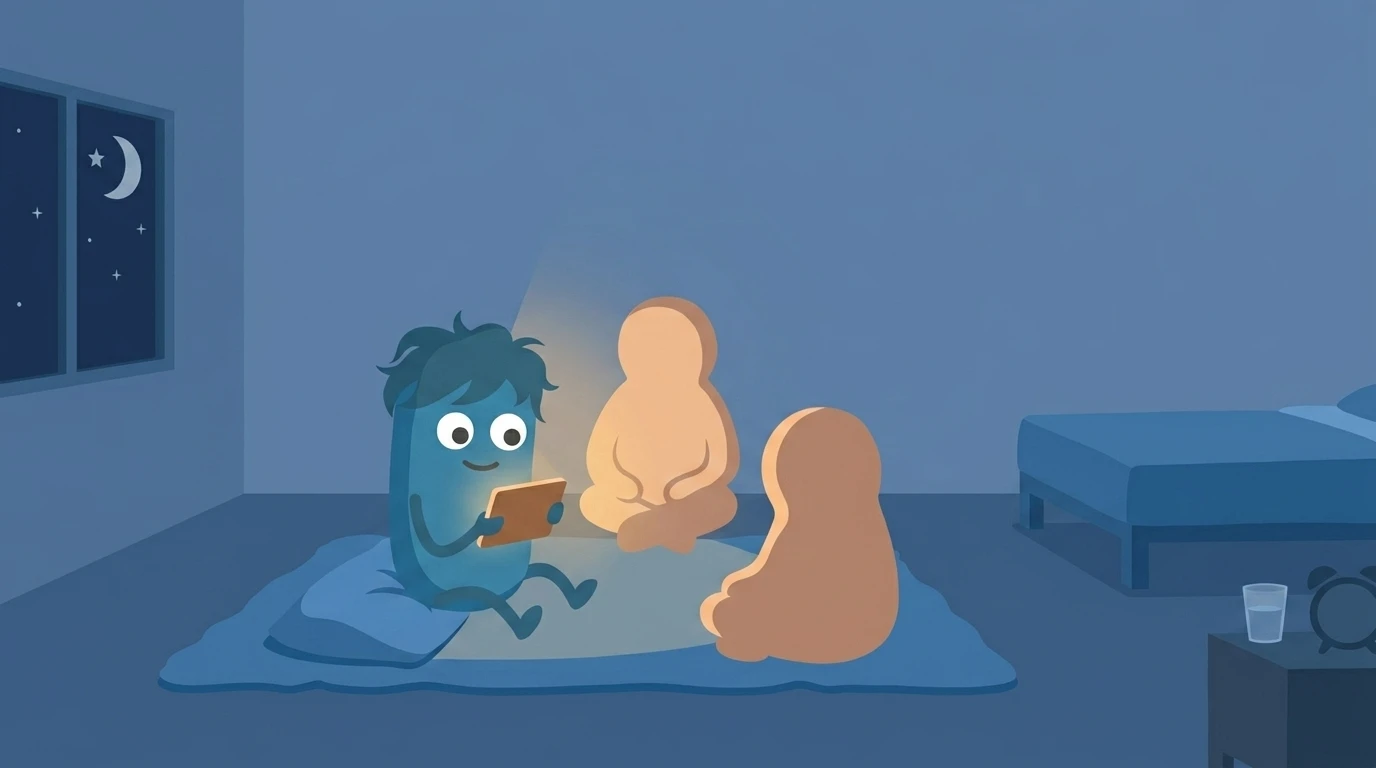
Online support groups work for access and consistency, though the evidence on symptom change is still mixed. People who cannot get to a room, because of distance, a packed schedule, caregiving duties, or anxiety about walking into a group of strangers, get real support through a screen. Whether that support moves the needle on depression or anxiety scores is a separate question, and the research on that part is still catching up.
What the research says about online groups
The clearest, most consistent finding in this area is not about symptoms. It's about reach. A 2020 systematic review in JMIR Mental Health looked at 30 studies of digital peer support for people with serious mental illness and found the interventions were feasible and acceptable, with strong potential for clinical effectiveness. The reviewers were careful about that last part: the field is still in early stages and needs larger, better-powered trials before anyone can say digital peer support changes symptoms the way therapy or medication does.
A 2026 cross-sectional study in Frontiers in Public Health looked at 230 university students and asked a more specific question: does perceived digital peer support track with anxiety and depression scores. It did. Students who felt supported by digital peer networks had lower odds of moderate-to-severe anxiety and lower odds of moderate-to-severe depression, even after adjusting for income and other factors. The researchers were upfront that a cross-sectional design can't prove digital peer support caused the difference. It shows an association, not a mechanism.
That combination, feasible and engaging but not yet proven to change clinical outcomes on its own, is the honest starting point. Anyone telling you online groups are either useless or a substitute for treatment is overselling one side.
Where online works better than in person
The advantage that shows up again and again isn't a mood score. It's who shows up at all.
A 2026 qualitative study out of India's National Institute of Mental Health and Neurosciences analyzed 137 posts from 124 users on an anonymized, moderated online peer support forum for youth. The most common theme wasn't a diagnosis. It was simply naming a feeling state, followed by posts about family conflict, romantic relationships, academic pressure, and the ache of wanting approval. People used the forum to vent, to ask for suggestions, to reflect, and to be told they weren't overreacting. Many of the posts describing depression or social anxiety never mentioned seeking professional help, which the researchers flagged as a real gap, but also as evidence that the forum was catching distress that otherwise had nowhere to go.
That's the practical case for online groups: they reach people a physical room never sees. If you're two hours from the nearest meeting, working night shifts, caring for a parent or a kid with no one to relieve you, or too anxious to walk into a room of strangers, "no group" was your actual alternative until the option existed on your phone. Anonymity also lowers the bar. Posting from a username at 1am is a smaller step than driving somewhere and sitting in a circle of chairs.