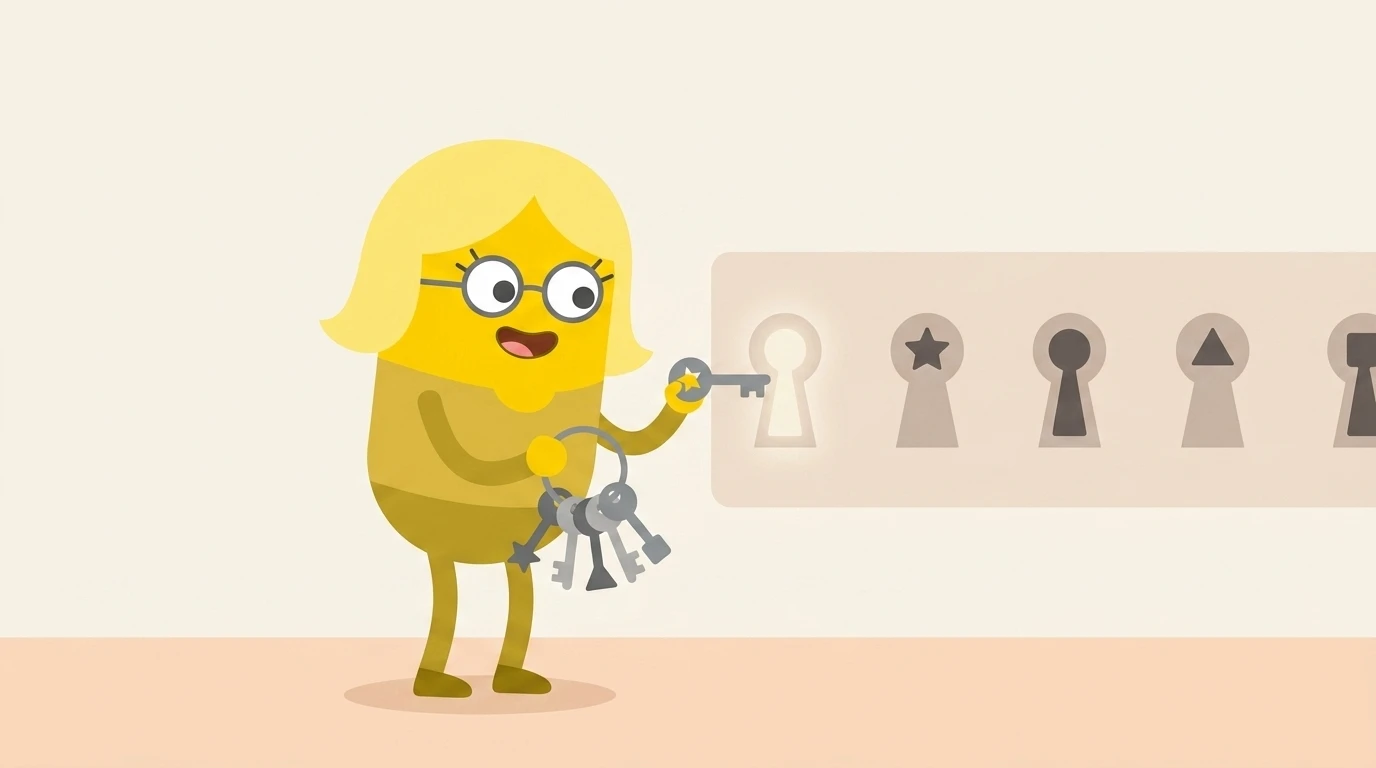

A support group is a recurring meeting, in person or online, where people facing the same problem talk to each other, not to a therapist running a session. The best one for you depends less on the topic than on whether the specific people, format, and size match how you actually want to be supported. Picking one takes a bit of testing, not guessing.
Most people either avoid support groups entirely, imagining a circle of strangers crying in a church basement, or they join the first one that shows up in a search and quit after one awkward session. Neither approach gives the format a fair shot. A support group is a specific tool with a specific job. Once you know what that job is and isn't, choosing one gets a lot more direct.
What actually happens in a support group
A support group is people with lived experience of the same problem, meeting on a schedule, talking to each other under some kind of light structure. Sometimes a facilitator opens the meeting and keeps time. Sometimes a peer support worker, someone with their own recovery experience, runs it. Either way, the core exchange is peer to peer, not clinician to patient.
A 2025 realist synthesis in BMJ Open pulled together 18 qualitative studies on the peer support relationship in mental health and built what the authors call the APPEAR framework: five conditions that show up again and again when peer support actually helps someone. The relationship works when it's Accepting, uses Personalised Practice, is Empowering, is Available, and is Reciprocal, meaning both people are getting something from the exchange, not just one person being helped. When those five things are present, people in the studies reported gains in self-acceptance, confidence, hopefulness, self-expression, their relationships, and practical knowledge and skills.
That framework is useful because it tells you what to look for in a room before you decide whether to come back. A group can be well-run on paper, right topic, right time slot, and still fail on reciprocity if it's structured as one person venting while everyone else listens. A group can look informal and undersold and still work if the people in it are genuinely trading experience both ways.
How to tell if a group is a good fit
Fit isn't really about the label on the group ("anxiety," "grief," "recovery"). It's about four things you can check directly.
Who else is in the room. A group of people ten years further into the same situation than you can be reassuring or can make you feel behind, depending on how they talk about it. A group of people at the exact same early stage can validate you fast but may lack anyone who's been through what's coming next. Neither is wrong. Notice which one you're in.
How much structure there is. Some groups follow a set curriculum each week. Others are open floor: whoever wants to talk, talks. If you want concrete tools, an unstructured group will frustrate you. If you want to process out loud without an agenda, a heavily structured one will feel clinical.
Group size. A group of six people gives everyone airtime most weeks. A group of thirty means you'll mostly listen, which is fine if listening is what you came for, and not fine if you came to be heard.
Whether the facilitator, if there is one, keeps the room accepting rather than corrective. The realist synthesis found the "Accepting" condition (feeling met without judgment) was one of the strongest predictors of a peer relationship actually producing change. Watch a facilitator's first response to someone's difficult share. Do they sit with it, or do they redirect to advice-giving right away? That single moment tells you a lot about the room's culture.