GetMotivated.ai Logo
How It WorksBlogLog in
  1. Home
  2. /
  3. Blog
  4. /
  5. How to Study Effectively at Home (Without the Structure of a Classroom)
September 11, 20265 min readHabits & Behavioral Change

How to Study Effectively at Home (Without the Structure of a Classroom)

A classroom hands you structure automatically. At home you have to build it yourself, and the two techniques that make the biggest measurable difference are not the ones most students reach for first.

Rachel Stein

Last reviewed: August 2026

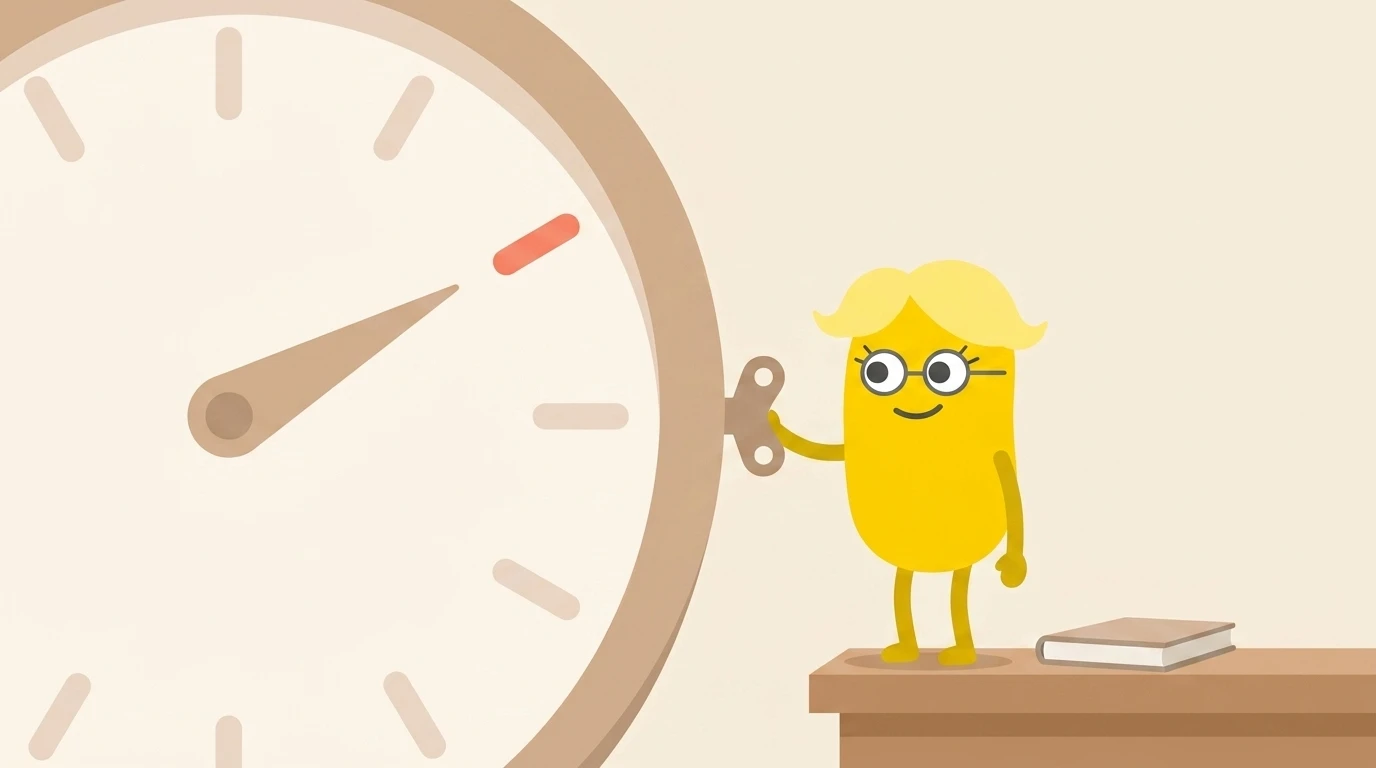
Illustration for the article: How to Study Effectively at Home (Without the Structure of a Classroom)

How do you study effectively at home?

You study effectively at home by replacing what a classroom gives you automatically, fixed start times, a teacher checking your understanding, and other people around you working, with two techniques you build yourself: testing yourself on material instead of rereading it, and spacing that testing across several short sessions instead of one long one. A classroom study of 22 reports found spaced practice produced a moderate improvement over massed, single-session study (d = 0.54), and a controlled study found the benefit of self-testing over rereading still measurable a full week later.

What a classroom gives you that home does not

A classroom is structure you did not have to build. A bell marks the start. A teacher's presence makes drifting off costly. Other students working near you create a baseline of effort that is hard to fall far below without noticing. None of that travels home with you. At home, the start time is whatever you decide it is, nobody notices if you check your phone for ten minutes, and the only person setting the pace is you, at exactly the moment your motivation is lowest.

This is why "just study at home like you would at school" fails as advice. It asks you to replicate an outcome without replicating the structure that produced it. The fix is not more willpower. It is deliberately rebuilding the two or three specific things a classroom provided, using techniques that do not require another person to enforce them.

Reread less, test yourself more

Rereading feels productive because the material feels familiar by the second pass, but familiarity is not the same as retrieval, the ability to produce the answer without the text in front of you. Exams test retrieval. Rereading trains familiarity. The gap between the two is exactly why hours of rereading at home can produce a test result that feels disappointing given the time invested.

A controlled study with 145 participants tested this directly using an artificial language, comparing a group that repeatedly restudied correct example material against a group that used a cloze test, filling in blanks from memory, as their practice method. Both groups were tested again after a 5-minute delay and again after a full week. The retrieval-practice group showed a benefit not just on simple recall but on a far-transfer task requiring them to judge whether new, unseen sentences were grammatically correct, and that advantage held up after the week-long delay. The self-testing group had learned the underlying rule, not just memorized the specific examples.

For home study, this means the highest-value use of your time is not another pass through your notes. It is closing the notes and trying to produce the answer, the formula, the explanation, from memory, then checking what you got wrong. The friction of not being able to recall something immediately is not a sign the method is failing. It is the mechanism that makes the memory stronger the second time.

What to do: After reading a section once, close the book and write down everything you remember before checking. Use practice questions instead of a fourth reread the night before a test. If a subject has no ready-made questions, write three of your own from the material and answer them the next day without looking back at your notes first.


Related Challenges & Plans

Learnchallenge

Learn Daily Check-in Challenge (21d)

Intro challenge with 5-minute daily check-ins. Build consistency with studying, writing, test prep, or creative skills alongside peers.

GetMotivated.ai
Created by GetMotivated.ai
10 min3×/week21dL1
Workchallenge

Work Daily Check-in

Intro challenge with 5-min daily check-ins. Get focused, follow through, and make progress on real work goals alongside peers.

GetMotivatedBuddies
Created by GetMotivatedBuddies
10 min3×/week21dL1
Lifechallenge

Dopamine Detox: Break the Overstimulation Cycle

Reset your brain's reward system and reclaim your focus in just 14 days with this science-backed dopamine detox challenge.

Andrew Huberman
Based on Andrew Huberman · by GetMotivated.ai
10 min3×/week14dL1
Lifeplan

Master Your Focus: The 14-Day ADHD-Friendly Pomodoro Plan

Stop the procrastination cycle and reclaim your productivity with a 14-day habit plan designed for the ADHD brain.

GetMotivated.ai
Created by GetMotivated.ai
10 min3×/week14dL2

Space it out instead of massing it into one session

The second classroom structure worth rebuilding is spacing. A classroom naturally spaces exposure to material across a term because you encounter the same topic in multiple classes over multiple weeks. Home study tends to collapse into single, long sessions, often the night before a deadline, because there is no external schedule forcing anything else.

A meta-analytic review of classroom-relevant research, drawing on 22 reports and more than 3,000 participants across studies using curriculum materials and realistic timescales, found a moderate advantage for distributed practice over massed practice (d = 0.54, 95% CI [0.31, 0.77]). The effect was generally larger when the retention interval was longer, meaning spacing paid off more the further out the test was, which is the opposite of what an all-night cram session assumes.

This does not mean studying longer overall. It means the same total time split across several shorter sessions beats one long session, because each return to the material after a gap forces a small retrieval effort that a single continuous session never asks of you. A two-hour block the night before a test is far less effective per hour than four thirty-minute sessions spread across the preceding week.

What to do: Break any single planned study session longer than 90 minutes into two or three sessions on different days instead. Revisit material you covered a week ago for ten minutes before moving to something new, rather than only ever moving forward. Build your schedule around a topic three times, not once.

How do you build a fixed study routine without a bell or timetable?

A classroom decides when studying starts so you never have to negotiate it with yourself. At home, that negotiation happens every single day, and it is where most sessions quietly die before they begin. The fix is a signal you control directly: the same time each day, the same short physical action, sitting at the same desk, opening the same notebook, before any decision about what to study gets made.

The signal matters more than the exact time you choose. A fixed sequence of small actions removes the moment-by-moment question of whether now is really the right time to begin, which is the exact question that eats the first twenty minutes of an unstructured home session. Treat the sequence as non-negotiable even on days motivation is low. The sequence does not need motivation. It only needs repetition.

How do you recreate classroom accountability when nobody is watching?

Two further features of a classroom have nothing to do with the material and everything to do with keeping you on task, and both travel to a home setup without needing a teacher physically present.

Someone else present, even remotely. Working alongside another person, in the same room or on a video call while each of you studies separately, recreates the mild social pressure a classroom provides for free. It does not require a formal group. A single friend on a call, cameras on, both working quietly, holds most of the same effect.

A phone that is not within reach. In most classrooms, a phone in a bag is not a live temptation the way a phone on the desk is at home. Put it in another room during a study block rather than relying on willpower to ignore it sitting six inches away. The distance does the work that willpower cannot be relied on to do every single session.

Where to start tonight

Pick the subject you have been rereading the most and studying the least. Tonight, close the notes after one pass and write down everything you remember before checking what you missed. Plan to revisit the same material again in three days rather than tomorrow. That single change, retrieval over rereading, spaced rather than massed, rebuilds the two structural pieces a classroom gave you for free.

Next time you search, our newest guide shows up.

Sources

Far transfer of retrieval-practice benefits: rule-based learning as the underlying mechanismResearch
Opitz B & Kubik V
Cognitive research: principles and implications (2024 Oct 8). PMID 39379748.
The Distributed Practice Effect on Classroom Learning: A Meta-Analytic Review of Applied ResearchResearch
Mawson RD & Kang SHK
Behavioral sciences (Basel, Switzerland) (2025 Jun 3). PMID 40564553.

Topics

Study Habitsproductivityproductivityproductivityfocusaccountability

AI-ready summary

A classroom hands you structure automatically. At home you have to build it yourself, and the two techniques that make the biggest measurable difference are not the ones most students reach for first.

Related Challenges & Plans

Learnchallenge

Learn Daily Check-in Challenge (21d)

Intro challenge with 5-minute daily check-ins. Build consistency with studying, writing, test prep, or creative skills alongside peers.

GetMotivated.ai
Created by GetMotivated.ai
10 min3×/week21dL1
Workchallenge

Work Daily Check-in

Intro challenge with 5-min daily check-ins. Get focused, follow through, and make progress on real work goals alongside peers.

GetMotivatedBuddies
Created by GetMotivatedBuddies
10 min3×/week21dL1
Lifechallenge

Dopamine Detox: Break the Overstimulation Cycle

Reset your brain's reward system and reclaim your focus in just 14 days with this science-backed dopamine detox challenge.

Andrew Huberman
Based on Andrew Huberman · by GetMotivated.ai
10 min3×/week14dL1
Lifeplan

Master Your Focus: The 14-Day ADHD-Friendly Pomodoro Plan

Stop the procrastination cycle and reclaim your productivity with a 14-day habit plan designed for the ADHD brain.

GetMotivated.ai
Created by GetMotivated.ai
10 min3×/week14dL2

Keep reading

Illustration for the article: How to Keep Focus While Studying (Once You Have Actually Started)
September 10, 20265 min readHabits & Behavioral Change

How to Keep Focus While Studying (Once You Have Actually Started)

Starting a study session is one problem. Staying in it is a different one, with its own mechanism and its own fix, and most advice only covers the first half.

focusconcentrationstudyingmind wandering
Rachel SteinRead →
Illustration for the article: How to Remove Mobile Addiction (Before It Costs You a Grade)
September 9, 20265 min readHabits & Behavioral Change

How to Remove Mobile Addiction (Before It Costs You a Grade)

Phone use does not just steal time. It runs through a specific chain, from lower self-control to higher anxiety to procrastination, and each link in that chain is where you can intervene.

mobile-addictionacademic procrastinationself-controlstudents
Rachel SteinRead →
Motivation vs. Discipline: What Actually Predicts Follow-Through
September 8, 20265 min readHabits & Behavioral Change

Motivation vs. Discipline: What Actually Predicts Follow-Through

Motivation fades and willpower-style discipline runs out. What predicts follow-through is a system: specific if-then plans, routines that remove decisions, and protecting a limited resource instead of demanding more of it.

motivationself-controlhabit formationgoal setting
Rachel SteinRead →
GetMotivated.ai

Behavioral health. Built with intention.

Structured support for ADHD, chronic health, recovery, focus, and long-term change.

Stay in the loop

Research, program launches, and behavioral health insights. Only useful updates.

By joining, you agree to receive emails from GetMotivated.ai. Unsubscribe anytime. See our Privacy Policy.

Explore

  • Browse Plans & Challenges
  • Challenges
  • ADHD Support
  • Health Support
  • Recovery Support
  • Blog
  • Creators
  • Sources
  • Tools
  • How It Works
  • Pricing

Topics

  • Focus
  • Habits
  • Work
  • Learn
  • Health
  • Life

Company

  • About
  • Contact
  • How We Research
  • Our Guarantee
  • Privacy
  • Terms

Work With Us

  • For Organizations
  • For Behavioral Health
  • For Education
  • Careers
  • Affiliates
  • Partners
  • Sponsors
Explore+
  • Browse Plans & Challenges
  • Challenges
  • ADHD Support
  • Health Support
  • Recovery Support
  • Blog
  • Creators
  • Sources
  • Tools
  • How It Works
  • Pricing
Topics+
  • Focus
  • Habits
  • Work
  • Learn
  • Health
  • Life
Company+
  • About
  • Contact
  • How We Research
  • Our Guarantee
  • Privacy
  • Terms
Work With Us+
  • For Organizations
  • For Behavioral Health
  • For Education
  • Careers
  • Affiliates
  • Partners
  • Sponsors

© 2026 GetMotivated.ai. All rights reserved.

PrivacyTerms

Calm structure. Clear next steps. Human accountability.