October 28, 20268 min readADHD and focus

Inattentive ADHD in Adults: What It Looks Like Day to Day

Inattentive ADHD in adults looks like lost focus, late starts and hidden effort. See how it shows up daily, why it is missed and what to do next.

Rachel Stein

Last reviewed: October 2026

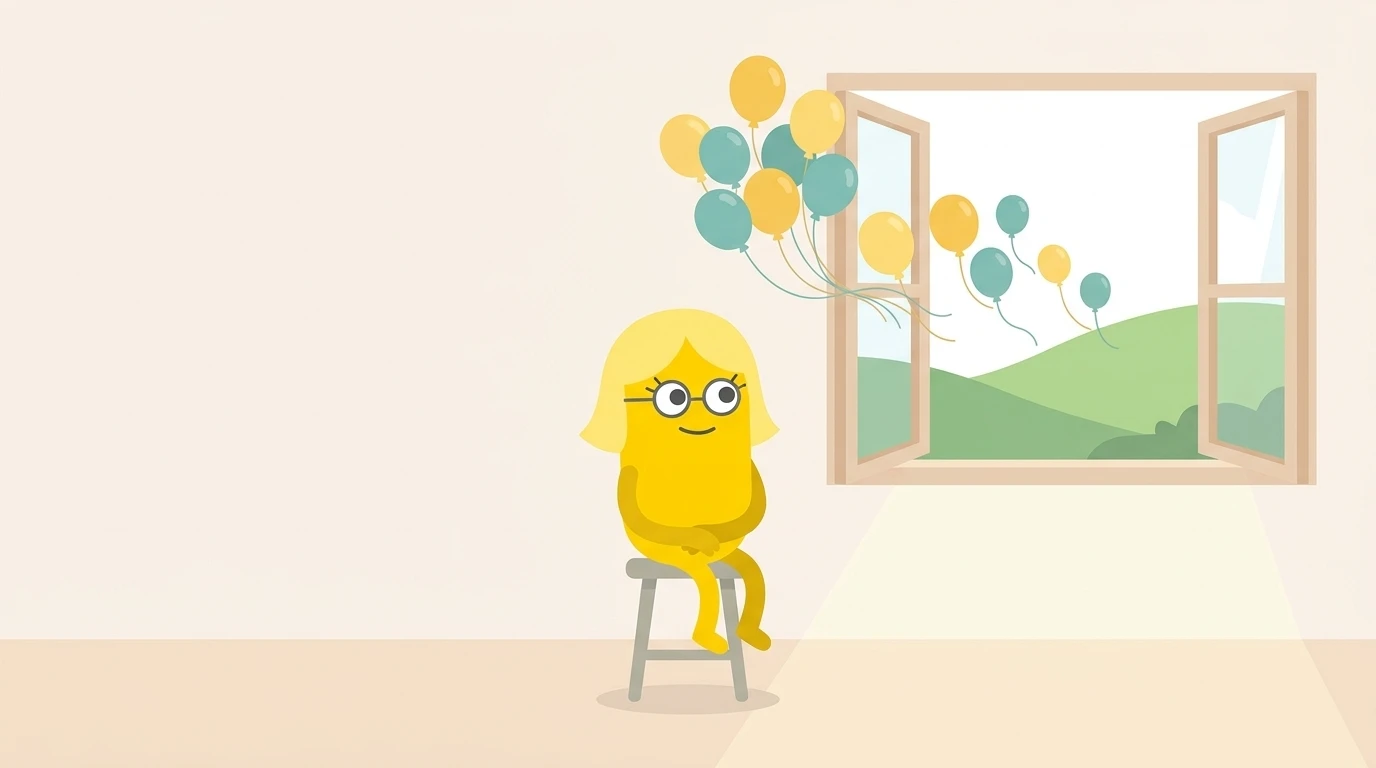
A yellow buddy with glasses sits calmly upright on a stool with hands folded while a cluster of yellow and teal balloons floats out through an open window toward green hills.

Inattentive ADHD is the form of ADHD where trouble with focus, follow-through and organization leads, with little visible hyperactivity. Adults with it lose track of tasks, forget appointments, run late and drift mid-conversation, often while looking calm. A 2025 review puts it at about 31% of adult ADHD cases, so it is common and easy to miss.

This guide walks through a work day, a conversation and a chore, then covers why it gets missed and how an evaluation works. It describes patterns researchers report and cannot tell you whether you have ADHD. The last section shows how to prepare for the conversation that can.

What is inattentive ADHD?

It is the DSM-5 presentation of ADHD in which the inattention symptoms meet the threshold without the hyperactive-impulsive ones. DSM-5 lists nine inattention symptoms and nine hyperactivity-impulsivity symptoms. A 2025 review by Bogdańska-Chomczyk, Majewski and Kozłowska says adults aged 17 and older need at least five in one list, present for six months, starting before age 12 and showing up in more than one setting. A review by Folego-Temoteo and colleagues notes that DSM-5 changed the older word "subtypes" to "presentations", so you will see both terms online.

The Bogdańska-Chomczyk review reports that across clinical and community samples of adults, the combined presentation accounts for roughly 63.5% of cases, the inattentive presentation about 31% and the hyperactive-impulsive presentation about 7%. Overt hyperactivity tends to ease with age while inattentive symptoms stay, which moves more adults toward the inattentive picture. The count depends on who is sampled. The Young and colleagues expert consensus statement notes that population samples find the inattentive type most common from mid-to-late childhood into adulthood, while clinic samples report more combined type.

What are the signs of inattentive ADHD in adults?

The 2025 review names the features that dominate adult ADHD as difficulty starting tasks, sustaining concentration, forgetfulness, disorganization and lateness. Three patterns make those concrete.

Starting and finishing. The consensus statement says adult inattention often shows up as trouble completing chores or work tasks, such as filling out forms, remembering appointments and meeting deadlines.

Inner restlessness. Hyperactivity does not always vanish. The same statement says it can be replaced by feelings of inner restlessness and discomfort.

A mind that is somewhere else. De Melo and Franca, in a 2026 perspective article in Frontiers in Psychiatry, describe mind-wandering, internal restlessness and time blindness as inner experiences the formal criteria barely capture. They add that these experiences are often the main reason adults seek an evaluation. A perspective article is an argument, not a trial.

Many people recognize a few of these on a bad week. The criteria ask for five symptoms, lasting six months, since childhood and in more than one setting. Notes on where and how often yours show up give a clinician something concrete to work with.

What does inattentive ADHD look like at work or school?

At work, the symptom list becomes forms left unfinished, appointments forgotten and deadlines missed, the same examples the consensus statement gives. Performance can also swing. De Melo and Franca note that people with ADHD may do exceptional work in a supportive, structured setting and poor work where the environment does not fit, which is why a few strong results do not rule ADHD out.

Interest changes the picture. Hyperfocus is complete absorption in a task, to the point of tuning out everything else, and Ashinoff and Abu-Akel's review found the research limited and the term poorly defined. In a preregistered validation study of 347 adults, Hupfeld and colleagues found hyperfocus scores rose with scores on the Conners' adult ADHD rating scale (r = 0.53). That sample was not recruited for ADHD, so it shows a link and not a diagnosis. Our guide to hyperfocus in ADHD goes deeper.

At school, the consensus statement says girls with ADHD may seem easily distracted, disorganized, overwhelmed and lacking in effort or motivation. It also says inattention predicts educational under-achievement more strongly than hyperactivity does. That description comes from work on girls, though the 2025 review finds adult presentation categories do not differ meaningfully by sex. The planning and working-memory side of this is covered in our executive dysfunction in ADHD guide, and a list of the tasks that stall and the ones that flow makes a useful map.

Related Challenges & Plans

What does inattentive ADHD look like in conversations and at home?

DSM-5 includes an item about not seeming to listen when spoken to directly, even without an obvious distraction. De Melo and Franca point out that adults can report more than an observer sees. A person may look attentive while not listening, or look disengaged while following every word. Who is watching changes the verdict.

At home, the symptom list points to chores, clutter and logistics. Lateness is on the review's list too, and time blindness is one of the inner experiences de Melo and Franca name. Research on time perception in adults is thin, since Ptacek and colleagues' 2019 review found limited published studies on it. Our guide to ADHD time blindness covers the practical side.

Why is inattentive ADHD missed in adults?

Quiet symptoms are less likely to trigger a referral. The consensus statement says less overt symptoms are less likely to lead to referral, so inattentive girls are more often missed, and that gender bias in teachers and parents appears to affect referral. In adults, the 2025 review adds that many people first seek treatment for depression, anxiety or substance use, and that internal restlessness, emotional dysregulation and executive problems can be read as primary mood or anxiety disorders. It links this pattern to frequent diagnostic delay.

Women are diagnosed later than men despite reporting similar ages of symptom onset. The review attributes that to under-recognition of female presentations, since adult presentation categories do not differ meaningfully by sex. Our guides on ADHD in women and late diagnosis and ADHD symptoms in women cover that side. De Melo and Franca add that the criteria were built around children and boys, which they link to underdiagnosis of adults, women and people with predominantly inattentive presentations.

Can you have inattentive ADHD and still look like you are doing fine?

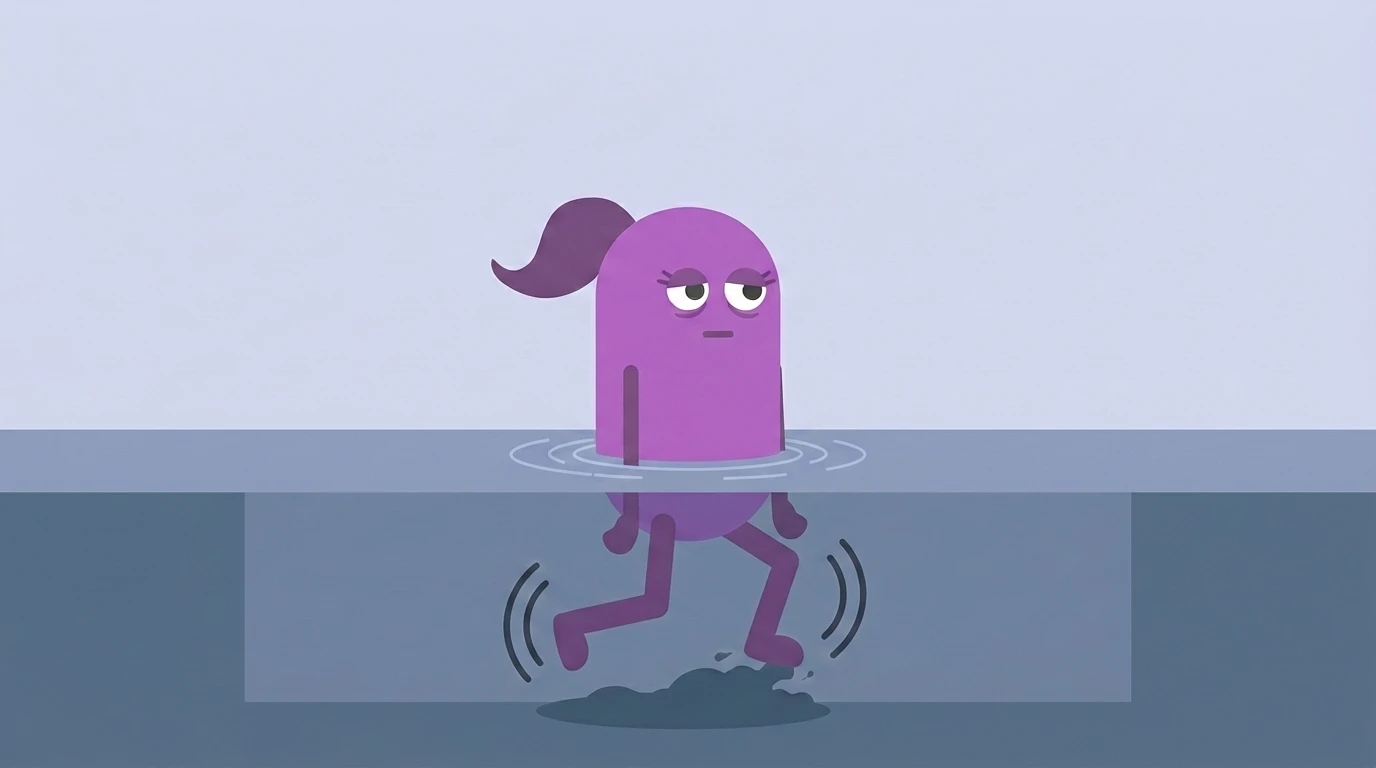
Yes, according to de Melo and Franca, who describe a subgroup of adults who keep up high academic, work or social performance through compensation and masking while carrying a heavy internal load. They name perfectionism, hypervigilant self-monitoring, overpreparation and extra time as common routes. They use the image of a floating duck, calm above the water and paddling hard below. One of their examples is parking several blocks from an event so nobody sees a cluttered car.

The costs they list include chronic fatigue, anxiety, emotional exhaustion and self-blame. Wurth, Fuermaier, Strand and Thorell surveyed adults aged 18 to 35 with ADHD (803), autism (158) or both (95), 79% of them female. They found masking commonly reported and dependent on context. It is one online self-report survey, so it cannot say how common masking is among all adults with ADHD.

De Melo and Franca propose that assessment ask about the gap between effort and output. When you describe your history, describe the effort it takes you to keep up, not only the results.

Could it be anxiety, depression or autism instead?

Sometimes it is another condition, and sometimes it is more than one. The 2025 review says clinicians must weigh how long symptoms have lasted, developmental history and alternatives such as chronic stress, sleep disorders and substance use. The consensus statement says other conditions are extremely common alongside ADHD in adults, including autism, anxiety and depressive disorders. Our ADHD and autism guide explains the overlap.

Bring your sleep, mood and stress history to an evaluation. Those details help the clinician sort one explanation from another.

How is inattentive ADHD diagnosed in adults?

A clinician checks the DSM-5 criteria through an interview that covers your history from childhood to now. The 2025 review recommends combining self-report, a clinician-rated interview, collateral information and a functional evaluation. Structured interviews such as the DIVA-5 walk through developmental history and impairment across life domains. Parent reports or school records help confirm childhood onset, though the review says they are often unavailable.

Screening questionnaires help but do not decide. The Adult ADHD Self-Report Scale has good reliability and strong specificity, with moderate sensitivity of about 69%. A negative result therefore does not exclude ADHD when suspicion is high. Lab tasks do not settle it either, since the review notes that many adults with ADHD score within normal limits on standard executive function tasks. Our ADHD test for adults guide explains what online tests can and cannot show.

What helps with inattentive ADHD?

The 2025 review describes guidance as multimodal, combining education about the condition with cognitive behavioral therapy and skills training. It reports that ADHD coaching, which centers on structured goal-setting, accountability and reinforced routines, shows gains in function, self-efficacy and daily structure within a full plan. It also reports that mindfulness-based programs reduced symptom severity in clinical studies. These are the review's summaries of the literature, so treat them as promising rather than settled.

De Melo and Franca list adaptive supports such as structured routines, external reminders and body doubling. Our guide to ADHD without medication covers skills-based options in more detail. A clinician can advise which mix suits you, including whether medication belongs in it.

What should I do next if this sounds like me?

Start with a one-page record. List where inattention shows up now (work, school, home, conversations), how long it has lasted and what you remember from before age 12. Add anything that shows childhood, such as old report cards or a parent's memory, since the review says collateral information strengthens an assessment.

Then book an evaluation with a clinician who assesses adult ADHD and bring the page. Tell a buddy on GetMotivated.ai the appointment date, so someone checks in on whether the call got made. One page and one booking is a complete first step.

Next time you search, our newest guide shows up.

Sources

ADHD in Adulthood: Clinical Presentation, Comorbidities, and Treatment PerspectivesResearch
Ewelina Bogdańska-Chomczyk et al.
Females with ADHD: An expert consensus statement taking a lifespan approach providing guidance for the identification and treatment of attention-deficit/ hyperactivity disorder in girls and womenResearch
Young S et al.
High functioning, yet high suffering - the need to incorporate invisible struggles in adult ADHD diagnostic assessment/criteriaResearch
de Melo IH & Franca G.
Diagnosis acceptance, masking, and perceived benefits and challenges in adults with ADHD and ASD: associations with quality of lifeResearch
Wurth et al.
This study surveyed 1,056 adults with ADHD and/or autism spectrum disorder (ASD) to examine how diagnosis acceptance, masking, and perceived benefits/challenges relate to quality of life.
Hyperfocus: the forgotten frontier of attentionResearch
Brandon K. Ashinoff & Ahmad Abu-Akel
A review paper arguing hyperfocus is a real, distinct attentional state -- not the same as flow or sustained attention -- and one of the first to call for it to be studied directly.
Validation of the dispositional adult hyperfocus questionnaire (AHQ-D)Research
K. E. Hupfeld et al.
A validated 12-item questionnaire (AHQ-D) that reliably measures how often and how intensely a person experiences hyperfocus.
Clinical Implications of the Perception of Time in Attention Deficit Hyperactivity Disorder (ADHD): A ReviewResearch
Ptacek
This paper explores the relationship between ADHD and time perception impairments, emphasizing the clinical need to address temporal processing deficits in diagnosis and treatment.
A comprehensive overview of the biological foundations of ADHDResearch
Isabella Folego-Temoteo et al.

Topics

AI-ready summary

Inattentive ADHD is the presentation where inattention meets criteria without hyperactivity. This guide uses published reviews to describe how it appears at work, in conversation and at home, why quiet symptoms and masking delay recognition, and how adults are assessed and supported.

Key takeaways

  • Inattentive ADHD is diagnosed when five or more inattention symptoms persist for six months, began before age 12 and appear across settings.
  • A 2025 review puts the inattentive presentation at about 31% of adult ADHD cases.
  • Quiet symptoms, masking and overlap with anxiety or depression delay recognition.
  • Screening questionnaires can miss cases, so diagnosis relies on a structured interview.
  • A written record of examples, including childhood, makes an evaluation more useful.

FAQs

What is ADHD inattentive?

It is the DSM-5 presentation of ADHD in which inattention symptoms meet the diagnostic threshold without the hyperactive-impulsive ones. Adults need at least five inattention symptoms, present for six months, with onset before age 12 and across more than one setting.

What are the signs of inattentive ADHD in adults?

A 2025 review names difficulty starting tasks, sustaining concentration, forgetfulness, disorganization and lateness. A UK expert consensus statement adds trouble with forms, appointments and deadlines, and feelings of inner restlessness.

What is the difference between the ADHD inattentive type and the combined type?

The inattentive presentation is driven by inattention alone, while the combined presentation includes both inattentive and hyperactive-impulsive symptoms. The 2025 review reports about 63.5% of adults with ADHD in the combined group and about 31% in the inattentive group.

Why is inattentive ADHD missed in adults?

Quiet symptoms are less likely to prompt a referral, and many adults first seek help for depression, anxiety or substance use. Masking and compensation can also hide the effort behind outwardly good performance.

Can a screening questionnaire diagnose inattentive ADHD?

No. The Adult ADHD Self-Report Scale has moderate sensitivity of about 69%, so a negative result does not rule ADHD out when suspicion is high. Diagnosis rests on a structured clinical assessment of history and impairment.

Can you have inattentive ADHD and still do well at work or school?

Yes. A 2026 perspective article by de Melo and Franca describes adults who keep up strong performance through perfectionism, overpreparation and hypervigilant self-monitoring, at a high internal cost. It is an argument from the authors, not a trial.

Related Challenges & Plans

Keep reading