October 23, 20268 min readADHD and focus

Jobs for People With ADHD Come Down to Seven Job Features

No job cures ADHD, but some fit better. Check seven job features before you apply, from autonomy to recovery time, with the research behind each one.

Rachel Stein

Last reviewed: October 2026

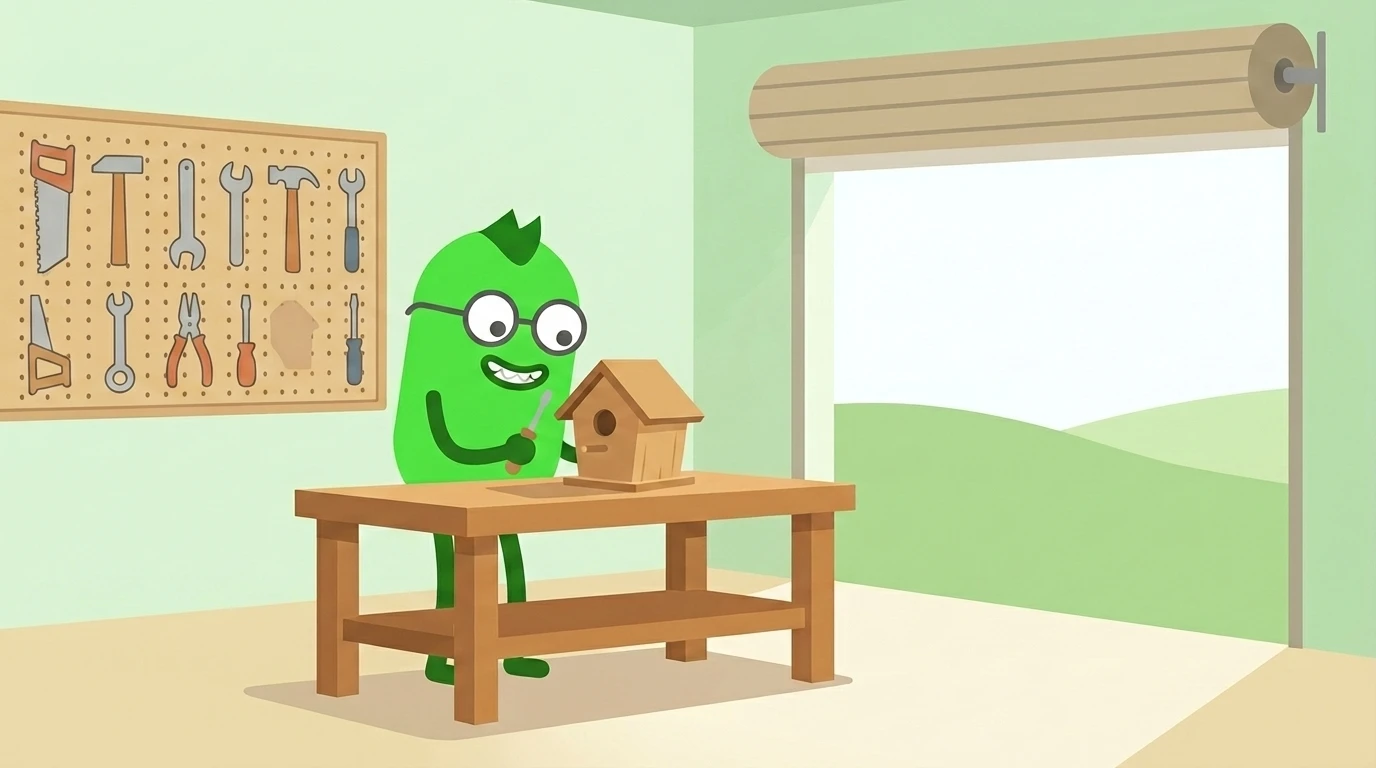
A buddy builds a birdhouse at a workbench beside a pegboard of outlined tools and a wide open door to green hills

No job cures ADHD, but some jobs fit an ADHD brain far better than others. The fit shows up in seven features of the work: visible structure, autonomy, output-based evaluation, variety, movement, flexibility, and room to recover. Check those before you apply and you will learn more than a list of job titles can tell you.

Most "best jobs for ADHD" lists name occupations and stop. The research does not rank occupations for ADHD, so a list that does is guessing. It does show how the same workplace can drain one person and steady another, and you can check that pattern in any job you are considering.

What jobs are good for people with ADHD?

It depends on how the job is built. A 2026 study in Frontiers in Psychology by Jameson and colleagues analysed 277 workplace threads from the r/ADHD forum. Meetings, deadlines and disclosure were not simply good or bad for the people describing them. They felt different depending on autonomy, how performance was managed, and how the work was structured.

The study has limits. It is people describing their own jobs online, not a measurement of outcomes, and the authors call it hypothesis-generating. It still gives you a usable question: what will this job do to my attention across an ordinary week?

What job features matter more than the job title?

Structure you can see. Russell Barkley's work on executive function says that information held only in your head is a weak guide to behaviour, and that people with ADHD do best when it is made physical and visible at the moment of action. At work, that means written expectations, agendas before meetings, and documented decisions. One contributor in the Jameson study said a job where people write things down helps enormously.

Autonomy over how the work gets done. The same demand felt different depending on how much control contributors had. A tight deadline you can meet your own way is a different experience from the same deadline with hourly check-ins.

Evaluation by output, not hours. Several contributors described fixed schedules and visible busyness being rewarded over finished work, and efficiency earning them more work instead of rest. Ask an interviewer how they decide whether someone is doing well in the role. The answer shows which of these features you are walking into.

Are fast-paced or physical jobs better for ADHD?

For some people. Contributors described needing stimulation, movement and variation, and one said, "I could not sit at a desk performing one task all day, every day." Another was happiest in jobs that are fast paced and physical.

Variety means the day holds different kinds of tasks. Roles with changing demands, such as kitchens, field service, clinical work or teaching, offer it, though they also bring constant interruption, which costs other people with ADHD. No study ranks these roles, so treat them as examples of how a feature shows up. Movement can come from physical work or from a desk job that allows breaks and pacing on calls.

Think of the stretches of work when you felt most capable, and note what those days had in common. That tells you which of the two you need.

Is working from home good for ADHD?

It is a mixed deal. Some Jameson contributors called remote work a life changer because they could organise work around their best focus hours. In an early-pandemic survey of ADDitude readers, about 90% were working from home, and the challenges they reported were distraction, lost structure and no one to anchor the day. Their fixes were practical: a morning check-in with a buddy, timers, a workspace with few visual distractions, and a short list of tasks to rotate between.

Flexibility helps when you build structure to go with it. Our guide to working from home with ADHD covers the setup, and a flexible job with a plan beats one without.

Why does a job burn me out even when I am good at it?

Performing well and paying nothing for it are different things. Jameson contributors described extra effort that colleagues without ADHD do not spend: maintaining a work persona, masking difficulties, and overcompensating for forgetfulness with long hours. The researchers called this invisible labour.

A 2024 field study by Turjeman-Levi, Itzchakov and Engel-Yeger adds numbers. They surveyed 171 working adults online, and 38 screened positive on a brief ADHD screener. Those 38 reported higher burnout on every dimension and more executive function difficulty. The link ran through two skills, managing time and organising work. It is a single survey and the screener is not a diagnosis, so it shows a pattern rather than a cause.

Room to recover is the seventh feature. A sustainable job leaves slack in the week, such as a meeting-free block or a lighter day after a deadline. The ADHD tax post shows where unsupported executive demands hide, so you can plan for them.

Are there jobs people with ADHD should avoid?

No occupation is off the table, and the research gives no banned list. Contributors found narrow, sedentary, repetitive work with a rigid schedule hard to sustain, along with evaluation by presence and roles demanding a constant professional persona.

A 2025 narrative review by Bogdańska-Chomczyk and colleagues reports more job instability and more sick days among adults with ADHD on average, and names executive dysfunction as a central explanation. That is a population pattern, and it does not predict your outcome. The same review notes that a subset of adults show real resilience, mostly by using external structure such as calendars, alarms and reminders. If a role you love has a couple of these features, ask for the specific adjustment and test whether it helps.

How do I get through an ADHD job search and interview?

Treat the search as a project with a paper checklist. ADHD coaches quoted in an ADDitude interview primer suggest writing down looping thoughts so you can set them aside, researching the company once and then stopping, and rehearsing answers aloud, since repetition lowers anxiety and keeps answers short. For gaps in your history, they suggest an honest, practised explanation built around what you did, such as projects, caring for family or gig work. This is practitioner advice rather than trial evidence, and it is easy to try.

Plan the day after each interview too. Fill it with something that has a clear start and finish, and decide when you will send the next application.

Should I tell a new employer I have ADHD?

That is your call, and it can differ by employer. A 2026 systematic review by Krishnamoorthy, Das and Thomas, covering 17 papers, found that perceived stigma hindered diagnostic disclosure. A middle path is to ask for the conditions you need, such as an agenda in advance or written follow-ups, without naming a diagnosis. Our guides to ADHD at work and ADA accommodations for ADHD explain when a formal disclosure is worth considering.

What if my current job is the wrong fit?

You can change the fit before you change the job. Bogdańska-Chomczyk and colleagues describe ADHD coaching and cognitive behavioural therapy as common supports for the difficulties that remain even with medication, and report that coaching programmes improve goal attainment and organisation.

Early evidence exists for treatment built for working adults. Oscarsson and colleagues tested a guided 12-module web programme in 36 working adults with ADHD. Quality of life improved (Cohen's d = 0.84), as did exhaustion (d = 1.12), and the gains held at 12 weeks. Nobody was randomised to a comparison group and 12 of the 36 reported negative effects, so the authors call it promising. A clinician can tell you what suits you.

Choose the job that gives your brain a chance

Pick the one feature you know you need. Look for it in the next job description, ask about it in the next interview, and ask for it in your current job. One step in that direction is enough to start.

Next time you search, our newest guide shows up.

Sources

What makes work sustainable for adults with ADHD? Interpreting workplace strain and support through Reddit dataResearch
Jameson TP et al.
Executive Function Deficits Mediate the Relationship Between Employees' ADHD and Job BurnoutResearch
Turjeman-Levi Y et al.
A study of 171 employees found that adults with ADHD experience significantly more job burnout, and traced the cause specifically to executive-function struggles with time management and self-organization rather than a general lack of effort.
Web-Based Stress Management for Working Adults With Attention-Deficit/Hyperactivity Disorder (ADHD): Single-Arm, Open Pilot TrialResearch Paper
Martin Oscarsson et al.
Abstract Background National and international guidelines advocate for a multimodal approach to treating adult attention-deficit/hyperactivity disorder (ADHD), combining pharmacotherapy with psychological interventions. While recent reviews support cognitive behavioral therapy (CBT) as a viable treatment for ADHD in adults, evidence remains limited. Another challenge is the availability of psychological interventions, with stimulants remaining the primary treatment choice for adults with ADHD. One promising approach to increasing access to psychological interventions is the dissemination of internet-delivered CBT.Objective This study evaluated the feasibility, acceptability, and effects of a guided web-based stress management program specifically designed for working adults with ADHD.
How to Ace Your Job Interview: An ADHD PrimerArticle
additudemag.com · Neha Kash
This guide outlines practical strategies for adults with ADHD navigating the job interview process. Drawing on advice from ADHD coaches, it provides actionable techniques to manage anxiety, prevent oversharing, explain resume gaps, and organize interview preparation. It also offers healthy coping mechanisms to handle potential rejection and sustain a confident job search.
Working from Home? Telecommuting Strategies from Adults with ADHDArticle
additudemag.com · ADDitude Editors
In This ArticleWorking From Home Challenge 1: Maintaining Focus When the News Is So ConsumingWorking From Home Challenge 2: Avoiding Distractions with Family Around, and No FirewallsWorking From Home Challenge 3: Maintaining Productivity When No One Is WatchingWorking From Home Challenge 4: Prioritizing and Scheduling When Tasks Arrive from Every DirectionWorking From Home Challenge 5: Avoiding Unhealthy HyperfocusWorking From Home Challenge 6: Floundering with a Lack of Structure and ColleaguesAs the pandemic that has consumed and changed our lives continues to spread at alarming rates, closing schools, offices, and restaurants across the nation, roughly 90% of ADDitude readers are now working from home — 22% of them for the first time, according to a survey fielded on March 13. What they are quickly learning is that attention deficit hyperactivity disorder (ADHD or ADD) complicates and undermines several work-from-home prerequisites: focus, time management, and prioritization skills, to name a few. Here, our readers share the five biggest challenges they face working from home, and their practical advice for overcoming each.
The Important Role of Executive Functioning and Self-Regulation in ADHDArticle
russellbarkley.org · Russell A. Barkley, Ph.D.
ADHD is characterized by deficits in self-regulation and executive functioning, which are closely related. Effective management involves externalizing internal information and motivation, providing immediate rewards, and using medication to address underlying neurological issues, as traditional appr
ADHD in Adulthood: Clinical Presentation, Comorbidities, and Treatment PerspectivesResearch
Ewelina Bogdańska-Chomczyk et al.
Females with ADHD: An expert consensus statement taking a lifespan approach providing guidance for the identification and treatment of attention-deficit/ hyperactivity disorder in girls and womenResearch
Young S et al.
Stigma in adults with ADHD: a systematic review of types, experiences, and potential implications for quality of lifeResearch
Krishnamoorthy T et al.

Topics

AI-ready summary

No job cures ADHD, but some fit better. Check seven job features before you apply, from autonomy to recovery time, with the research behind each one.

FAQs

What are the best jobs for ADHD?

No study ranks occupations for ADHD. Judge any job on the seven features instead, and look for roles that score well on the ones you need.

Can the right job fix ADHD?

No. A good fit lowers the load ADHD puts on you, but it does not treat the condition. Medication, therapy and coaching address symptoms, and a clinician can help you choose.

What jobs are good for women with ADHD or inattentive ADHD?

The research names no different jobs. The Young and colleagues consensus statement notes that women with ADHD may find returning to work after having children especially hard and may need support with disclosure and time management. The same seven features apply.

Is working from home better for ADHD?

It depends on whether you can build your own structure. Hybrid arrangements and a daily check-in with another person are common middle options.

Why do I keep losing jobs even though I am capable?

A 2025 review names working memory, planning and time management as central explanations for job instability in adults with ADHD. If the pattern repeats, an evaluation and a conversation with a clinician are a reasonable next step.

Keep reading