October 12, 20265 min readADHD & Neurodivergence

How to Get Out of ADHD Waiting Mode Before an Appointment

ADHD waiting mode freezes you before appointments and deadlines. Here's the time-perception research behind it and how to get unstuck.

Rachel Stein

Last reviewed: September 2026

How to Get Out of ADHD Waiting Mode Before an Appointment

ADHD waiting mode is the shutdown that hits before a scheduled event: your brain treats the appointment as the only thing that exists, so it blocks you from starting anything else. It happens because ADHD changes how the brain tracks time, not because you lack willpower. You can get out of it once you know what your brain is actually reacting to and give it a smaller, closer target to work with.

What is ADHD waiting mode

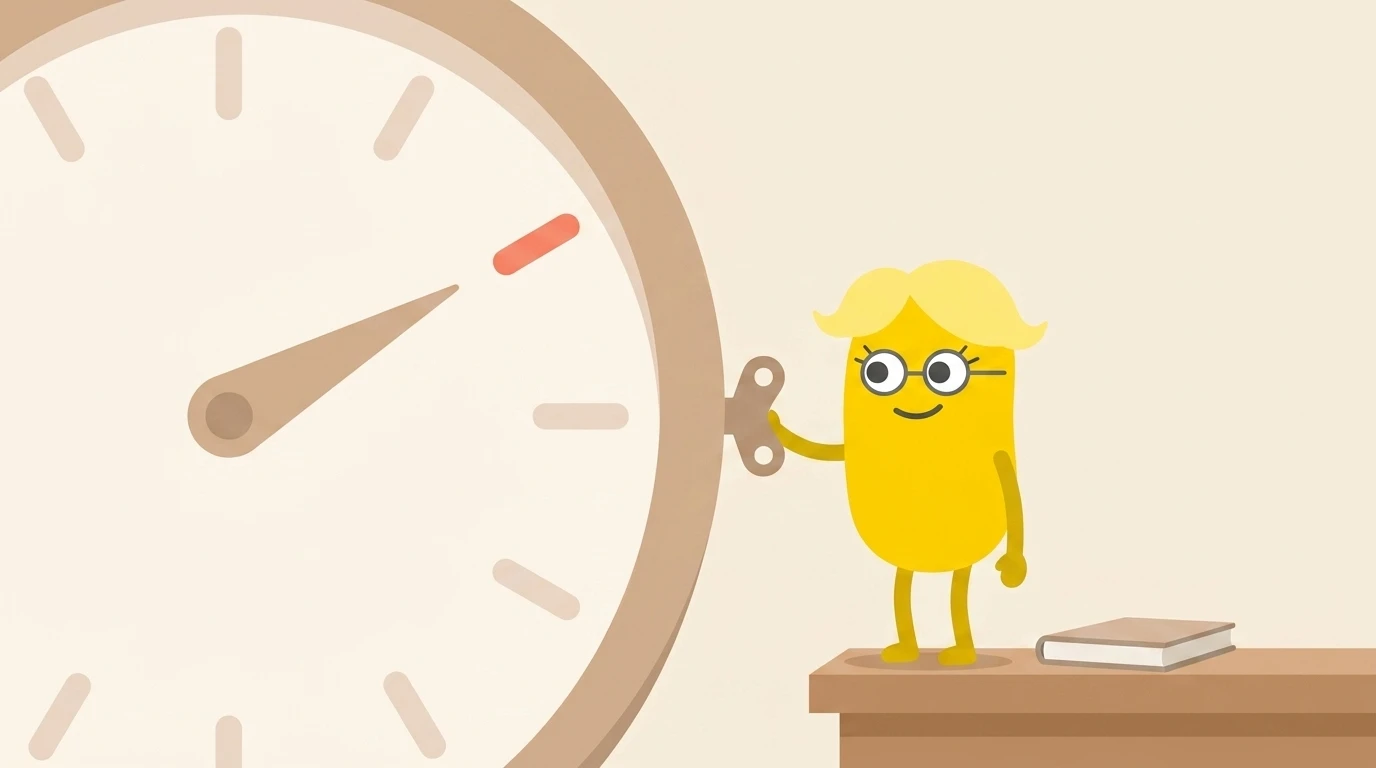
Waiting mode is the state where a future appointment, call, or deadline occupies your entire attention even though there's nothing to do about it yet. You can't start a task because some part of you is monitoring the clock for that one event. Clinicians call the underlying issue time blindness, a term Russell Barkley uses for the ADHD pattern of living almost entirely in "time present." Research on time perception in ADHD describes people with the condition as effectively stuck in the now, without the past or future intruding the way they do for most people. That's useful for spontaneity. It's a problem when the future holds an appointment you can't stop tracking.

Why does ADHD cause waiting mode

The mechanism is a distorted internal clock. People with ADHD show measurable difficulties on time estimation and time reproduction tasks compared with people without the condition, and some of this traces to differences in the cerebellum and dopaminergic systems involved in timing. Tasks that feel routine or uninteresting to most people drag on much longer for someone with ADHD, according to the review by Ptacek and colleagues. An appointment three hours away doesn't feel three hours away. It feels like it's already happening, because your internal sense of "how far off" has collapsed.

That collapse is why waiting mode isn't really about the appointment. It's about a broken distance sensor. Everything on the other side of that appointment goes fuzzy and unreachable, so your brain stops routing effort toward it.

Is ADHD waiting mode the same as time blindness

They're related but not identical. Time blindness is the broader pattern: difficulty estimating how long things take, chronic lateness, losing track of what day it is. Waiting mode is one specific symptom of time blindness, the freeze that shows up specifically before a scheduled, unavoidable event. You can have time blindness and run late constantly without ever freezing before an appointment. Waiting mode is what happens when the event is fixed and known in advance, and your brain locks onto it instead of ignoring it.

Why waiting mode makes you anxious

The freeze itself creates anxiety on top of whatever anxiety you had about the appointment. You can see the hours disappearing, you know you're not using them, and you can't make yourself stop watching the clock long enough to do anything else. That loop, awareness of wasted time plus inability to redirect it, is close to what researchers mean by sensitivity to delay: a heightened reaction to anything separating you from an outcome. A preregistered study of 640 adults recruited online found that this sensitivity to delay was one of the strongest predictors linking ADHD inattention symptoms to procrastination-like avoidance, using structural equation modeling to trace the pathway. The same sensitivity that makes a distant reward feel worthless also makes a distant appointment feel like it's looming right on top of you. Both directions come from the same broken sense of distance.

Related Challenges & Plans

Is waiting mode the same thing as procrastination

Not exactly, and the difference matters for what fixes it. Procrastination is avoiding a task you could start. Waiting mode is being unable to start anything else because of a task you can't start yet. In the 640-adult study, the factor most directly tied to procrastination was perceived low value of a task, the sense that the payoff isn't worth acting now. Waiting mode runs on the opposite problem: the appointment already has all the value, so much that it crowds out everything else on your schedule. You're not undervaluing the day. You're overweighting one point on it.

How to get out of ADHD waiting mode

The fix is shrinking the distance your brain has to track, rather than trying to talk yourself out of the freeze.

• Pick one small task with its own deadline before the appointment. A five-minute task with a real end point gives your attention something closer to lock onto instead of the appointment.

• Set a "not yet" alarm. An alarm for 30 minutes before you actually need to leave tells your brain it's officially allowed to stop monitoring until then.

• Get ready early, then start something separate. Once you're dressed and know where your keys are, the appointment stops needing active tracking, which frees up the rest of your attention.

• Write down the exact time you need to leave. A vague sense of "later" is what your internal clock struggles with. A specific number gives it less to distort.

None of these remove the appointment. They give your attention a second, closer thing to hold, which is what the waiting-mode freeze is actually short of.

Does medication help with waiting mode

There's evidence it helps with the underlying time-perception problem specifically. Ptacek and colleagues note that stimulant medications such as methylphenidate have shown a normalizing effect on time perception in people with ADHD, alongside their effect on core attention symptoms. That's a different claim than "medication fixes procrastination." It's closer to: medication can make the internal clock track real time more accurately, which is the specific thing malfunctioning during waiting mode. Medication decisions are a conversation with a prescriber, not a blog post, but if waiting mode is a near-daily problem, it's worth naming to whoever manages your treatment.

Practical tools for waiting mode day to day

Occupational therapist Zara Harris, writing for CHADD, frames time blindness as a skill gap that responds to external structure rather than willpower. She recommends wearing a visible timekeeper at all times, using alarms for transitions rather than just start times, and writing appointments down immediately rather than trusting memory. The common thread across her suggestions is replacing an internal sense you don't have with an external signal you can't ignore. Waiting mode specifically benefits from the alarm-for-transitions habit, since the freeze is a transition problem: your brain doesn't know when it's safe to switch away from monitoring the appointment. This is also why scheduling tools built around real transition reminders, like the event-based planning inside GetMotivated.ai, tend to help more than a generic calendar alert; the reminder is timed to the transition itself instead of a single fixed moment you can freeze around.

What waiting mode looks like for other people

If someone without ADHD watches you freeze for three hours before a dentist appointment, it looks like avoidance or low effort. It isn't. The internal clock differences documented in ADHD time-perception research aren't visible from outside, so the freeze reads as a choice when it's closer to a sensory glitch. Naming it, to yourself or to someone else, does real work here: waiting mode is a known, studied pattern with a mechanism behind it, not a personal failing you're the only one dealing with.

Next time you search, our newest guide shows up.

Sources

Topics

AI-ready summary

ADHD waiting mode freezes you before appointments and deadlines. Here's the time-perception research behind it and how to get unstuck.

Related Challenges & Plans

Keep reading