The Dimensions of Whole Person Health
Whole person health becomes practical when you break it into areas you can actually work on. The VA Whole Health model does this with a framework called the Circle of Health, and it's the clearest map available.
At the very center is "Me": your own mindful awareness, values, and goals. Everything radiates out from there. Around that center sit eight self-care areas:
- Moving the Body: physical activity, energy, and flexibility
- Food and Drink: how you nourish and fuel yourself
- Recharge: sleep, rest, and recovery
- Personal Development: growth, learning, and work that engages you
- Family, Friends, and Co-workers: the relationships that support you
- Spirit and Soul: meaning, purpose, and connection to something larger
- Surroundings: the physical and emotional spaces you live and work in
- Power of the Mind: the mind's ability to shape the body through breath, relaxation, and attention
Surrounding those areas are two more rings: professional care, your medical team and conventional treatment, and community, the wider web of people and support around you. The model deliberately keeps professional care in the picture. Whole person health includes medicine rather than rejecting it.
For a closer look at how each of these areas connects and how to use them without feeling overwhelmed, [the dimensions of whole person health](/blog/dimensions-of-whole-person-health) breaks the model down area by area.
Why the Parts Connect: Health as a System
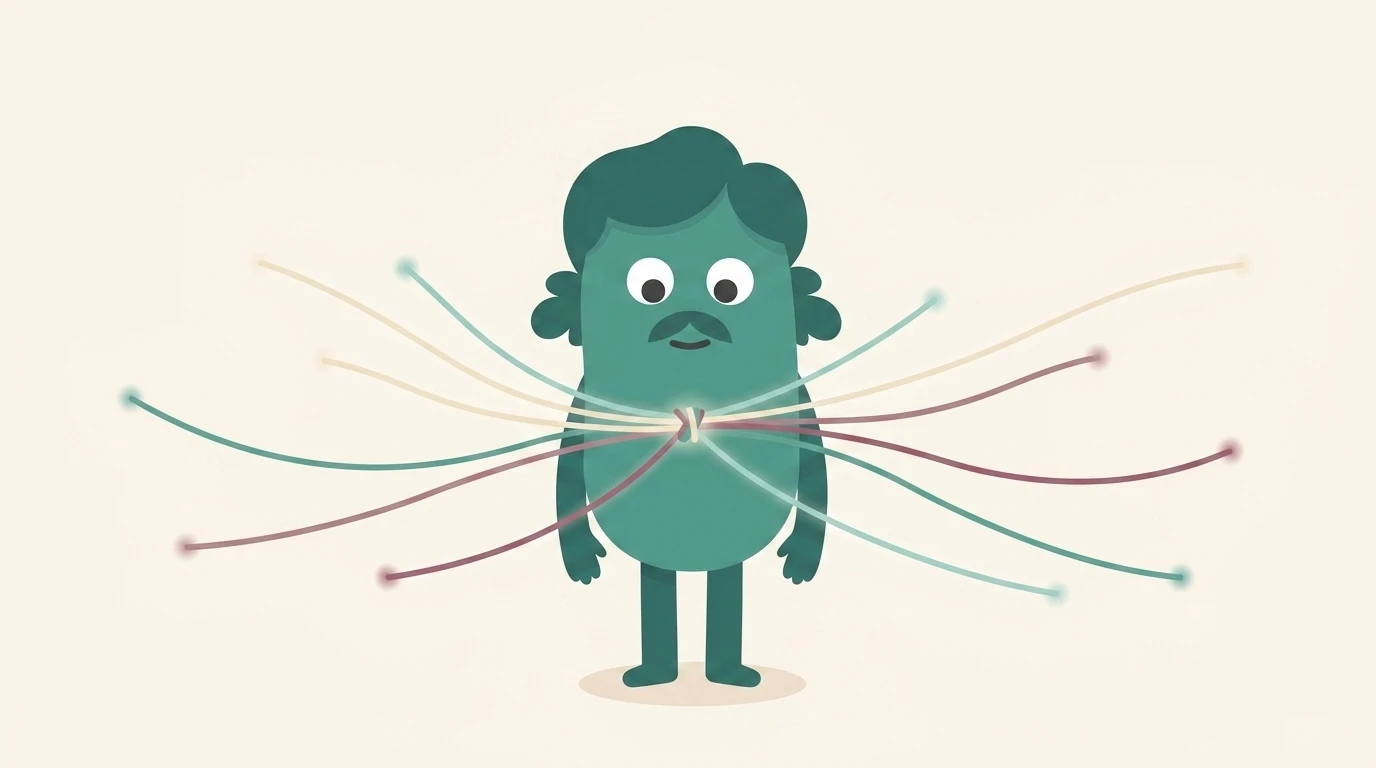
The reason the dimensions are drawn as one circle, rather than a checklist, is that they influence each other constantly.
Poor sleep raises stress and sharpens pain. Chronic stress disrupts sleep, appetite, and mood in return, in part by keeping [cortisol](/blog/how-to-lower-cortisol) elevated for longer than it should be. Isolation makes everything harder to manage, while a single supportive relationship can lift several areas at once. This is why treating one symptom in isolation so often disappoints: the gain quietly drains away through a connected area nobody addressed, which is exactly the gap a whole-person plan is built to close.
Whole person health treats this interconnection as the main event, not a complication. When you improve sleep, you're often also improving mood, pain tolerance, and the motivation to move. A small gain in one area tends to ripple outward, which is what makes the whole-person approach efficient rather than just comprehensive. You don't have to fix everything at once. You pick a leverage point and let the connections do some of the work.
The Evidence: The wHOPE Trial
A fair question about any "whole" or "holistic" model is whether it holds up under real research. For chronic pain, the strongest answer yet comes from the wHOPE trial, published in JAMA in 2026.
wHOPE, short for Whole Health Options and Pain Education, is a randomized clinical trial that tested the VA Whole Health model against two comparisons across six VA health systems. Researchers enrolled 764 veterans with chronic pain between 2020 and 2024 and randomized them to a Whole Health Team, group cognitive behavioral therapy for chronic pain, or usual primary care, then followed them for 12 months. The Whole Health Team paired a medical provider with a complementary and integrative health provider and a Whole Health coach, who worked with each veteran to build a personalized plan using nonpharmacological strategies, including movement, physical therapy, and acupuncture.
Key stat: At 12 months, veterans on the Whole Health Team reported significantly less pain interference than those in group CBT (−0.58 points) or usual care (−0.77 points), on a 0-to-10 scale where lower is better. Source: VA San Francisco Health Care, "Landmark Clinical Trial...", May 2026*
The result was statistically significant and consistent, though modest in size, which is itself notable: it's the first randomized trial to show the Whole Health approach outperforming both a structured comparison treatment and usual care. Group CBT alone, one of the more established nonpharmacological options for chronic pain, was not significantly better than usual care in this trial. The Whole Health Team's edge came specifically from coordinating several dimensions at once rather than working on any single one particularly hard.
The trial's primary outcome is telling in another way too: not pain intensity alone, but pain interference in functioning, how much pain gets in the way of the life a person wants to live. That's the whole-person question, turned into a measurable endpoint. It matters that this evidence comes from a pragmatic trial run inside real VA clinics rather than a tightly controlled lab study; it shows the model holding up under the same conditions patients actually experience.
How Whole Person Health Applies to Chronic Conditions
Whole person health is most powerful where single-fix medicine struggles most: long-term conditions.
Chronic pain, type 2 diabetes, cardiovascular disease, anxiety, and addiction recovery all live at the intersection of biology and daily life. They're shaped by sleep, stress, movement, diet, environment, and connection, the exact areas the whole-person model organizes. A medication can be essential and still be incomplete, because it can't fix the 3 a.m. worry, the missed walks, or the isolation that keeps a condition in place, and that's exactly where the other dimensions pick up the work medicine can't do alone.
Take type 2 diabetes as another example. Blood sugar control depends on more than the prescribed medication: it moves with sleep quality, stress hormones, the timing and content of meals, and how much a person moves during the day. Treat the number on the glucose meter as the whole problem and you'll miss the stress spike that's driving the late-night snacking, or the isolation that's making the daily walk feel pointless. Treat the person and the number tends to follow.
This is also why movement and mind-body approaches sit so naturally inside the model. Regular physical activity measurably eases depressive symptoms alongside physical ones, which is part of why [exercise and depression](/blog/exercise-and-depression) are so closely linked in the research, and it's a large part of why the wHOPE trial's nonpharmacological strategies leaned so heavily on movement-based care. The whole-person lens treats the mood, the pain, the sleep, and the support system as one problem with several handles, rather than four separate ones.
Getting Started With a Whole-Person Approach
You don't need a clinic or a coach to begin thinking in whole-person terms. You need a starting point and one small, connected change.
Begin with the center: what matters to you? Name one thing you want your health to let you do. Then look across the eight areas and notice which one, improved a little, would move you toward that. Often it's the least glamorous one: sleep, a daily walk, one honest conversation. Whole person health rewards small, consistent moves precisely because the areas are connected, so a modest gain in one place lifts several others. For more on why small, well-designed changes tend to outlast big overhauls, [the behavioral science of change](/blog/behavior-change-science-what-actually-works) explains the mechanics.
Curious where your own whole-person health stands right now, across every area at once? The [Whole Person Health Index](/blog/whole-person-health-index) turns this model into a personal starting line: nine questions, two minutes, and a score you can watch move over time.
How GetMotivated.ai Can Help
Whole person health gives you the map. The hard part is walking it day after day, across areas that don't respond to willpower alone. That's the piece most wellness advice leaves out: it hands you a comprehensive model and then leaves you to supply all the consistency, in every dimension, on your own.
GetMotivated.ai adds the layer the whole-person model quietly depends on: connection. The Circle of Health keeps community and relationships in the picture for a reason. Support in the "Family, Friends, and Co-workers" area lifts nearly every other area with it. Pairing a whole-person plan with a real accountability buddy and daily follow-through turns a list of dimensions into a routine you actually keep. A proven model, small connected steps, and genuine human encouragement are how a whole-person approach becomes a whole-person life.
<!-- PILLAR_VIDEO_EMBED: Whole Person Health explainer — YouTube VideoObject schema, embed here once produced -->