Anchor to a Concrete, Automatic Routine
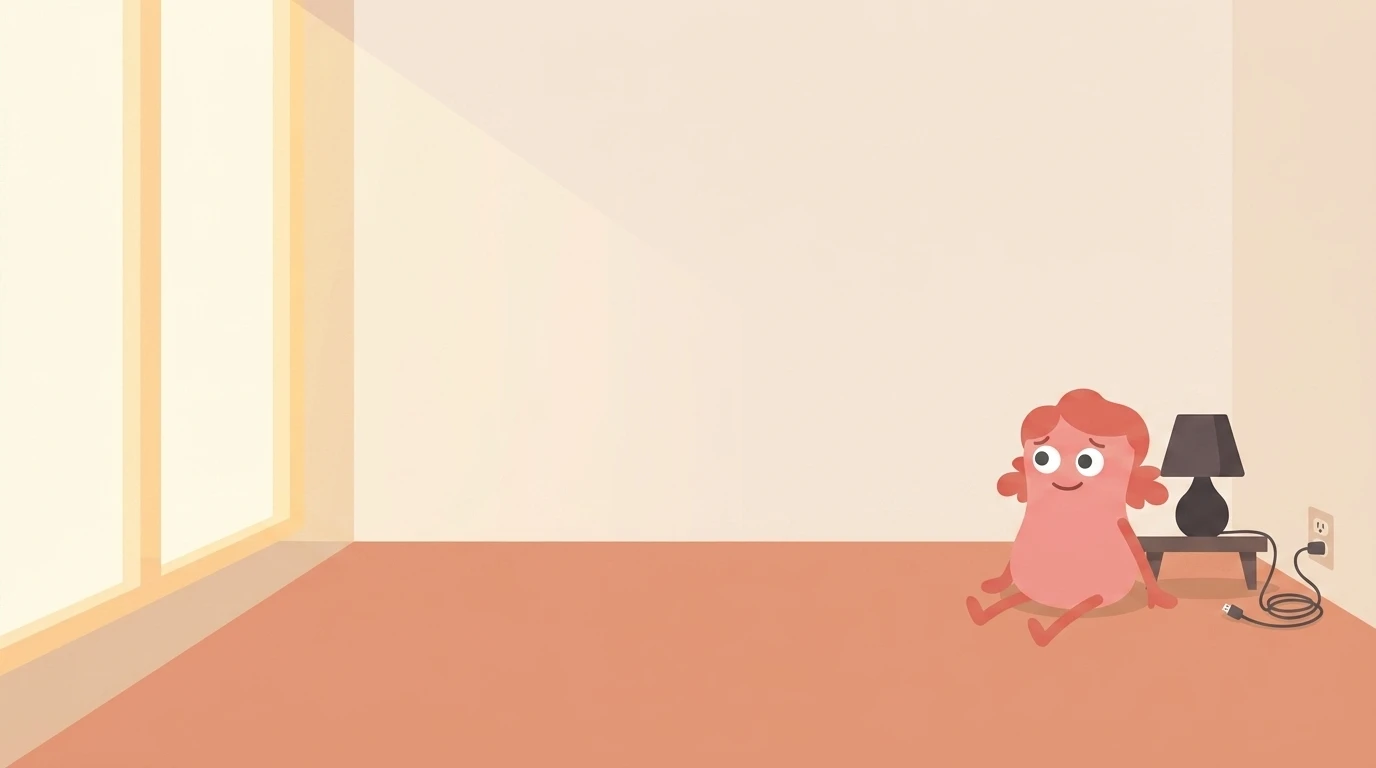
The anchor is your cue — an existing routine that reminds you to do the new behavior. With ADHD, never rely on "I'll remember." Pick something you already do on autopilot: after I pour my coffee, after I sit at my desk, after I put my phone on the charger. The more physical and specific, the better the trigger fires.
This matters more with ADHD than it sounds. Time blindness — the well-documented ADHD tendency to lose track of clock time — means a time-based anchor like "8am" quietly slides to 8:40 and gets skipped entirely. An action-based anchor sidesteps that problem, because it doesn't care what time it is. It only cares that the trigger action happened, whenever that turns out to be.
Shrink It Smaller Than Feels Reasonable
Whatever tiny feels like, go smaller. Not "do a workout" but "put on one shoe." Not "study" but "open the notebook" — the same start-smaller principle that anchors effective [ADHD study habits](/blog/adhd-study-habits). The point is to make the starting move so small that resistance can't grab onto it. You'll often keep going once you've started — but the habit only requires the tiny version, so a low-energy day still counts as a win.
Make the Celebration Loud
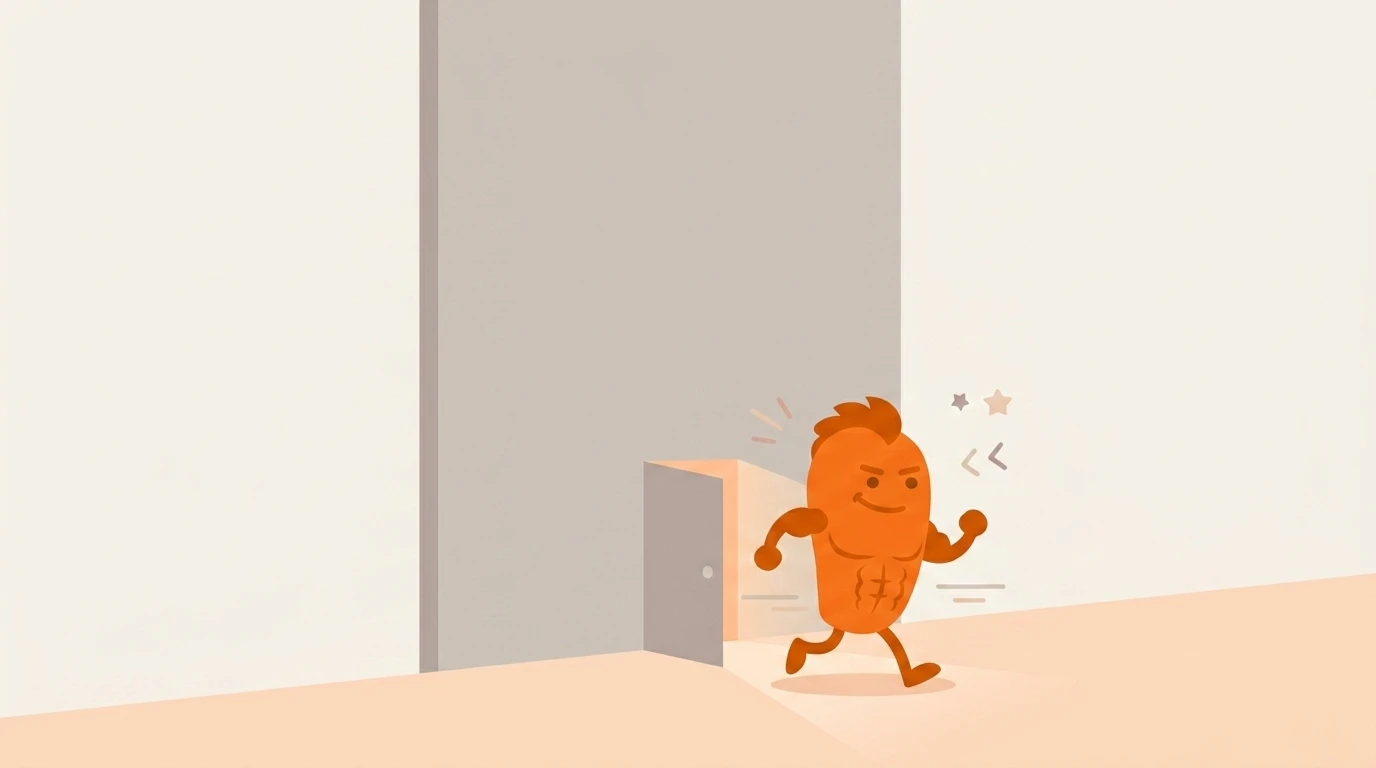
This is the step people skip, and for ADHD it's the one that carries the load. A weak, mental "good job" won't cut through. Make it physical and real: a fist pump, a genuine grin, saying "Yes!" out loud, a little dance. You're deliberately generating the dopamine hit your brain would otherwise wait weeks for. The bigger the honest celebration, the faster the habit wires in.
When the Freeze Hits: Tiny Habits and ADHD Paralysis
Sometimes the barrier isn't a big task — it's a full stop. [ADHD paralysis](/blog/adhd-paralysis) is the freeze that happens when something feels so overwhelming that you can't move toward it at all, even when you want to and even when the task is objectively small. Tiny Habits helps here because it removes the size question entirely: a behavior that takes two seconds doesn't have the same room to trigger a freeze that a 30-minute task does. But on days when even "one shoe" feels impossible, adding a second person changes the equation.
That's where [body doubling](/blog/body-doubling-adhd) comes in. Working alongside someone else — in person, on a video call, or just knowing a buddy is expecting a check-in — supplies an external prompt that doesn't rely on your own initiation system at all. Pair body doubling with the anchor–behavior–celebration recipe and you get two forms of momentum stacked together: a tiny, almost-frictionless action, and a person who notices when you do it. For ADHD brains, that combination turns "I should do this" into "I'm doing this right now, with someone."
It's worth adding early, not saving as a last resort. If Tiny Habits alone still leaves you staring at the first step, a body double is often the missing piece, not a sign the method failed you.
Ditch the Streak, Keep the Momentum
One more adaptation matters enormously for ADHD: stop chasing perfect streaks.
Streak-based trackers set a trap. Miss one day and the all-or-nothing wiring common in ADHD whispers that you've blown it, so you quit entirely. Tiny Habits treats a miss as neutral — no guilt, no restart penalty, no broken chain. You simply do the tiny behavior at the next anchor and celebrate. Consistency over time comes from getting back on quickly, not from never falling off. And since [habit formation timelines vary widely](/blog/how-long-does-it-take-to-form-a-habit) for everyone, giving yourself room to be imperfect is exactly what the research supports.
Two Worked Examples: Morning and Night
Say you want to start moving in the morning but never manage it. The usual advice — "commit to a 30-minute workout" — is exactly the kind of big, delayed-reward goal an ADHD brain slides off. Here's the Tiny Habits version.
Pick a rock-solid anchor: after I pour my morning coffee. You do that every day without thinking, so the cue is reliable. Then shrink the behavior far past "reasonable": I will put on one running shoe. Not go for a run. One shoe. That's small enough that resistance has nothing to grab. And the instant the shoe is on, celebrate for real — a grin, a "Yes!", a little fist pump.
What happens next surprises people. Most mornings, once one shoe is on, you put on the other and head out, because starting was the whole barrier and you already cleared it. But on the rough mornings, one shoe still counts. You did the habit, you celebrated, and the wiring got a little stronger, because the habit never required a good morning to work.
The same pattern holds at the other end of the day. Say you want to stop scrolling in bed and read instead, but by 11pm you're too fried to fight it. Anchor: after I plug my phone in across the room. Tiny behavior: I will open the book to any page. Not read a chapter — open it. Celebrate with a quiet "good" the second the book is open. Some nights you'll read three pages. Other nights you'll close it right away, and that still counts, because the phone is already across the room and the habit already fired.
That's the pattern for anything with ADHD: a concrete anchor, a behavior so small it's almost funny, and a loud, honest celebration the second you finish.
Frequently Asked Questions
Do Tiny Habits work for ADHD? Yes. Tiny Habits is well-suited to ADHD because it lowers the effort needed to start a behavior and delivers an immediate reward through celebration. Both address common ADHD challenges — difficulty initiating tasks and weak response to delayed rewards.
Why is it so hard to build habits with ADHD? ADHD involves differences in executive function and dopamine signaling, which make task initiation harder and delayed rewards less motivating. Standard habit advice relies on willpower and future payoff, both of which are unreliable for the ADHD brain.
How do you make a habit stick with ADHD? Shrink the habit until starting takes almost no effort, anchor it to a routine you already do automatically, and celebrate the instant you finish so your brain gets a reward immediately. Treat any missed day as neutral — you just pick the habit back up at the next anchor.
What is the best habit-tracking approach for ADHD? For ADHD, chasing an unbroken streak often backfires — one miss can trigger an all-or-nothing spiral. It's usually better to focus on the immediate celebration and getting back to the habit after a miss than on a perfect tracker.
How GetMotivated.ai Can Help
The hardest part of any ADHD habit is doing it when nobody's watching and the reward feels far away. GetMotivated.ai closes both gaps: it structures the anchor–behavior–celebration recipe into a daily rhythm, and it pairs you with a buddy who makes the reward immediate and social. When another person is genuinely glad you showed up, the celebration lands harder and the initiation wall shrinks, because now there's a small, kind, right-now reason to start. For a brain that runs on now, that combination is what turns a good intention into something you keep doing.