GetMotivated.ai Logo
How It WorksBlogLog in
  1. Home
  2. /
  3. Blog
  4. /
  5. ADHD Accommodations: The Complete Guide
August 29, 20265 min readADHD & Neurodivergence

ADHD Accommodations: The Complete Guide

Accommodations work when they target the mechanism causing the problem. Here is how to tell which one you are dealing with, and what to ask for.

Rachel Stein

Last reviewed: August 2026

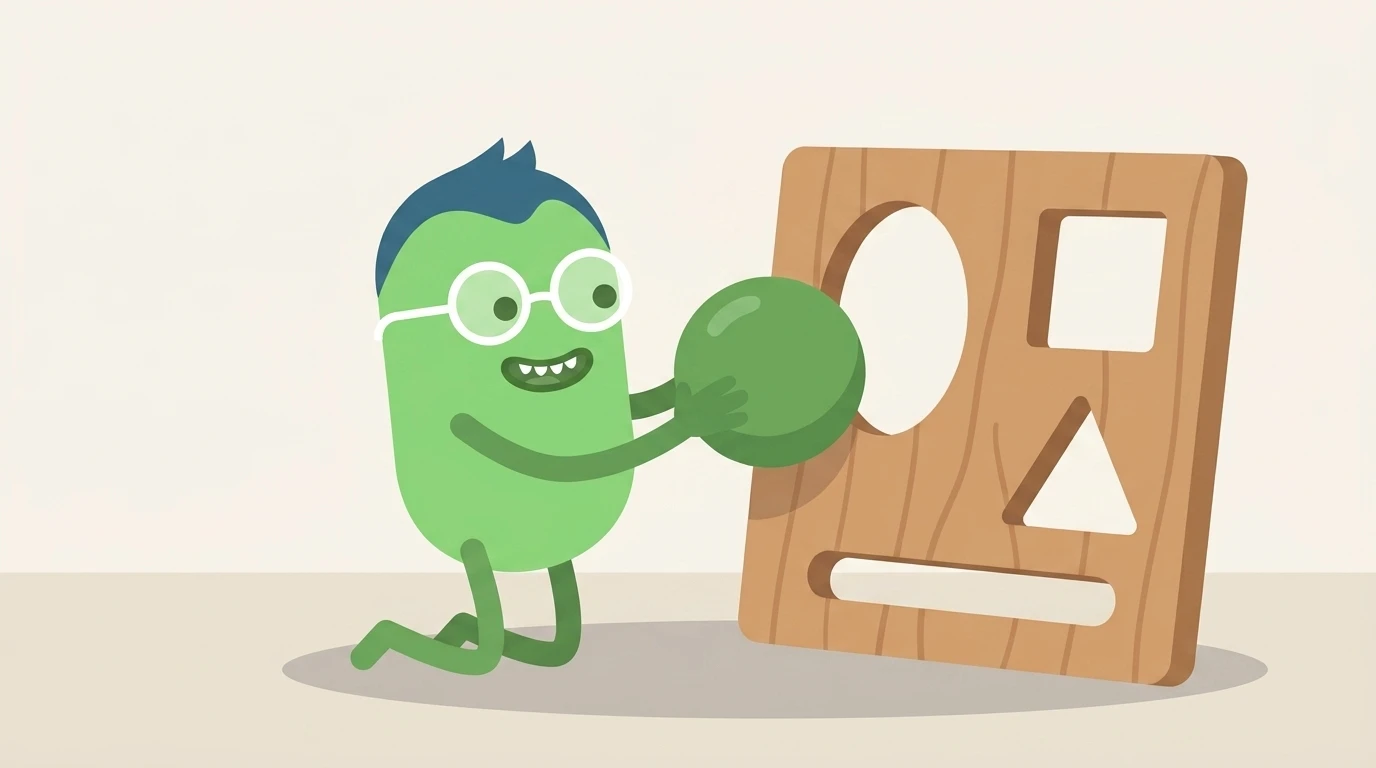
Illustration for the article: ADHD Accommodations: The Complete Guide

What are ADHD accommodations?

ADHD accommodations are changes to how a task is structured, timed, or delivered so that the work reflects what you know rather than how well you self-regulate. They do not lower the standard. Extended time on an exam still tests the same material. A written follow-up to a verbal instruction still requires you to carry out the instruction. What changes is the demand running underneath the task, the part that has nothing to do with the skill being measured.

An accommodation works when it targets the specific mechanism causing the difficulty, and does nothing when it targets the wrong one. This is why so many well-intentioned supports fail: a quiet room, a pep talk, a reminder to "try harder" all assume the problem is effort or attention, when the actual difficulty is usually something more specific and more fixable.

Start with the mechanism, not the symptom

Most accommodation requests fail because they name a symptom. "I get distracted" describes what you notice. It does not tell anyone which support would help, and it invites the response that everyone gets distracted. A symptom is a surface description. It leaves the listener to guess at the cause, and the guess is usually wrong.

Working from the mechanism instead gives you something specific to ask for. Barkley's account of ADHD centres on executive functioning and self-regulation rather than attention as such: the capacity to hold a goal in mind and organise behaviour toward it across time. A systematic review of executive function and neural oscillations in adults with ADHD found this pattern holds in adulthood, not just childhood, so the framework applies whether you're asking a teacher or a manager.

That reframing matters practically. If the underlying difficulty is holding a multi-step instruction in mind long enough to act on it, a quiet room does nothing. The same instruction written down solves it outright, because the problem was never noise. It was retention.

The shift from symptom to mechanism also changes how you talk about your own difficulty. Instead of "I'm bad at staying organized," you can say "instructions given verbally don't stay retrievable for me, so I need them in writing." One is a character judgment. The other is a description of a specific, addressable gap, and it is much harder to argue with.

Four mechanisms account for most of what people actually need.

Mechanism 1: Holding information while using it

You read the paragraph and reach the end having lost the beginning. This is executive dysfunction rather than inattention. Someone gives you three steps and you retain the first and last. The information went in and did not stay available long enough to be used. This is called working memory, and it is a separate system from long-term memory: you can know something perfectly well once it's written down, and still lose it completely between the moment someone says it and the moment you need to act on it.

That gap is why "just pay closer attention" doesn't work as advice. Attention was not the failure. The information was never going to stay retrievable no matter how closely you listened, which is why the fix is not more focus but a different storage location: paper, a screen, anywhere outside your own head.

What to ask for: instructions in writing as well as verbally. A copy of slides or notes before class. Permission to record lectures or meetings. A checklist that lives outside your head for any multi-step procedure. Breaking a large assignment into separately submitted parts, so the structure exists on paper rather than in memory. For a job with recurring procedures, a written standard operating procedure you can check against instead of relying on recall.

Related Challenges & Plans

Lifeplan

10-Day ADHD Habit Reset Plan: Stop the Cycle of Schedule Rebellion

Bypass executive function resistance and stop 'schedule rebellion' with a 10-day plan built specifically for the ADHD brain.

G
GetMotivated.ai
10 min3×/week10dL1
Lifeplan

Master Your Focus: The 14-Day ADHD-Friendly Pomodoro Plan

Stop the procrastination cycle and reclaim your productivity with a 14-day habit plan designed for the ADHD brain.

GetMotivated.ai
Created by GetMotivated.ai
10 min3×/week14dL2
Lifeplan

14-Day RSD Toolkit: Stop the Emotional Spiral Plan

Master your response to perceived rejection and reclaim your confidence with this science-backed 14-day emotional regulation plan.

GetMotivated.ai
Created by GetMotivated.ai
10 min3×/week14dL2
Lifechallenge

ADHD Sleep Reset

Reset your circadian rhythm in 30 days with a neurobiologically optimized screen shutdown protocol designed for ADHD brains.

GetMotivatedBuddies
Created by GetMotivatedBuddies
10 min3×/week30dL1

Mechanism 2: Time not registering

Time blindness is not poor planning. A review of time perception in ADHD found measurable differences in how intervals are judged, which means the internal sense of how long something takes is reporting inaccurate information. You are planning correctly against a faulty instrument.

This produces two failures that look opposite and share a cause: starting far too late, and spending four hours on something that warranted forty minutes. Both come from the same broken feedback loop. Without an accurate internal clock, "I'll start in a bit" and "this will only take a minute" are both guesses, and the guesses are wrong in whichever direction costs you more that day.

What to ask for: deadline reminders at intervals rather than a single due date. Checkpoints on long assignments, so the work is broken into pieces with their own visible timing. Extended time on timed tasks. Written confirmation of deadlines discussed in conversation, since a spoken date has nowhere reliable to live. A study of time-related and productivity challenges among young people with ADHD and learning disabilities found that externalising time, making it visible outside your own estimate, was central to the strategies that worked. That is the same principle behind these time-blindness strategies: a visible timer, a countdown, a calendar block you can see rather than a mental estimate you have to trust.

Mechanism 3: Starting

The task is understood, its importance is clear, and you do not begin. This is task paralysis, not a motivation problem, and treating it as one produces advice that does not help. "Just start" assumes the block is willingness. It usually isn't. The block is that the first move is undefined, or the task feels too large to enter anywhere, and no amount of wanting to begin resolves that on its own.

What to ask for: a first step small enough to be unambiguous, something you could do in under two minutes with no decision attached to it. A scheduled start time rather than only a due date, since a start time creates an external trigger a due date doesn't. Body doubling, working alongside someone in person or on a call, changes the starting conditions rather than requiring more willpower. A structured version of this runs in the Learn Daily Check-in, where a set time and a group provide the starting conditions every day rather than requiring you to invent them yourself. For work, a short check-in at the start of a task rather than only at the end gives you a moment where someone else is expecting you to have begun.

Mechanism 4: Emotional intensity

Shaw and colleagues examined emotion dysregulation in ADHD and found it a core feature of the condition rather than a separate problem occurring alongside it. Feedback lands harder. Frustration arrives faster and takes longer to clear. A single critical comment can end a working session, not because the person is fragile, but because the emotional response is genuinely larger and slower to settle than it is for someone without ADHD.

This has consequences for how criticism should be delivered, not just how it's received. A comment tossed off casually in a hallway can derail an afternoon in a way the speaker never intended, simply because there was no time to prepare for it.

What to ask for: written feedback rather than only verbal, so you can read it once, react, and return to it once the initial spike has passed. A short break before responding to difficult feedback, rather than being expected to answer in the moment. Feedback framed around the specific work rather than general performance, which is easier to act on and harder to internalize as a verdict on you. Advance notice of evaluation, so the moment doesn't arrive unannounced.

Matching the accommodation to the mechanism

If an accommodation is not helping, the usual reason is a mismatch. Extended time does nothing for a task you never started. A quiet room does nothing when the difficulty is holding three steps in mind. Before dropping a support that "didn't work," check it against the table: it may simply have been aimed at the wrong mechanism, in which case the fix is a different request, not giving up on accommodations altogether.

How to ask

Name the mechanism, name the support, and connect the two.

"Multi-step verbal instructions do not stay available to me long enough to act on them. Could you send the steps in writing as well? I will work from those."

This is short, specific, and asks for something concrete. It avoids arguing about whether the difficulty is real and moves directly to what will change. Keep the request to two or three sentences: a longer explanation invites the listener to focus on justifying the diagnosis rather than agreeing to the fix.

For school, the two formal routes are a 504 plan and an IEP, and they work differently. A 504 plan adjusts access to the same curriculum, while an IEP provides specialised instruction and comes with measurable goals the school must track. At work in the US, the ADA is the relevant framework, and accommodations are agreed through a conversation with your employer rather than through a diagnosis alone. Each route has its own process, timeline, and evidence requirements, which the dedicated guides below walk through.

Where to start

For the day-to-day mechanics of coursework, these ADHD study habits pair with the accommodations above.

Pick the single difficulty costing you most this month. Identify which of the four mechanisms it belongs to. Ask for one accommodation that targets that mechanism, in writing, this week.

One well-matched support changes more than a long list of poorly matched ones, and it gives you clear evidence of what works when you ask for the next.

Sources

The Important Role of Executive Functioning and Self-Regulation in ADHDArticle
russellbarkley.org · Russell A. Barkley, Ph.D.
ADHD is characterized by deficits in self-regulation and executive functioning, which are closely related. Effective management involves externalizing internal information and motivation, providing immediate rewards, and using medication to address underlying neurological issues, as traditional appr
Clinical Implications of the Perception of Time in Attention Deficit Hyperactivity Disorder (ADHD): A ReviewResearch
Ptacek
This paper explores the relationship between ADHD and time perception impairments, emphasizing the clinical need to address temporal processing deficits in diagnosis and treatment.
Strategies for Coping with Time-Related and Productivity Challenges of Young People with Learning Disabilities and Attention-Deficit/Hyperactivity DisorderResearch
Consuelo M Kreider et al.
This qualitative study examines how college students with learning disabilities and ADHD manage time and productivity challenges. It identifies a multidimensional mix of cognitive, behavioral, and environmental strategies, such as habit formation and reframing, used to navigate academic and daily life demands.
Executive function and neural oscillations in adults with attention-deficit/hyperactivity disorder: a systematic reviewResearch
Zihan Su et al.
A 68-study systematic review finding consistent EEG/ERP alterations in adult ADHD during response-inhibition and sustained-attention tasks, evidence of measurable executive-function disruption.

Topics

adhdaccommodationsschoolworkexecutive functionself-advocacy

AI-ready summary

Accommodations work when they target the mechanism causing the problem. Here is how to tell which one you are dealing with, and what to ask for.

Related Challenges & Plans

Lifeplan

10-Day ADHD Habit Reset Plan: Stop the Cycle of Schedule Rebellion

Bypass executive function resistance and stop 'schedule rebellion' with a 10-day plan built specifically for the ADHD brain.

G
GetMotivated.ai
10 min3×/week10dL1
Lifeplan

Master Your Focus: The 14-Day ADHD-Friendly Pomodoro Plan

Stop the procrastination cycle and reclaim your productivity with a 14-day habit plan designed for the ADHD brain.

GetMotivated.ai
Created by GetMotivated.ai
10 min3×/week14dL2
Lifeplan

14-Day RSD Toolkit: Stop the Emotional Spiral Plan

Master your response to perceived rejection and reclaim your confidence with this science-backed 14-day emotional regulation plan.

GetMotivated.ai
Created by GetMotivated.ai
10 min3×/week14dL2
Lifechallenge

ADHD Sleep Reset

Reset your circadian rhythm in 30 days with a neurobiologically optimized screen shutdown protocol designed for ADHD brains.

GetMotivatedBuddies
Created by GetMotivatedBuddies
10 min3×/week30dL1

Keep reading

Illustration for the article: ADHD Motivation: Why Interest Moves You When Willpower Doesn't
August 9, 20269 min readADHD & Neurodivergence

ADHD Motivation: Why Interest Moves You When Willpower Doesn't

ADHD motivation runs on interest, autonomy, and connection more than on deadlines or willpower. Here's what the dopamine and self-determination theory research actually shows — and how to use it instead of fighting it.

adhddopaminemotivationself-determination theory
The GetMotivated.ai TeamRead →
Illustration for the article: ADHD Hyperfocus: Why It Happens and How to Work With It
August 8, 20269 min readADHD & Neurodivergence

ADHD Hyperfocus: Why It Happens and How to Work With It

ADHD hyperfocus is a real, measurable attentional state — not the same as flow — where the brain locks onto an interesting task and everything else disappears. Here's what the research shows and how to use it without losing your day.

adhddopamineexecutive dysfunctionhyperfocus
The GetMotivated.ai TeamRead →
Illustration for the article: Virtual Body Doubling: What It Is and How to Do It Online
August 3, 20269 min readADHD & Neurodivergence

Virtual Body Doubling: What It Is and How to Do It Online

Virtual body doubling means working alongside another person over video or in a live co-working room instead of in the same room. Here's how it differs from in-person, the formats worth trying, and how to make it actually work.

body doublingadhdaccountabilityCoworking
The GetMotivated.ai TeamRead →
GetMotivated.ai

Behavioral health. Built with intention.

Structured support for ADHD, chronic health, recovery, focus, and long-term change.

Stay in the loop

Research, program launches, and behavioral health insights. Only useful updates.

By joining, you agree to receive emails from GetMotivated.ai. Unsubscribe anytime. See our Privacy Policy.

Explore

  • Browse Plans & Challenges
  • ADHD Support
  • Health Support
  • Recovery Support
  • Blog
  • Creators
  • Sources
  • Tools
  • How It Works
  • Pricing

Company

  • About
  • Contact
  • How We Research
  • Our Guarantee
  • Privacy
  • Terms

Work With Us

  • For Organizations
  • For Behavioral Health
  • For Education
  • Careers
  • Affiliates
  • Partners
  • Sponsors
Explore+
  • Browse Plans & Challenges
  • ADHD Support
  • Health Support
  • Recovery Support
  • Blog
  • Creators
  • Sources
  • Tools
  • How It Works
  • Pricing
Company+
  • About
  • Contact
  • How We Research
  • Our Guarantee
  • Privacy
  • Terms
Work With Us+
  • For Organizations
  • For Behavioral Health
  • For Education
  • Careers
  • Affiliates
  • Partners
  • Sponsors

© 2026 GetMotivated.ai. All rights reserved.

PrivacyTerms

Calm structure. Clear next steps. Human accountability.