November 6, 20268 min readStudents and studying

How to Stay Awake in Class When You Are Running on Empty

Fighting sleep in lecture? Here is what studies of students show about sleep length, naps and morning light, and when to see a clinician.

Rachel Stein

Last reviewed: October 2026

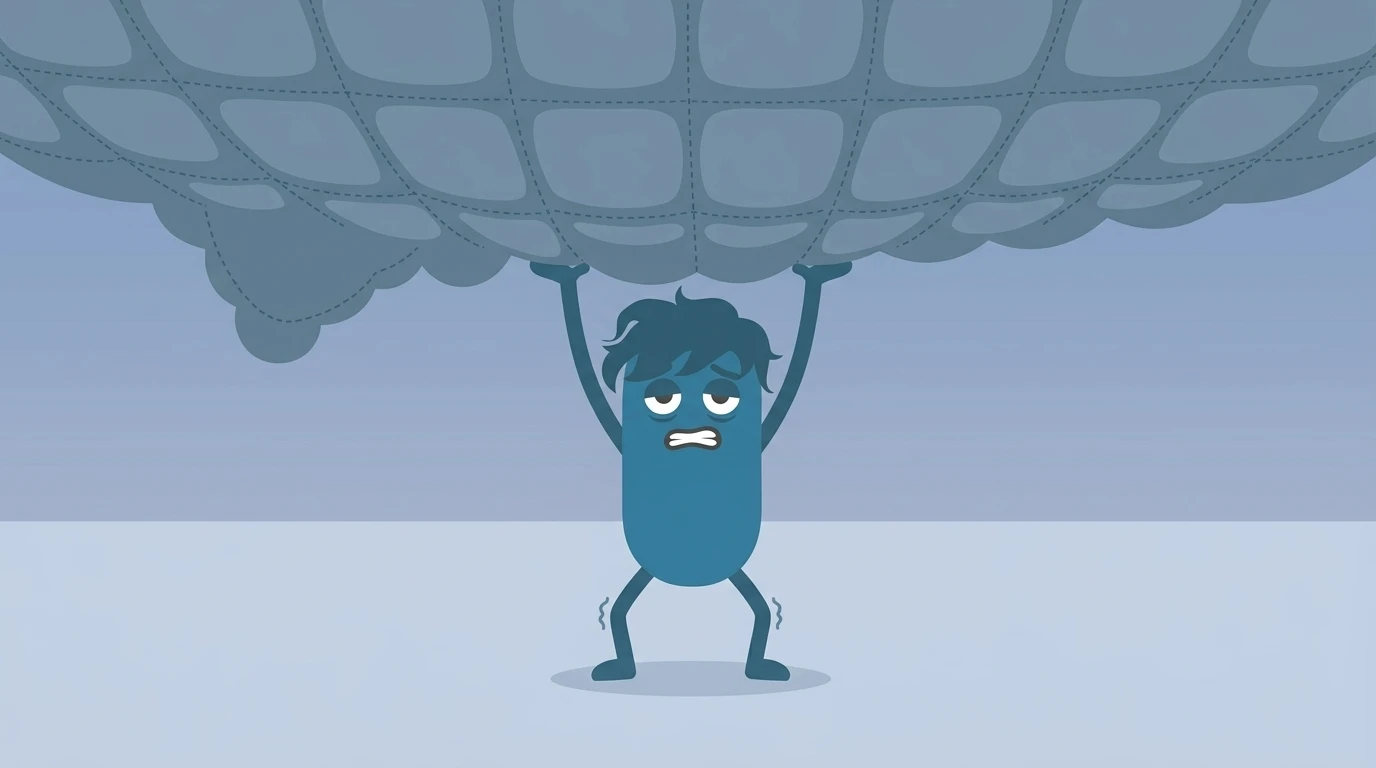
A blue buddy with drooping half-closed eyes and a strained grimace stands with knees trembling, pushing both arms up against a huge stitched quilt sagging down from the sky like a heavy ceiling.

To stay awake in class, protect your sleep first: a later school start went with more sleep and lower sleepiness in one small study. In that non-randomized study of 51 14-year-olds, the class that gained about 34 minutes of sleep over the year reported less sleepiness at the end. For today, naps and morning light have limited support.

No study here promises a thirty-second fix. Most of the research below is small, done on adults in labs, or based on surveys, and we say so each time. Where it has nothing to say, as with caffeine, we leave the gap open.

How much sleep do teenagers and college students actually need?

Adolescents need about 8.5 to 9.25 hours a night, according to a National Sleep Foundation figure cited in a 2016 review of delayed sleep phase disorder in Nature and Science of Sleep. The same review reports that average sleep is only 7 hours 42 minutes at age 13 and 7 hours 4 minutes at age 19. That review pools no data, so treat the numbers as a reference range.

For adults, including college students, Binjabr and colleagues in Current Sleep Medicine Reports (2023) use a 7 to 9 hour guideline. Their medical students averaged only 6.5 hours a night.

Check your own number. Count the hours between lights-out and your alarm for the past week. If you are a teenager and the answer is 8, you sit below your range.

How many students are excessively sleepy during the day?

Binjabr and colleagues pooled 109 studies of 59,427 medical students. Across the 28 studies that measured sleepiness (10,122 students), 33.32% reported excessive sleepiness during the day. Poor sleep quality was more common still, at 55.64% across 95 studies. The authors note that the studies differed widely.

In 2025, Hou and colleagues surveyed 1,658 nursing students at 8 schools in 5 regions of China. They found that 18.03% (299 students) had excessive daytime sleepiness. Internet addiction had the strongest link (odds ratio 4.401, 95% CI 3.166 to 6.117), followed by psychosomatic illness (2.970), clinical practice (1.991) and drinking (1.603). A cross-sectional survey cannot show cause, and the answers were self-reported.

Neither group covers every student, but you are in large company.

Why do I get so sleepy in class even after sleeping 8 hours?

Eight hours can still be short, and an early alarm can cut into it. If you are a teenager, 8 hours sits below the 8.5 to 9.25 range above. Falling asleep late, around 11 p.m. in that review, leaves little room before school.

Alfonsi, De Gennaro and colleagues (2020) tracked 51 high-school students whose classes started at 8:00 or 9:00 a.m. Both groups turned their lights off at similar times (about 11:11 and 11:21 p.m.), but the 8:00 class woke at 6:55 a.m. and the 9:00 class at 7:23 a.m. The early start went with less sleep. Students chose their own class, so the groups may have differed beforehand.

In the nursing survey, clinical practice and internet addiction were also tied to sleepiness. If late nights on a screen are your pattern, our guides on why you cannot go to bed with ADHD and revenge bedtime procrastination cover the pull to stay up.

Related Challenges & Plans

Do later school start times help students stay awake?

In the Alfonsi study, a one-hour later start went with about 34 more minutes of sleep (34.1 ± 11.9 minutes) over the school year. The 8:00 class slept about the same as before. By the end of the year, the 9:00 class reported lower daytime sleepiness (p = 0.03), and the authors associate the later start with better sustained attention and attendance. The design was non-randomized, the sample small, and the early class scored higher on the entrance test.

A 2024 systematic review in Sleep Advances by Gaskin and colleagues looked at 21 randomized trials (22 papers, 10,867 children and adolescents in 13 countries). It found that sleep education lessons were typically ineffective. The interventions were short, a median of 4 weeks. Only one study tested later start times, which promoted longer sleep over 1 week and was rated high risk of bias.

If you pick your own sections in college, the Alfonsi result is a reason to weigh class times when you register, with the caution that those students were 14.

Lessons usually did not change sleep in the review, so our suggestion is to work on what you repeat each night. A buddy on GetMotivated.ai can be the person you text when lights are out, and a challenge with a daily check-in turns "sleep more" into one small thing you report on.

Is a nap before or between classes a good idea, and how long should it be?

A nap can help alertness, and earlier in the afternoon looks better. Dutheil and colleagues (2021) ran a systematic review and meta-analysis in the International Journal of Environmental Research and Public Health. It covered 11 studies of 381 working-aged adults, nearly all in laboratories. Cognitive performance improved after a nap (effect size 0.18, 95% CI 0.09 to 0.27), most of all alertness (0.29, 0.10 to 0.48). Naps before 1 p.m. looked better (0.24), though that estimate was imprecise (95% CI -0.07 to 0.34).

The limits are large. These were adults, not students, and the average nap lasted 55.4 minutes, far more than most people can fit between lectures. Results during the foggy stretch right after waking, called sleep inertia, were conflicting. The control group relaxed instead of working, which the authors say could understate the effect.

If you try a nap, treat it as a test. Pick a day without an exam, set an alarm, leave a buffer before class, and note how you feel on waking.

Does bright light or sitting by a window help you stay alert?

Two small adolescent studies tested morning light, and neither tested a window.

Teicher and colleagues (2023, PLOS ONE) gave 26 sleepy adolescents aged 13 to 18 a 30-minute bright light device each morning for 3 to 4 weeks. They also wore blue-light-blocking glasses for 2 hours before bed. It was an open, non-randomized trial with no placebo or sham light, so the glasses and light cannot be separated. Participants used the device 57% of the recommended time. More use went with a 22% drop in response-time variability on an attention test and was linked to 19.2% of the variance in change in math scores. Sleep onset and duration did not change.

A 2025 experiment in Frontiers in Behavioral Neuroscience put 47 adolescents aged 15 to 21 through a single 30-minute morning bright-light session (24 well-rested, 23 sleep-deprived). Negative mood and a forward digit span task improved after the light, but subjective sleepiness did not change. The authors say the lack of a control light limits what the result proves.

Morning light has early signals and no proof, and it is no quick fix for the next ten minutes. A seat near a window costs nothing to try as your own experiment.

Does caffeine actually help you stay awake in class, and when should you stop?

We cannot answer that from the research behind this post. None of the eight studies tested caffeine, coffee or energy drinks as a way to stay awake, so we give no dose, no cutoff hour and no verdict on energy drinks.

If you already use caffeine, read the label for the amount per serving, and ask a pharmacist or clinician what suits you, particularly if you take any medication. Then log the time of your last caffeinated drink next to how you slept that night.

When is constant daytime sleepiness a sign of a sleep disorder?

These studies cannot say when sleepiness crosses from ordinary to a disorder. The 2016 review of delayed sleep phase disorder (DSPD) says adolescent prevalence estimates exceed 7%. DSPD means sleep comes much later than the bedtimes school and work expect, and it is diagnosed when symptoms cause distress or impairment and persist for at least 3 months.

The review also cites a study of 22 adolescents with DSPD in which 59% showed poor scholastic performance and 45% had behavioral problems. That is a very small sample, so read it as a warning sign, not a rate.

None of the eight studies examined narcolepsy or sleep apnea as a cause, so we describe no signs for them. The 3 months is a diagnostic criterion, not a waiting period, and a doctor or your campus health service is the place to raise sleepiness that is not improving. Our guide to delayed sleep phase explains the pattern.

What can I do in a lecture to stay awake without being obvious?

None of the moves below was tested in the studies above, so treat them as experiments and keep the ones that work for you.

Sit where the light is. A seat near a window is a cheap way to try the idea behind the light studies, though none of them tested one.

Move quietly. Sit upright, press your feet flat, and shift position every few minutes.

Stay busy with the content. Write one sentence at the end of each section, or a question to ask. Our guides on how to study with ADHD and what to do when you cannot focus while studying go deeper on staying with the material once you are awake.

Keep score. After each class, rate your sleepiness from 1 to 5 and note the hours you slept the night before. After a week, you have your own data to compare with the studies and to show a clinician if the pattern holds.

For the next ten minutes, count back from your alarm by the hours in your range (7 to 9 for adults, 8.5 to 9.25 for teenagers), then set a lights-out alarm on your phone for tonight.

Next time you search, our newest guide shows up.

Sources

The Association Between School Start Time and Sleep Duration, Sustained Attention, and Academic PerformanceResearch
Alfonsi V et al.
PurposeIn adolescence, physiological (circadian and homeostatic regulation of sleep) and social habits contribute to delayed sleep onset, while social obligations impose early sleep offset. The effects of delayed school start time on the subjective/objective measures of sleep-wake patterns and academic achievement have not been established.MethodsThis pre-, post-, and longitudinal non-randomized study included an early (8:00 am; ESC=30 students) and the late (9:00 am; LSC=21 students) start class. Multiple sleep data included a weekly sleep diary, Karolinska Sleepiness Scale, Pittsburgh Sleep Quality Index, and Epworth Sleepiness Scale. Sustained attention was measured using the Psychomotor Vigilance Task. Academic performance was evaluated by two different mathematical and scientific standard tests (entrance and final) and by school attendance indicators. Data were collected at monthly
Effects of a Short Daytime Nap on the Cognitive Performance: A Systematic Review and Meta-AnalysisResearch
Dutheil F et al.
BackgroundNapping in the workplace is under debate, with interesting results on work efficiency and well-being of workers. In this systematic review and meta-analysis, we aimed to assess the benefits of a short daytime nap on cognitive performance.MethodsPubMed, Cochrane Library, ScienceDirect and PsycInfo databases were searched until 19 August 2021. Cognitive performance in working-aged adults, both before and following a daytime nap or under control conditions (no nap), was analysed by time and by type of cognitive function (alertness, executive function and memory).ResultsWe included 11 studies (all in laboratory conditions including one with a subgroup in working conditions) for a total of 381 participants. Mean duration of nap was 55.4 ± 29.4 min. Overall cognitive performance did not differ at baseline (t0) between groups (effect size -0.03, 95% CI -0.14 to 0.07), and improved in
Sleep behavioral outcomes of school-based interventions for promoting sleep health in children and adolescents aged 5 to 18 years: a systematic reviewResearch
Gaskin CJ et al.
Study objectivesInsufficient sleep is common among children and adolescents, and can contribute to poor health. School-based interventions potentially could improve sleep behavior due to their broad reach, but their effectiveness is unclear. This systematic review focused on the effects of school-based interventions on sleep behavior among children and adolescents aged 5 to 18 years.MethodsFive electronic databases were searched for randomized controlled trials of sleep health interventions initiated or conducted in school settings and in which behavioral sleep outcomes were measured. Cochrane risk of bias tools were used to assess study quality.ResultsFrom the 5303 database records and two papers from other sources, 21 studies (22 papers) met the inclusion criteria for this review. These studies involved 10 867 children and adolescents at baseline from 13 countries. Most studies (n = 15
Excessive daytime sleepiness and associated factors among nursing students in China: a large-scale, multicenter, cross-sectional studyResearch
Hou L et al.
This study aimed to investigate the prevalence of daytime sleepiness and to identify its influencing factors among nursing students. A total of 1658 nursing students from 8 schools in 5 regions of China were selected. SPSS26.0 software was used for univariate and binary Logistic analysis to identify the influencing factors of sleepiness between nursing days. 299 (18.03%) Nursing students had daytime sleepiness and Internet addiction (OR = 4.401, 95% CI 3.166 to 6.117), Drinking (OR = 1.603, 95% CI 1.093 to 2.350), Clinical practice (OR = 1.991, 95% CI 1.521 to 2.607), and Psychosomatic illness (OR = 2.970, 95% CI 1.360 to 6.486) had statistical significance (all P < 0.05). The incidence of excessive daytime sleepiness is relatively high. Internet addiction, Drinking, Clinical practice, and Psychosomatic illness are the factors that affect excessive daytime sleepiness. Therefore, early id
The Worldwide Prevalence of Sleep Problems Among Medical Students by Problem, Country, and COVID-19 Status: a Systematic Review, Meta-analysis, and Meta-regression of 109 Studies Involving 59427 ParticipantsResearch
Binjabr MA et al.
AbstractPurpose of reviewSeveral studies have found that medical students have a significant prevalence of sleep issues, such as poor sleep quality, excessive daytime sleepiness, and inadequate sleep duration. The purpose of this review is to carefully evaluate the current research on sleep problems among medical students and, as a result, estimate the prevalence of these disturbances. The EMBASE, PsychINFO, PubMed/MEDLINE, ScienceDirect, Scopus, and Web of Science and retrieved article reference lists were rigorously searched and rated for quality. Random effects meta-analysis was performed to compute estimates.Recent findingsThe current meta-analysis revealed an alarming estimated pooled prevalence of poor sleep quality (K = 95, N = 54894) of 55.64% [95%CI 51.45%; 59.74%]. A total of 33.32% [95%CI 26.52%; 40.91%] of the students (K = 28, N = 10122) experienced excessive sleepiness duri
Bright light therapy and early morning attention, mathematical performance, electroencephalography and brain connectivity in adolescents with morning sleepinessResearch
Teicher MH et al.
Adolescents typically sleep too little and feel drowsy during morning classes. We assessed whether morning use of an LED bright light device could increase alertness in school students. Twenty-six (8M/18F) healthy, unmedicated participants, ages 13-18 years, (mean 17.1±1.4) were recruited following screenings to exclude psychopathology. Baseline assessments were made of actigraph-assessed sleep, attention, math solving ability, electroencephalography and structural and functional MRI (N = 10-11, pre-post). Participants nonrandomly received 3-4 weeks of bright light therapy (BLT) for 30 minutes each morning and used blue light blocking glasses for 2 hours before bedtime. BLT devices were modified to surreptitiously record degree of use so that the hypothesis tested was whether there was a significant relationship between degree of use and outcome. They were used 57±18% (range 23%-90%) of
Bright light exposure reduces negative affect and modulates EEG activity in sleep-deprived and well-rested adolescentsResearch
Kopřivová J et al.
IntroductionThis study investigated whether a single morning session of bright light exposure modulates alertness, cognition, mood, and EEG activity in well-rested and partially sleep-deprived adolescents.MethodsForty-seven subjects (15-21 years) were assigned to a well-rested (8 h sleep; 9 men, 15 women) or a sleep-deprived group (4 h sleep; 11 men, 12 women). All underwent 30 min of morning bright light exposure, with EEG, cognitive testing, and ratings of sleepiness and affect conducted pre- and post-intervention. Behavioral and electrophysiological changes were compared within and between groups. Associations between changes in EEG activity and behavioral outcomes were explored using correlation analyses.ResultsBright light significantly reduced negative affect and improved Digit Span Forward task performance. No changes were observed in positive affect, subjective sleepiness, or Dig
Delayed sleep phase disorder: clinical perspective with a focus on light therapyResearch
Figueiro MG
Delayed sleep phase disorder (DSPD) is common among adolescents and further increases their susceptibility to chronic sleep restriction and associated detrimental outcomes, including increased risk of depression, drug and alcohol use, behavioral problems, and poor scholastic performance. DSPD is characterized by sleep onset that occurs significantly later than desired bedtimes and societal norms. Individuals with DSPD exhibit long sleep latencies when attempting to sleep at conventional bedtimes. Circadian sleep disorders such as DSPD can occur when there is misalignment between sleep timing and societal norms. This review discusses studies using light therapy to advance the timing of sleep in adolescents and college students, in particular on those suffering from DSPD. A discussion on how to increase effectiveness of light therapy in the field will also be provided.

Topics

AI-ready summary

In one small non-randomized study of 51 14-year-olds, a one-hour later start went with about 34 more minutes of sleep and lower sleepiness. Early-afternoon naps and morning light have limited evidence. The research reviewed here has no data on caffeine.

Key takeaways

  • About one in three medical students (33.32% across 28 studies) report excessive daytime sleepiness, and the average sleep in that review was 6.5 hours.
  • Adolescents need about 8.5 to 9.25 hours a night according to a clinical review, so 8 hours can still fall short.
  • A meta-analysis of mostly laboratory naps in adults found better alertness. Early naps looked better, but that estimate was imprecise (95% CI -0.07 to 0.34), and the average nap was 55 minutes.
  • Both bright-light studies of adolescents were small, and the single-session study found no change in subjective sleepiness.
  • Sleepiness that persists despite enough time in bed is worth taking to a clinician, since delayed sleep phase disorder is diagnosed when symptoms persist for at least 3 months.

FAQs

How can I stay awake in class when I am exhausted?

The clearest lead is more sleep: in a non-randomized study of 51 14-year-olds, the class that gained about 34 minutes of sleep over the year reported lower daytime sleepiness. Naps and morning light have limited support, from adults in labs and small adolescent studies.

Why do I get so sleepy in class even after sleeping 8 hours?

A clinical review cites a National Sleep Foundation figure of about 8.5 to 9.25 hours a night for adolescents, so 8 hours can fall short. If you are sleepy for weeks despite enough time in bed, a body clock that runs late is one cause a clinician can check.

Is a nap before or between classes a good idea, and how long should it be?

A 2021 meta-analysis of 11 mostly laboratory studies (381 working-aged adults) found better alertness after a nap, and early naps looked better, though that estimate was imprecise (95% CI -0.07 to 0.34). The average nap was 55 minutes, so it cannot tell students the best length, and results right after waking were mixed.

Does caffeine actually help you stay awake in class, and when should you stop?

None of the eight studies tested caffeine as a way to stay awake, so we give no dose, cutoff time or verdict. A pharmacist or clinician can advise on what suits you.

How many students are excessively sleepy during the day?

A meta-analysis of 28 studies (10,122 medical students) pooled 33.32% with excessive daytime sleepiness. A survey of 1,658 nursing students in China found 18.03%. Both are student samples, not the general population.

Do later school start times help students stay awake?

In a non-randomized study of 51 high-school students, the 9:00 a.m. class reported lower daytime sleepiness than the 8:00 a.m. class by year end. A review of 21 randomized trials found only one study of later start times, rated high risk of bias, with longer sleep over one week.

Related Challenges & Plans

Keep reading