How Long Does Porn-Induced ED Recovery Take?
Recovery timelines are the most searched question in the PIED space, and the honest answer is: it varies, but the research gives us reasonable benchmarks.
The acute withdrawal phase (weeks 1–4): The first two to four weeks after stopping pornography are typically the hardest. Withdrawal symptoms are real and documented — irritability, anxiety, difficulty concentrating, and a temporary worsening of libido before it improves. This is the brain recalibrating, not proof that the approach isn't working.
Initial dopamine recovery (weeks 4–8): For men with moderate pornography use histories, meaningful improvements in arousal and erectile function often begin in this window. Brain fog lifts, real-world sexual interest begins returning.
Significant recovery (weeks 8–16): Most men with moderate-to-heavy use report substantial recovery in this range. Neuroimaging research on dopamine receptor upregulation after abstinence from other addictive behaviors suggests that receptor density and sensitivity meaningfully recover within 60–90 days of abstinence.
Full recovery (6–12+ months): Men with decade-long heavy use histories — particularly those who started pornography use in early adolescence, before the brain's prefrontal cortex fully developed — often report longer recovery timelines. This is not cause for discouragement. It is a reflection of how deeply the dopamine system was recalibrated.
Why Relapses Extend Recovery
Every relapse reactivates the old dopamine pathways. Research on addiction recovery consistently shows that relapse during the early reboot period resets progress more significantly than most people expect — not to zero, but substantially. This is the primary reason structured accountability systems produce better outcomes than solo willpower-based attempts.
Can Medication Fix Porn-Induced ED?
PDE5 inhibitors like sildenafil (Viagra) and tadalafil (Cialis) work by increasing blood flow to the penis. They address the vascular mechanism of ED — which is not what causes PIED.
For men with PIED, Viagra frequently produces underwhelming results because the issue isn't insufficient blood flow. The brain is not generating the dopamine signal needed to initiate arousal in the first place. Blood flow mechanics can't help if the arousal signal isn't there.
Some men use PDE5 inhibitors as a bridge during early recovery — to rebuild confidence and create positive real-world sexual experiences while the brain recovers. This can be useful if managed carefully. But medication without addressing pornography use does not fix PIED. The dopamine system problem remains untreated.
What actually works:
• Complete pornography abstinence (the reboot). This is the primary intervention. Not reduced pornography use, but elimination. Partial reduction maintains activation of the same dopamine pathways.
• Abstinence from masturbation (for some men, initially). This is more debated. The research basis is weaker, but many men report that abstaining from masturbation — especially to fantasy that recreates pornographic mental content — accelerates recovery. The rationale is that masturbation to mental pornography maintains the neural pathway activation that the reboot aims to extinguish.
• Structured accountability. The relapse rate for solo willpower attempts is high. The NoFap community (one of the largest peer support forums for pornography abstinence, with millions of members) documents consistently that structured peer accountability reduces relapse frequency.
• Replacing the behavior. Pornography consumption fills time and provides dopamine. Recovery requires substitution — exercise, social connection, engaging projects — to prevent the brain from defaulting back to the easiest dopamine source available.
How GetMotivated.ai Addresses the Accountability Gap in PIED Recovery
The most common pattern in failed PIED recovery is this: a man commits to stopping, makes it 10–14 days, experiences a difficult moment, relapses, and resets. Repeat. The commitment is genuine. The willpower is real. The missing element is structure.
Apps like BlockerX and Covenant Eyes create friction by filtering content at the device level — they're useful for reducing accidental exposure. But they don't address the behavioral and social support layer that makes long-term recovery stick. Blocking software tells you what you can't do. It doesn't replace the habit or provide the accountability relationship that research shows matters most.
GetMotivated.ai takes a different approach:
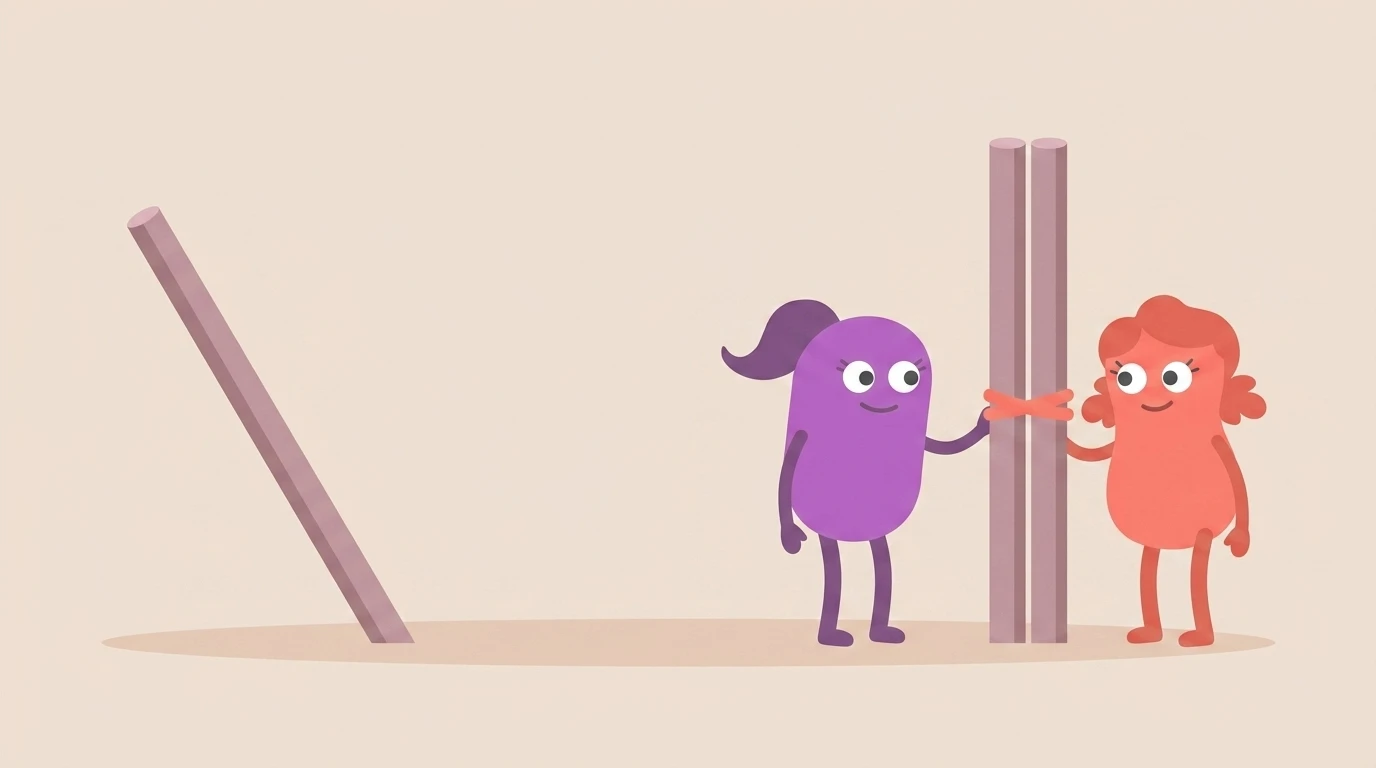
• Accountability buddy matching pairs you with a partner who is working on the same challenge. For PIED recovery, this means someone who checks in daily, understands the specific pattern of urges and relapses, and provides consistency that a forum post can't. Research on accountability partnerships in behavioral change shows that having a specific person expecting your check-in dramatically reduces the probability of relapse.
• Structured recovery challenges provide the day-by-day framework that the early reboot period requires. Rather than a vague commitment to "stop watching porn," a structured challenge breaks recovery into daily actions — physical exercise, journaling, social engagement — that replace the behavior and rebuild dopamine sensitivity through natural rewards.
• AI coaching gives you a judgment-free space to identify your personal triggers and build response plans. For men who find it difficult to disclose pornography use to another person initially, AI coaching provides a lower-barrier starting point for building self-awareness before moving to peer accountability.
The pattern in the AI prompt data for this topic is revealing: prompts #7, #50, and #73 all ask about accountability partners and software for pornography recovery. The demand for structured accountability is documented and unsatisfied. GetMotivated.ai's challenge and buddy system is built for exactly this gap.