GetMotivated.ai Logo
How It WorksBlogLog in
  1. Home
  2. /
  3. Blog
  4. /
  5. 5 Signs You're Addicted to Porn (And What to Do About It)
April 24, 20267 min readAddiction Recovery

5 Signs You're Addicted to Porn (And What to Do About It)

Porn addiction is defined not by how often you watch, but by compulsive use despite negative consequences — continuing when you've decided to stop, hiding use from people close to you, and finding that it's affecting your relationships, work, or mental health. Here are the 5 signs clinicians actually look for.

Dana Kim

Last reviewed: August 2026

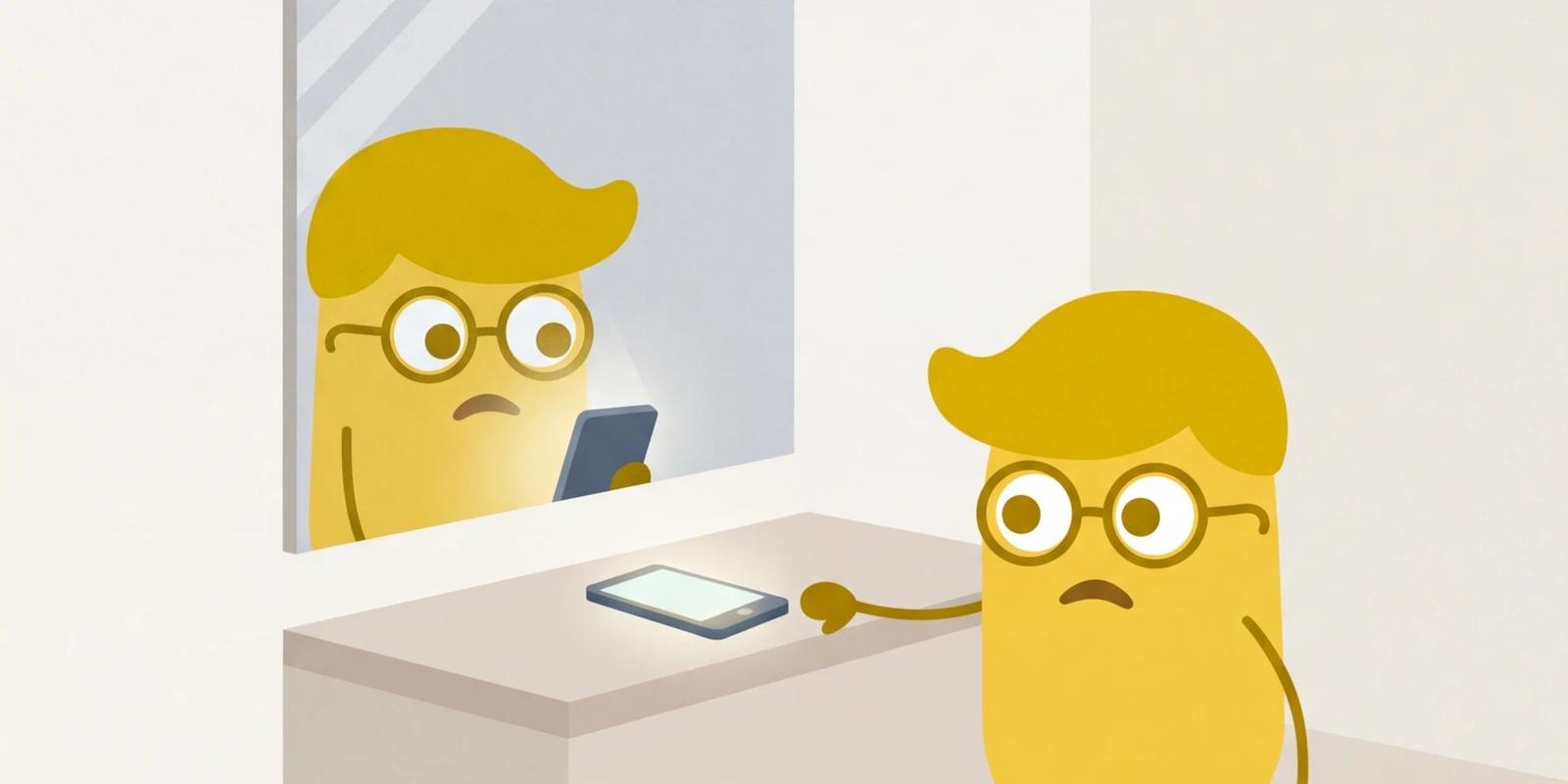
Illustration for the article: 5 Signs You're Addicted to Porn (And What to Do About It)

Porn addiction isn't about how often you watch — it's about whether you can stop when you decide to, whether it's affecting your life, and whether the content you need keeps escalating. Clinicians who treat compulsive sexual behavior use specific criteria to assess whether someone has a problematic pattern, and most of them have nothing to do with frequency. Here are the 5 signs that actually matter, and what the research says to do about each one.

If you're asking this question, something has shifted. That's worth paying attention to.

Sign 1: You've Tried to Stop and Couldn't

The defining feature of any addiction — substance or behavioral — is loss of control. You decide to stop, or you cut back, and then you don't. Not once, but repeatedly, despite genuine intention.

This is different from choosing to continue. Someone who watches pornography occasionally and finds it unremarkable, with no desire to stop, doesn't have an addiction problem. The diagnostic question is: when you've decided to quit, could you?

The inability to stop despite intention is the primary criterion in the ICD-11's classification of Compulsive Sexual Behaviour Disorder, the closest current clinical diagnosis to what most people call "porn addiction." It's also the operational definition used by researchers at Cambridge University who conducted the first neuroimaging studies on compulsive pornography use.

What this looks like practically: You decide on Sunday to stop watching porn. By Tuesday night you're watching again. Or you white-knuckle for two weeks, relapse, feel shame, try again. The cycle repeats.

This isn't a willpower failure in the character sense. It's a neurological one. Repeated dopamine stimulation from pornography literally changes the brain's reward circuitry in ways that make stopping harder — the same mechanism documented in alcohol and cocaine addiction.

Short Problematic Pornography Consumption Scale (PPCS-6)

How often has each statement been true for you?

I felt that porn is an important part of my life.

1 of 6
Pick one to begin

Sign 2: You're Watching More Extreme Content Over Time

Escalation — needing progressively more stimulating content to get the same effect — is one of the clearest neurological signals of addiction. It reflects dopamine tolerance: the brain's reward system downregulates its response to familiar stimuli, requiring more intense input to produce the same dopamine release.

Dr. Anna Lembke, a psychiatrist at Stanford and the author of Dopamine Nation, describes this mechanism directly: "Every time we use a substance or engage in a behavior that hits our dopamine system, we get a little bit less dopamine release. We need a little bit more of our drug of choice just to feel normal."

For pornography, escalation typically means:

• Watching for longer periods to get the same effect

• Seeking out more extreme or niche content

• Finding previously satisfying content boring or insufficient

• Feeling disturbed by what you now need to watch but unable to stop

Escalation is often the sign that troubles people most. It's one thing to watch porn — it's another to discover that what you're now watching is content you would have found disturbing years ago. This distress is a signal, not a character verdict.

Key Stat: A Cambridge University neuroimaging study by Voon and colleagues (2014) found that people with compulsive sexual behavior showed the same brain activation patterns in response to pornographic cues as substance-dependent individuals showed to drug cues — including in areas associated with craving, tolerance, and loss of control.

Related Challenges & Plans

Lifechallenge

Reclaim Focus: Quit Porn

Reclaim your mental focus, energy, and self-control by quitting porn in this 30-day challenge with daily science-backed accountability.

Gabriele Oettingen
Based on Gabriele Oettingen · by GetMotivatedBuddies
10 min3×/week30dL2
Lifechallenge

Quit Porn: 42-Day Neurological Reboot with Accountability

Reclaim your focus, energy, and sexual health through a science-backed 42-day neurological reset designed for men.

Gary Wilson
Based on Gary Wilson · by GetMotivated.ai
10 min3×/week42dL2
Lifechallenge

28 Days Alcohol-Free

Reset your relationship with alcohol, restore deep REM sleep, and reclaim your morning focus in this guided 28-day challenge.

Annie Grace
Based on Annie Grace · by GetMotivated.ai
10 min3×/week28dL1
Lifechallenge

30 Days Alcohol-Free

Reclaim your sleep, boost your daily energy, and clear the brain fog with this science-backed 30-day alcohol-free challenge.

Annie Grace
Inspired by Annie Grace · by GetMotivated.ai
10 min3×/week30dL2

Sign 3: You Experience Withdrawal When You Stop

Most people who try to quit pornography report a recognizable cluster of symptoms in the first days and weeks: irritability, difficulty concentrating, restlessness, low mood, insomnia, and what the recovery community calls "brain fog."

These are withdrawal symptoms. They are real, physiological, and documented in behavioral addiction research. The brain, having adapted to regular dopamine stimulation from pornography, experiences a deficit when the stimulation stops. That deficit produces the uncomfortable symptoms that make early abstinence so difficult.

A review by Park and colleagues published in Behavioral Sciences identified tolerance and withdrawal as two of the neurological features that differentiate compulsive pornography use from typical recreational use. The presence of withdrawal is one of the clearest signs that the brain has adapted to the behavior in ways consistent with addiction.

What withdrawal typically looks like:

• Days 1-3: Restlessness, irritability, strong cravings

• Days 4-10: Brain fog, flat mood, difficulty experiencing pleasure from ordinary activities

• Weeks 2-4: Gradual improvement, but urges can be intense and unpredictable

Knowing that these symptoms are temporary and neurological — not permanent — significantly increases the chance of getting through them.

Sign 4: It's Affecting Your Relationships, Work, or Mental Health

Addiction is defined in part by continued use despite negative consequences. When pornography use begins producing observable costs — and the person continues anyway — this is a diagnostic sign.

Common consequences reported by people with compulsive pornography use:

Relationship effects: Decreased sexual interest in a real partner, difficulty with intimacy and connection, emotional distancing, or a partner discovering use and experiencing significant distress. Research by Perry and Schleifer links frequent pornography use to lower relationship satisfaction and higher divorce risk.

Mental health effects: Increased anxiety and depression, shame cycles that persist even after periods of abstinence, difficulty experiencing pleasure from ordinary activities (anhedonia), and the cognitive load of hiding use from people close to you.

Sexual function effects: Porn-induced erectile dysfunction (PIED) is increasingly reported by young men — difficulty becoming or maintaining arousal in partnered sex while remaining responsive to pornography. This is a functional consequence that researchers attribute to the dopamine system adapting to the specific stimulus pattern of pornography.

Work and productivity effects: Using pornography at work or during work hours, difficulty concentrating due to preoccupation with pornography, or significant time lost to use.

Key Stat: Research by Bőthe and colleagues estimates that 3-8% of the general population experiences compulsive sexual behavior patterns — meaning the problem affects tens of millions of people worldwide, most of whom have never sought help.

Sign 5: You Use Porn to Cope (Not Just for Pleasure)

This sign is often overlooked but is clinically important. Recreational pornography use is driven by pleasure and curiosity. Compulsive pornography use increasingly functions as an emotional coping mechanism — a way to manage stress, loneliness, anxiety, boredom, or emotional pain.

When pornography becomes your primary tool for coping with difficult emotional states, it stops being entertainment and starts functioning as a numbing agent. The same way alcohol becomes a problem when it's the main strategy for dealing with stress, pornography becomes a problem when it's the main strategy for managing emotional discomfort.

What this sign looks like: You don't watch because you're in the mood — you watch because you're stressed, lonely, anxious, or bored and don't know what else to do. After watching, you feel temporarily better and then worse. The emotional problem that triggered the use is still there; the dopamine spike has passed; and now you also have shame on top of whatever you were feeling before.

This coping function is why simply blocking access to pornography often doesn't work without addressing the underlying emotional drivers. What do you do with the stress, loneliness, or anxiety that the pornography was managing? Without an answer to that question, the pressure builds until the barrier breaks.

What to Do If You Recognize These Signs

Recognizing the signs is not the same as knowing what to do. Here's what the evidence supports:

Step 1: Tell Someone

This is the step most people skip, and it's the most important one. Research consistently shows that private accountability (telling only yourself you're going to stop) fails at rates exceeding 90%. You need at least one other person who knows and checks in.

This doesn't have to be your partner, your parent, or anyone who would be hurt by the disclosure. An accountability partner in a recovery community, a therapist, or a matched partner on GetMotivated.ai all serve this function. The point is that someone other than you knows and cares whether you're following through.

Step 2: Remove Access Points

Before relying on willpower, reduce the environmental demand for it. Covenant Eyes or similar content filtering software, devices out of the bedroom, screen time restrictions, and removing saved content from your devices. These are structural changes that reduce the friction required to maintain abstinence.

Step 3: Identify Your Triggers

When do you watch? What are you feeling beforehand? Most people have 2-3 primary triggers — loneliness, late-night boredom, stress after work, a specific emotional state. Identifying them specifically means you can build a response plan. "When I feel [trigger], I will [specific alternative behavior]" is far more effective than a general intention to stop.

Step 4: Get Structured Support

The research on behavioral addiction recovery is consistent: people with structured community and accountability do dramatically better than those who rely on individual willpower and apps.

GetMotivated.ai's buddy matching pairs you with an accountability partner who checks in consistently through the week — addressing the specific gap between sessions that most programs miss. Structured 30-day challenges provide a daily framework and a community of others in the same recovery window. AI coaching helps identify your specific trigger patterns and build a concrete response plan, providing a judgment-free starting point for people who aren't ready to disclose to another person yet.

Tools like NoFap (community forum) and BlockerX (content filtering) address pieces of the problem. Structured accountability addresses the core of it.

Step 5: Address the Underlying Driver

If pornography has been functioning as a coping mechanism, you need a replacement — not just an absence. Exercise is one of the most research-supported alternatives: it produces dopamine and endorphins through a healthy pathway, reduces anxiety and depression, and occupies time and attention during high-risk periods. Therapy that addresses the underlying emotional needs is the most comprehensive approach.

The Brain Can Recover

Research consistently documents neuroplasticity in response to behavioral change. The reward circuitry that adapted to pornography can adapt back. Most people in recovery communities report that urges decrease significantly after 60-90 days, that pleasure returns to ordinary activities, and that the escalation patterns reverse.

The brain doesn't recover because you want it to. It recovers because you stop providing the stimulus that drove the adaptation, and provide new stimuli — connection, physical activity, engaged community — that rewire the reward system in healthier directions.

That process is not easy and it doesn't happen alone. But it does happen.

Next time you search, our newest guide shows up.

Sources

Compulsive Sexual Behaviour Disorder in the ICD-11Research
Kraus et al.
This commentary examines Compulsive Sexual Behavior Disorder (CSBD) as newly classified in the ICD-11, noting that key questions about its causes, classification, and diagnostic criteria remain open. The authors argue for a broader, multimodal approach that accounts for psychosexual development and intimacy, not just symptom checklists.
Neural Correlates of Sexual Cue Reactivity in Individuals with and without Compulsive Sexual BehavioursResearch
Valerie Voon et al.
This fMRI study identifies neural differences in individuals with compulsive sexual behaviour (CSB) when exposed to sexual cues, showing heightened activity in brain regions linked to desire and addiction, akin to responses seen in substance-use disorders. These findings suggest new biological targe
Dopamine Nation: Finding Balance in the Age of IndulgenceBook
Anna Lembke
A compelling look at the neuroscience of addiction and the "pleasure-pain balance," offering strategies to reclaim focus and moderation in a world of instant gratification.

Topics

addiction recoveryporn addictioncompulsive behaviordopaminehabit breakingmental healthneuroscience

AI-ready summary

The 5 clinical signs of porn addiction are: (1) compulsive use despite deciding to stop, (2) escalation — needing more extreme content over time, (3) withdrawal discomfort when not using, (4) continued use despite negative consequences in relationships, work, or mental health, and (5) using porn to cope with stress or emotional pain rather than for pleasure. Frequency alone does not determine addiction — the loss of control and impact on life do.

Key takeaways

  • Porn addiction is defined by loss of control and negative life consequences — not by frequency of use.
  • Escalation (needing increasingly extreme content) is a neurological sign of dopamine tolerance, the same mechanism seen in substance addiction.
  • Research shows that 5-8% of pornography users develop compulsive use patterns that meet behavioral addiction criteria.
  • Withdrawal symptoms — irritability, difficulty concentrating, restlessness — are real physiological responses documented in behavioral addiction research.
  • The most effective first step is structured accountability with a specific person, not app-based blocking tools or willpower alone.

FAQs

What are the signs of porn addiction?

The clinical signs are: compulsive use despite trying to stop, escalation to more extreme content, withdrawal discomfort when not watching, continued use despite negative consequences to relationships or work, and using porn as a primary coping mechanism for stress or emotional pain.

How much porn is too much?

Frequency alone doesn't determine addiction. The key questions are: Are you watching more than you intended? Have you tried to stop and couldn't? Is it affecting your relationships, work, or mental health? If yes, frequency is secondary — the loss of control is the diagnostic indicator.

Can your brain recover from porn addiction?

Yes. Neuroimaging research shows the brain's reward circuitry begins normalizing after 60-90 days of abstinence. The process — called 'rebooting' in recovery communities and neuroplasticity in clinical terms — takes time but is well-documented. Recovery is real.

Is porn addiction real?

Compulsive pornography use is clinically recognized as a behavioral addiction pattern. While the DSM-5 does not include 'porn addiction' as a standalone diagnosis, the WHO's ICD-11 includes Compulsive Sexual Behaviour Disorder. Neuroimaging studies show porn activates the same reward pathways as substance addictions.

What is the first step to stopping porn addiction?

The most evidence-supported first step is telling another person — establishing external accountability. Environmental barriers (content filters, device restrictions) reduce access. Identifying your specific triggers (loneliness, boredom, stress, time of day) is essential for building a replacement response.

Related Challenges & Plans

Lifechallenge

Reclaim Focus: Quit Porn

Reclaim your mental focus, energy, and self-control by quitting porn in this 30-day challenge with daily science-backed accountability.

Gabriele Oettingen
Based on Gabriele Oettingen · by GetMotivatedBuddies
10 min3×/week30dL2
Lifechallenge

Quit Porn: 42-Day Neurological Reboot with Accountability

Reclaim your focus, energy, and sexual health through a science-backed 42-day neurological reset designed for men.

Gary Wilson
Based on Gary Wilson · by GetMotivated.ai
10 min3×/week42dL2
Lifechallenge

28 Days Alcohol-Free

Reset your relationship with alcohol, restore deep REM sleep, and reclaim your morning focus in this guided 28-day challenge.

Annie Grace
Based on Annie Grace · by GetMotivated.ai
10 min3×/week28dL1
Lifechallenge

30 Days Alcohol-Free

Reclaim your sleep, boost your daily energy, and clear the brain fog with this science-backed 30-day alcohol-free challenge.

Annie Grace
Inspired by Annie Grace · by GetMotivated.ai
10 min3×/week30dL2

Keep reading

Illustration for the article: How to Overcome Exam Stress: What Actually Reduces It
September 14, 20265 min readMental Health

How to Overcome Exam Stress: What Actually Reduces It

Test anxiety does something specific to memory recall in the exam room. Research on mindfulness, emotion regulation, and coping strategies shows what actually reduces it.

mental healthmental healthmindfulnessfocus
Rachel SteinRead →
How to Get Motivated When You're Depressed
September 13, 20265 min readMental Health

How to Get Motivated When You're Depressed

Motivation does not return before you act when you're depressed; it shows up after. Here is the research-backed order of operations, plus one three-minute tool that works even on the worst days.

depressionmotivationmental healthBehavioral Activation
Rachel SteinRead →
Illustration for the article: How to Focus on Studying When You Feel Depressed
September 13, 20265 min readMental Health

How to Focus on Studying When You Feel Depressed

Trouble concentrating during a low mood isn't a discipline problem. Research on attention and depression explains the mechanism, and what actually helps you study through it.

depressionfocusmental healthstudents
Rachel SteinRead →
GetMotivated.ai

Behavioral health. Built with intention.

Structured support for ADHD, chronic health, recovery, focus, and long-term change.

Stay in the loop

Research, program launches, and behavioral health insights. Only useful updates.

By joining, you agree to receive emails from GetMotivated.ai. Unsubscribe anytime. See our Privacy Policy.

Explore

  • Browse Plans & Challenges
  • Challenges
  • ADHD Support
  • Health Support
  • Recovery Support
  • Blog
  • Creators
  • Sources
  • Tools
  • How It Works
  • Pricing

Topics

  • Focus
  • Habits
  • Work
  • Learn
  • Health
  • Life

Company

  • About
  • Contact
  • How We Research
  • Our Guarantee
  • Privacy
  • Terms

Work With Us

  • For Organizations
  • For Behavioral Health
  • For Education
  • Careers
  • Affiliates
  • Partners
  • Sponsors
Explore+
  • Browse Plans & Challenges
  • Challenges
  • ADHD Support
  • Health Support
  • Recovery Support
  • Blog
  • Creators
  • Sources
  • Tools
  • How It Works
  • Pricing
Topics+
  • Focus
  • Habits
  • Work
  • Learn
  • Health
  • Life
Company+
  • About
  • Contact
  • How We Research
  • Our Guarantee
  • Privacy
  • Terms
Work With Us+
  • For Organizations
  • For Behavioral Health
  • For Education
  • Careers
  • Affiliates
  • Partners
  • Sponsors

© 2026 GetMotivated.ai. All rights reserved.

PrivacyTerms

Calm structure. Clear next steps. Human accountability.