GetMotivated.ai Logo
How It WorksBlogLog in
  1. Home
  2. /
  3. Blog
  4. /
  5. Why Atomic Habits Fails ADHD Brains (And What Does Work)
July 21, 20266 min read

Why Atomic Habits Fails ADHD Brains (And What Does Work)

Atomic Habits sold 15 million copies and transformed how millions of people build routines. For ADHD brains, it often just adds a new flavor of failure. Here's why the framework crashes, and what actually sticks.

GetMotivated.ai Team

Last reviewed: August 2026

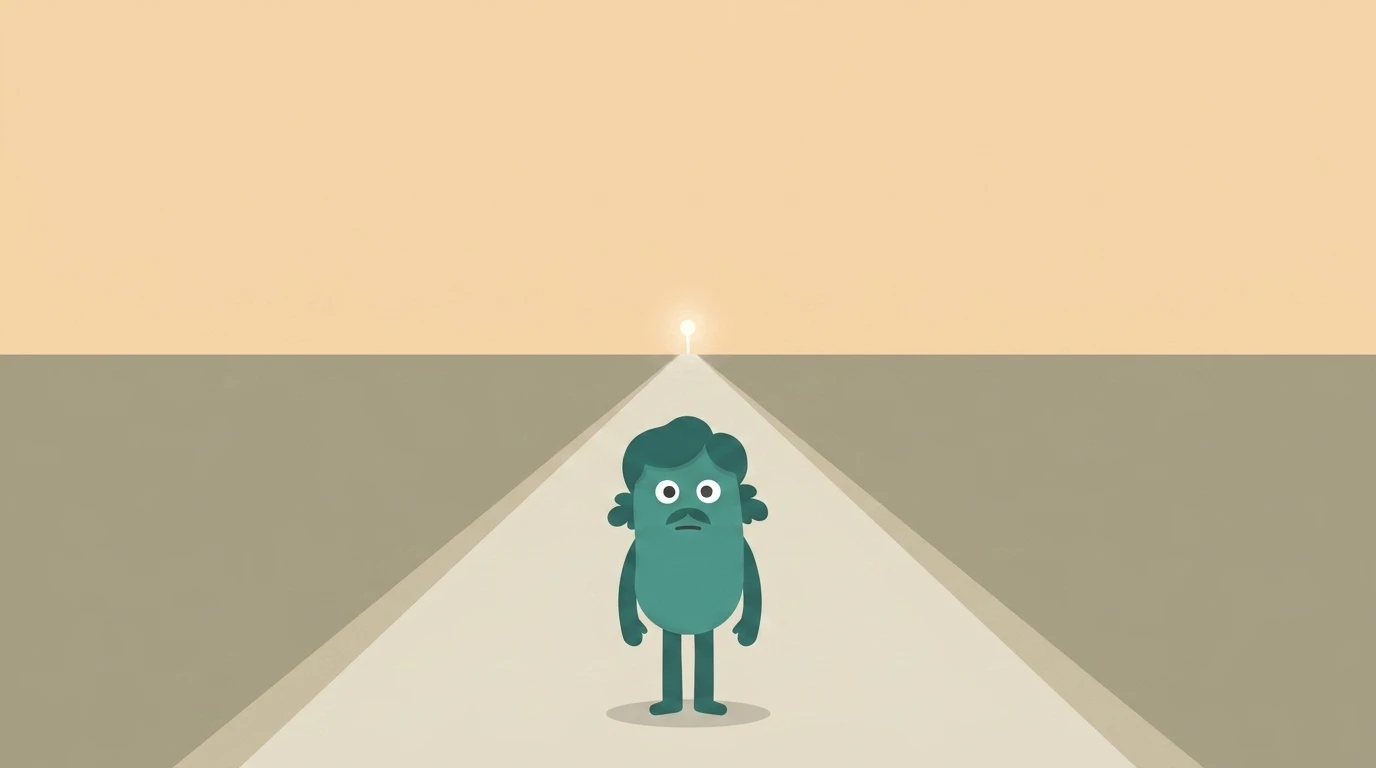
Illustration for the article: Why Atomic Habits Fails ADHD Brains (And What Does Work)

James Clear's Atomic Habits is one of the most well-engineered behavior-change books ever written. The 1% improvement framework, habit stacking, cue-routine-reward loops: all of it is grounded in solid behavioral science and works remarkably well for a large population of readers.

That population does not reliably include people with ADHD. Not because the book is wrong, but because it was written for a brain that works differently from yours. Recognizing that gap is not an excuse to stop trying. It's the first step toward building a system that can actually hold.

The Part of Atomic Habits That's Actually True

Clear's environmental design principles are genuinely useful regardless of neurology. Making cues visible, reducing friction for good behaviors, and increasing friction for bad ones all work because they externalize what your brain would otherwise have to remember. That externalization matters for everyone, and it matters more for ADHD brains.

The flaw is not in Clear's observations about cues or environments. The flaw is in the assumptions baked into the implementation: that you can string together a reliable decision-action chain based on internal intention, that streaks motivate consistent follow-through, and that identity-based change ("I am a runner") translates naturally into daily behavior. Each of those assumptions runs directly into ADHD's core deficits.

Adult ADHD Self-Report Scale v1.1 Part A Screener (ASRS-v1.1 Part A)

How often has this happened over the past 6 months?

How often do you have trouble wrapping up the final details of a project, once the challenging parts have been done?

1 of 6
Pick one to begin

Why Tiny Habits Still Crash on ADHD Brains

The "make it so small you can't fail" advice is appealing. In practice, two things get in the way.

First, there's time blindness. Dr. Russell Barkley's research describes ADHD not as an attention deficit in the traditional sense, but as a disorder of time perception and self-regulation. Barkley (2012) argues that people with ADHD have significant difficulty using time as a bridge between knowing what to do and actually doing it. A two-minute habit requires you to notice that now is the moment to do it. That noticing is the broken part.

Research by Ptacek et al. (2019) supports this, showing that time perception deficits in ADHD are not just subjective experience but measurable impairments in duration estimation and temporal processing. You're not forgetting your habit because you're lazy. You're losing track of time itself.

Second, there's dopamine. Volkow et al. (2011) demonstrated that ADHD involves significant disruptions to reward pathways, particularly in how the brain anticipates and processes dopamine signals from future rewards. Habits work for neurotypical brains partly because the anticipation of completing a familiar routine generates a mild dopamine hit that sustains motivation. ADHD reward circuitry does not reliably generate that anticipatory signal. The habit has to earn its dopamine in the moment, every time.

This is why you can do the same habit fourteen days in a row and then completely forget it exists on day fifteen. The internal reinforcement system that would normally keep that loop running isn't firing the way Clear's model assumes.

The Real Problem Is Regulation, Not Discipline

Thomas E. Brown (2014) frames ADHD as a developmental impairment of the brain's executive functions: activation, focus, effort, emotion, memory, and action. Every one of those clusters interacts with habit formation.

Barkley's model, outlined in his work on executive functioning and ADHD, frames the disorder similarly: not as a deficit in knowing what to do, but in doing what you know, when you need to do it. The phrase is almost perfectly calibrated to describe why Atomic Habits falls short. Clear teaches you what to do. ADHD impairs the doing-it-when-it-matters part, which is the entire game.

CHADD's resources on shame and ADHD add another layer. Many ADHD adults arrive at habit systems already carrying years of internalized failure. When Atomic Habits frames identity ("I am the kind of person who...") as the foundation for behavior change, and then your ADHD causes you to break that identity repeatedly, the system doesn't just fail. It generates shame. And shame, for ADHD brains already taxed by executive load, makes the next attempt harder, not easier.

Related Challenges & Plans

Lifechallenge

ADHD Sleep Reset

Reset your circadian rhythm in 30 days with a neurobiologically optimized screen shutdown protocol designed for ADHD brains.

GetMotivatedBuddies
Created by GetMotivatedBuddies
10 min3×/week30dL1
Lifechallenge

Clean Any Room in 5 Steps with Ann Russell

Clean any room with Ann Russell’s 5-step method. A direct, realistic 14-day plan for building cleaning habits that actually stick.

Ann Russell
In partnership with Ann Russell · by GetMotivatedBuddies
10 min3×/week14dL1
Lifeplan

10-Day ADHD Habit Reset Plan: Stop the Cycle of Schedule Rebellion

Bypass executive function resistance and stop 'schedule rebellion' with a 10-day plan built specifically for the ADHD brain.

G
GetMotivated.ai
10 min3×/week10dL1
Workchallenge

Work Daily Check-in

Intro challenge with 5-min daily check-ins. Get focused, follow through, and make progress on real work goals alongside peers.

GetMotivatedBuddies
Created by GetMotivatedBuddies
10 min3×/week21dL1

What Actually Works for ADHD Habit-Building

None of this means habit formation is impossible. It means the system needs to be built for your actual architecture.

Replace internal cues with external ones. Don't rely on remembering. Use alarms with specific labels ("10-minute walk now, not later"), physical objects placed as visual triggers, or phone notifications tied to location. The cue has to be loud enough to interrupt ADHD's time blindness.

Use body doubling. Working alongside another person, whether in person or through a virtual co-working session, provides a social anchor that activates accountability circuits ADHD brains respond to. Research consistently shows that external social presence compensates for weakened internal regulation.

Design for novelty, not consistency. ADHD brains habituate quickly. A habit that was engaging in week one may feel flat by week three, which your brain interprets as a signal to disengage. Build in variation: rotate playlist, change location, add a small reward element that refreshes the dopamine signal.

Make streaks optional, not central. Streak-based motivation is fragile for ADHD. Missing one day can collapse the entire motivational architecture. Instead, track completions without penalizing gaps. Five out of seven days is a functioning habit, not a broken one.

Use implementation intentions. Research on this technique, pairing a specific when-then statement with each habit ("When I sit down with coffee, I will open my journal for five minutes"), shows stronger effects for people who struggle with bridging intention to action. The specificity reduces the cognitive load required to start.

Kreider et al. (2019) found that college students with ADHD who combined behavioral strategies with environmental restructuring showed the most durable productivity gains. No single tactic worked alone. The combination of external structure, reframing, and social accountability is what held.

---

Atomic Habits is not a bad book. It's a book that works beautifully for the brain it was written for. If that's not your brain, the answer is not to try harder with the same system. It's to find a system that meets your neurology where it actually is.

GetMotivated.AI's Focus & Follow-Through Challenge is built for exactly this. It pairs external accountability, ADHD-informed habit design, and community check-ins so that you're not white-knuckling consistency alone. If the standard frameworks have let you down before, this one is worth a look.

---

FAQ

Can people with ADHD build habits at all?

Yes, but the process looks different. ADHD brains can form strong habits, especially when those habits are tied to dopamine-engaging activities, external cues, and social accountability. The key is designing for your actual neurology rather than forcing a neurotypical framework.

Why does the two-minute rule from Atomic Habits feel useless with ADHD?

The two-minute rule assumes you can reliably bridge the gap between intention and action through a small enough commitment. ADHD's time blindness and working memory gaps mean that even two-minute tasks get lost before they start. External triggers and body doubling close that gap better than shrinking the task.

What is body doubling and why does it help ADHD?

Body doubling means working alongside another person, physically or virtually, without necessarily collaborating. The social presence activates accountability circuits and provides a consistent external cue that compensates for weakened internal regulation in ADHD brains.

Is Atomic Habits worth reading if you have ADHD?

It's worth reading for the environmental design concepts, particularly cue visibility and friction reduction. Skip the chapters that lean on motivation or streak-based systems, which punish ADHD's natural variability. Use the framework selectively rather than wholesale.

How long does it take to build a habit with ADHD?

The commonly cited 21 or 66 days assume neurotypical consistency. For ADHD, the timeline is less predictable. What matters more is the number of successful repetitions, not days elapsed. Focus on lowering barriers to starting each time rather than tracking a streak.

Sources

Clinical Implications of the Perception of Time in Attention Deficit Hyperactivity Disorder (ADHD): A ReviewResearch
Ptacek
This paper explores the relationship between ADHD and time perception impairments, emphasizing the clinical need to address temporal processing deficits in diagnosis and treatment.
Dopamine Nation: Finding Balance in the Age of IndulgenceBook
Anna Lembke
A compelling look at the neuroscience of addiction and the "pleasure-pain balance," offering strategies to reclaim focus and moderation in a world of instant gratification.
Self-Compassion: The New ADHD TreatmentArticle
additudemag.com · Kristin Neff
This article explores how self-compassion builds resilience in adults with ADHD by replacing self-criticism with a mindfulness-based practice of self-kindness and shared humanity.

Topics

adhdhabit formationhabit buildingexecutive dysfunction

AI-ready summary

This post argues that James Clear's Atomic Habits framework, while effective for neurotypical readers, systematically fails people with ADHD because it relies on executive functions that ADHD compromises. Drawing on research by Russell Barkley, Nora Volkow, and others, the post explains how time blindness, reward pathway differences, and working memory deficits undermine tiny-habit approaches. It then offers ADHD-specific alternatives: body doubling, implementation intentions, environmental design with novelty, and external accountability systems.

Key takeaways

  • Atomic Habits assumes working memory and time perception that ADHD brains lack
  • ADHD is a regulation disorder, not a willpower or motivation problem
  • Effective ADHD habit systems use external structure, novelty, and dopamine-aware design

FAQs

Can people with ADHD build habits at all?

Yes, but the process looks different. ADHD brains can form strong habits, especially when those habits are tied to dopamine-engaging activities, external cues, and social accountability. The key is designing for your actual neurology rather than forcing a neurotypical framework.

Why does the two-minute rule from Atomic Habits feel useless with ADHD?

The two-minute rule assumes you can reliably bridge the gap between intention and action through a small enough commitment. ADHD's time blindness and working memory gaps mean that even two-minute tasks get lost before they start. External triggers and body doubling close that gap better than shrinking the task.

What is body doubling and why does it help ADHD?

Body doubling means working alongside another person, physically or virtually, without necessarily collaborating. The social presence activates accountability circuits and provides a consistent external cue that compensates for weakened internal regulation in ADHD brains.

Is Atomic Habits worth reading if you have ADHD?

It's worth reading for the environmental design concepts, particularly cue visibility and friction reduction. Skip the chapters that lean on motivation or streak-based systems, which punish ADHD's natural variability. Use the framework selectively rather than wholesale.

How long does it take to build a habit with ADHD?

The commonly cited 21 or 66 days assume neurotypical consistency. For ADHD, the timeline is less predictable. What matters more is the number of successful repetitions, not days elapsed. Focus on lowering barriers to starting each time rather than tracking a streak.
Related Challenges & Plans

Lifechallenge

ADHD Sleep Reset

Reset your circadian rhythm in 30 days with a neurobiologically optimized screen shutdown protocol designed for ADHD brains.

GetMotivatedBuddies
Created by GetMotivatedBuddies
10 min3×/week30dL1
Lifechallenge

Clean Any Room in 5 Steps with Ann Russell

Clean any room with Ann Russell’s 5-step method. A direct, realistic 14-day plan for building cleaning habits that actually stick.

Ann Russell
In partnership with Ann Russell · by GetMotivatedBuddies
10 min3×/week14dL1
Lifeplan

10-Day ADHD Habit Reset Plan: Stop the Cycle of Schedule Rebellion

Bypass executive function resistance and stop 'schedule rebellion' with a 10-day plan built specifically for the ADHD brain.

G
GetMotivated.ai
10 min3×/week10dL1
Workchallenge

Work Daily Check-in

Intro challenge with 5-min daily check-ins. Get focused, follow through, and make progress on real work goals alongside peers.

GetMotivatedBuddies
Created by GetMotivatedBuddies
10 min3×/week21dL1

Keep reading

Illustration for the article: Body Doubling for Studying: Why Working Near Someone Helps
September 4, 20265 min readADHD & Neurodivergence

Body Doubling for Studying: Why Working Near Someone Helps

Studying alongside another person changes the conditions of a study session rather than requiring more willpower. Here is how to run one so it holds through exam season and beyond.

adhdbody doublingstudy-tipsstudents
Rachel SteinRead →
Illustration for the article: ADHD Study Tips That Work With Your Brain, Not Against It
September 3, 20265 min readADHD & Neurodivergence

ADHD Study Tips That Work With Your Brain, Not Against It

Most study advice assumes the hard part is understanding the material. With ADHD it is usually starting, staying, and knowing how long anything took.

adhdstudy-tipsstudentsexecutive function
Rachel SteinRead →
Illustration for the article: ADHD in Schools: What Actually Helps
September 2, 20265 min readADHD & Neurodivergence

ADHD in Schools: What Actually Helps

Classroom advice for ADHD tends to target visible behaviour. The changes that hold target the executive demands sitting underneath it.

adhdschoolaccommodationsexecutive function
Rachel SteinRead →
GetMotivated.ai

Behavioral health. Built with intention.

Structured support for ADHD, chronic health, recovery, focus, and long-term change.

Stay in the loop

Research, program launches, and behavioral health insights. Only useful updates.

By joining, you agree to receive emails from GetMotivated.ai. Unsubscribe anytime. See our Privacy Policy.

Explore

  • Browse Plans & Challenges
  • Challenges
  • ADHD Support
  • Health Support
  • Recovery Support
  • Blog
  • Creators
  • Sources
  • Tools
  • How It Works
  • Pricing

Topics

  • Focus
  • Habits
  • Work
  • Learn
  • Health
  • Life

Company

  • About
  • Contact
  • How We Research
  • Our Guarantee
  • Privacy
  • Terms

Work With Us

  • For Organizations
  • For Behavioral Health
  • For Education
  • Careers
  • Affiliates
  • Partners
  • Sponsors
Explore+
  • Browse Plans & Challenges
  • Challenges
  • ADHD Support
  • Health Support
  • Recovery Support
  • Blog
  • Creators
  • Sources
  • Tools
  • How It Works
  • Pricing
Topics+
  • Focus
  • Habits
  • Work
  • Learn
  • Health
  • Life
Company+
  • About
  • Contact
  • How We Research
  • Our Guarantee
  • Privacy
  • Terms
Work With Us+
  • For Organizations
  • For Behavioral Health
  • For Education
  • Careers
  • Affiliates
  • Partners
  • Sponsors

© 2026 GetMotivated.ai. All rights reserved.

PrivacyTerms

Calm structure. Clear next steps. Human accountability.