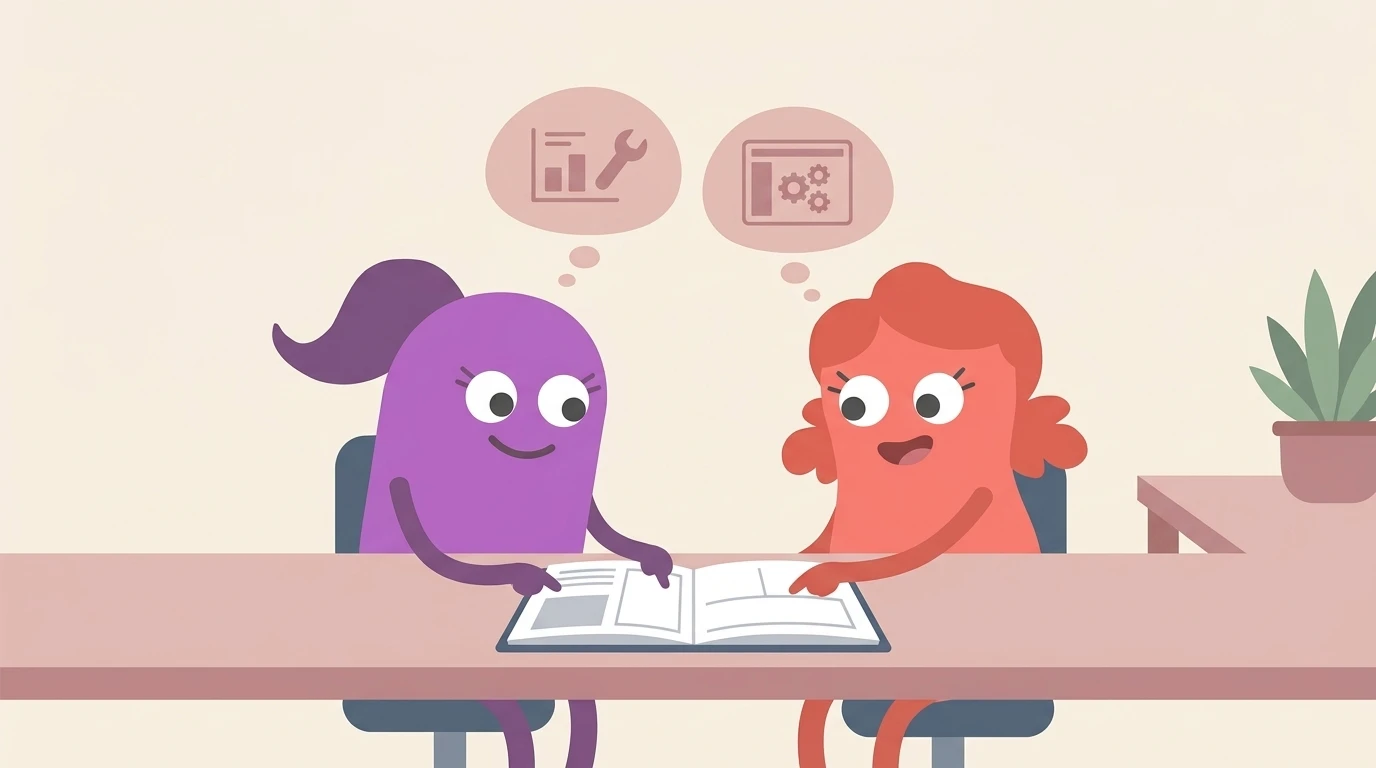
Body doubling — working in the presence of another person — is one of the most consistently effective strategies for ADHD task initiation, and a growing category of apps has emerged to make it accessible online. The ADHD brain activates differently in social contexts: when someone else is present (even virtually), the brain's performance system engages in a way that willpower alone cannot produce. If you've ever worked productively in a coffee shop but accomplished nothing at home, you've experienced this.
The right body doubling app depends on whether you need single-session activation for immediate tasks or ongoing accountability structure for longer-term change. Here's how the leading options compare.
Why Body Doubling Works for ADHD
Before comparing apps, it's worth understanding the mechanism — because it changes how you choose.
Research by Zentall et al. (2013) and Fabiano et al. (2014) establishes that social presence modifies task performance in ADHD in ways that are neurologically distinct from simple motivation. The presence of another person activates the brain's social performance system, which functions differently from the self-directed motivation system that ADHD impairs.
Put simply: the part of the brain that cares about what others think works more reliably in ADHD than the part that generates internal motivation. Body doubling borrows from the social system to compensate for the internal motivation system's dysfunction.
Key Stat: An ADDitude Magazine survey of adults with ADHD ranked body doubling among the top three most effective non-medication coping strategies — ahead of most productivity apps, planners, and organizational systems.
This is why co-working with a stranger on Focusmate often works better than the most perfectly organized to-do list. It's not about information. It's about neurological activation.
The 2026 Body Doubling App Landscape
Focusmate
What it is: Live 50-minute video co-working sessions with a matched partner. You state your goal at the start, work, and check in at the end. The partner is typically a stranger.
Best for: Immediate task activation. If you need to start something today and can't, scheduling a Focusmate session in the next hour creates a real social commitment that activates the ADHD brain's performance system.
Strengths:
• Flexible scheduling — sessions available around the clock
• Low friction to start — book a session, show up, work
• No long-term commitment required
• Free tier available (3 sessions/week)
Limitations:
• Sessions are one-off — no continuity with partners
• No progress tracking or challenge structure
• Addresses the immediate initiation problem but not longer-term habit building
• The accountability resets after every session — good for tasks, limited for behavior change
Pricing: Free (3 sessions/week) or $6.99/month for unlimited sessions.