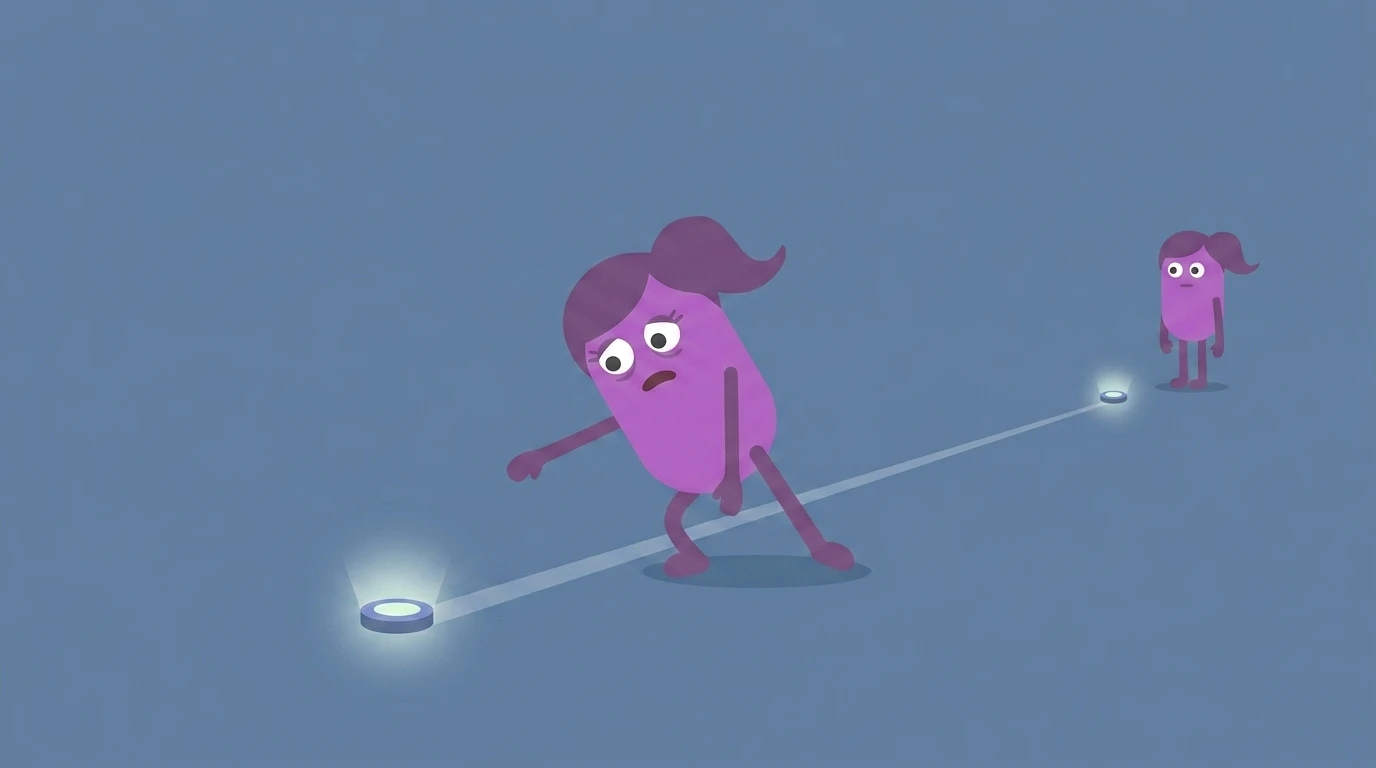
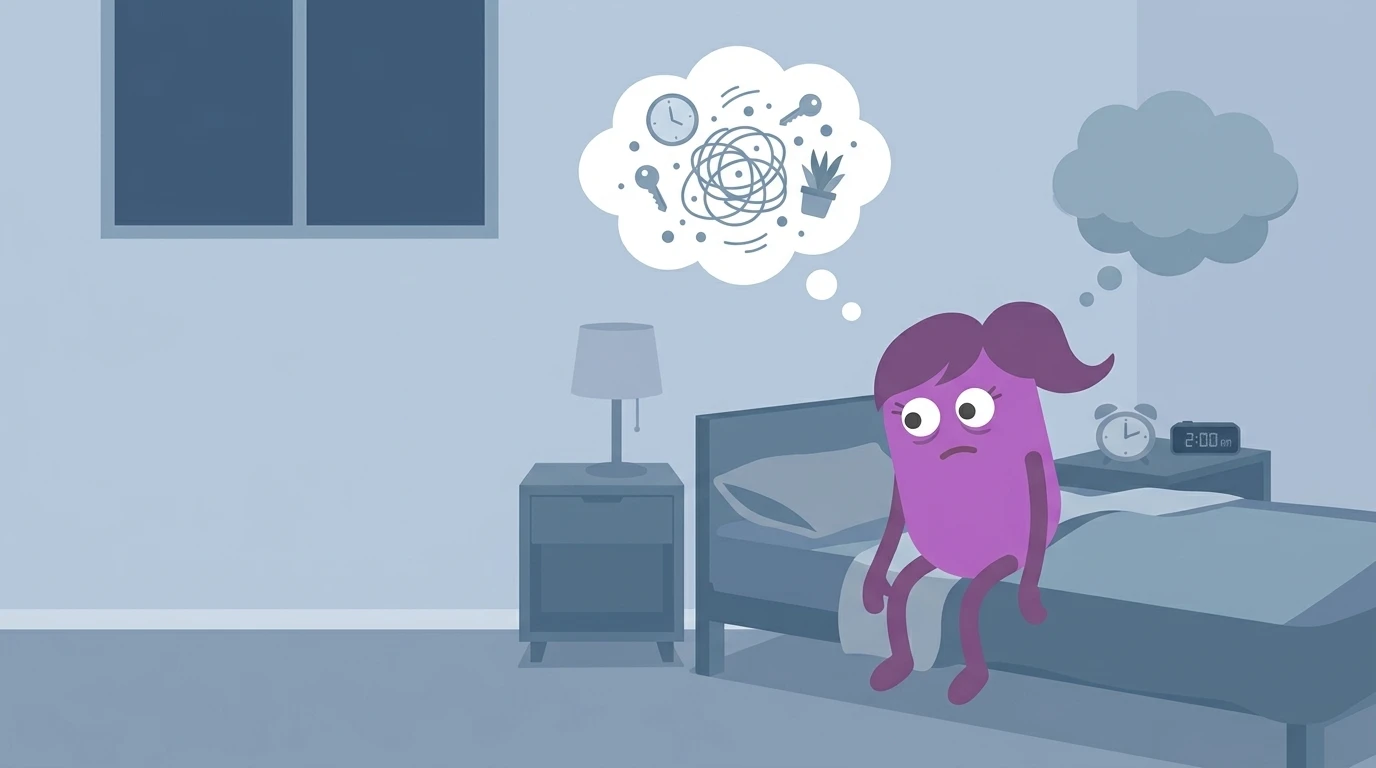
ADHD paralysis and depression both produce an inability to function — lying in bed, staring at the task, body not moving — but they come from different places and require different treatment. Getting this distinction wrong means spending years treating the wrong condition. If you've been on antidepressants that barely touched the freeze state, or if you can hyperfocus for hours on something you love but can't send a single email, the distinction matters.
Both are real. Both impair daily life significantly. Here's how to tell them apart — and what to do when you have both.
The Core Difference: Context Sensitivity
The single most useful test for distinguishing ADHD paralysis from depression is context sensitivity.
ADHD paralysis is context-dependent. The freeze lifts when the right conditions appear: a real deadline, someone watching, a genuinely interesting angle on the task, a text from a friend who says "let's work on this together." The ADHD brain's activation system runs on interest, urgency, challenge, and novelty. When those are absent, the motor doesn't start. When they're present, it often runs fine — sometimes better than neurotypical brains.
Depression's immobility is not context-sensitive. Even activities that were previously enjoyable produce little motivation or pleasure (this is anhedonia — one of depression's core features). A person with depression won't suddenly find energy for a hobby they used to love. The low-energy state persists across contexts, including ones that previously activated them.
Ask yourself: Is there anything that reliably breaks the freeze? A deadline with real consequences? A friend working alongside you? A topic you genuinely find interesting? If yes — ADHD paralysis is the more likely primary driver.
How Each Condition Produces the Freeze
ADHD Paralysis: The Dopamine Problem
In the ADHD brain, task initiation failure occurs because the prefrontal cortex — responsible for activating goal-directed behavior — is underregulated in its dopamine and norepinephrine signaling. Without the chemical signal that says "this matters, start now," the brain doesn't generate the activation required to begin.
The person is not choosing not to start. The neurological start command is misfiring. Working memory can't hold the steps, the time estimate is disconnected from reality, and the emotional weight of the task (often built up from past failures) adds friction. Result: freeze.
This is why stimulant medication — which increases dopamine and norepinephrine availability in the prefrontal cortex — is often the most effective single intervention for ADHD paralysis. It provides the chemical signal the brain wasn't generating.
Depression: The Anhedonia and Energy Problem
Depression involves dysregulation across serotonin, norepinephrine, and dopamine systems — but the subjective experience centers on persistent low mood, hopelessness, and drastically reduced energy. The person doesn't freeze because they can't initiate; they freeze because nothing feels worth initiating.
Anhedonia — the inability to feel pleasure from previously enjoyable activities — is depression's most diagnostically distinct feature and the clearest differentiator from ADHD. An ADHD person without depression can still feel excited, engaged, and motivated by things they care about. A person in a depressive episode typically cannot.
Key Stat: Research by Kooij et al. (2012) found that 30-50% of adults with ADHD also have a comorbid depressive disorder — making the co-occurrence so common that evaluating for both simultaneously is standard clinical practice.