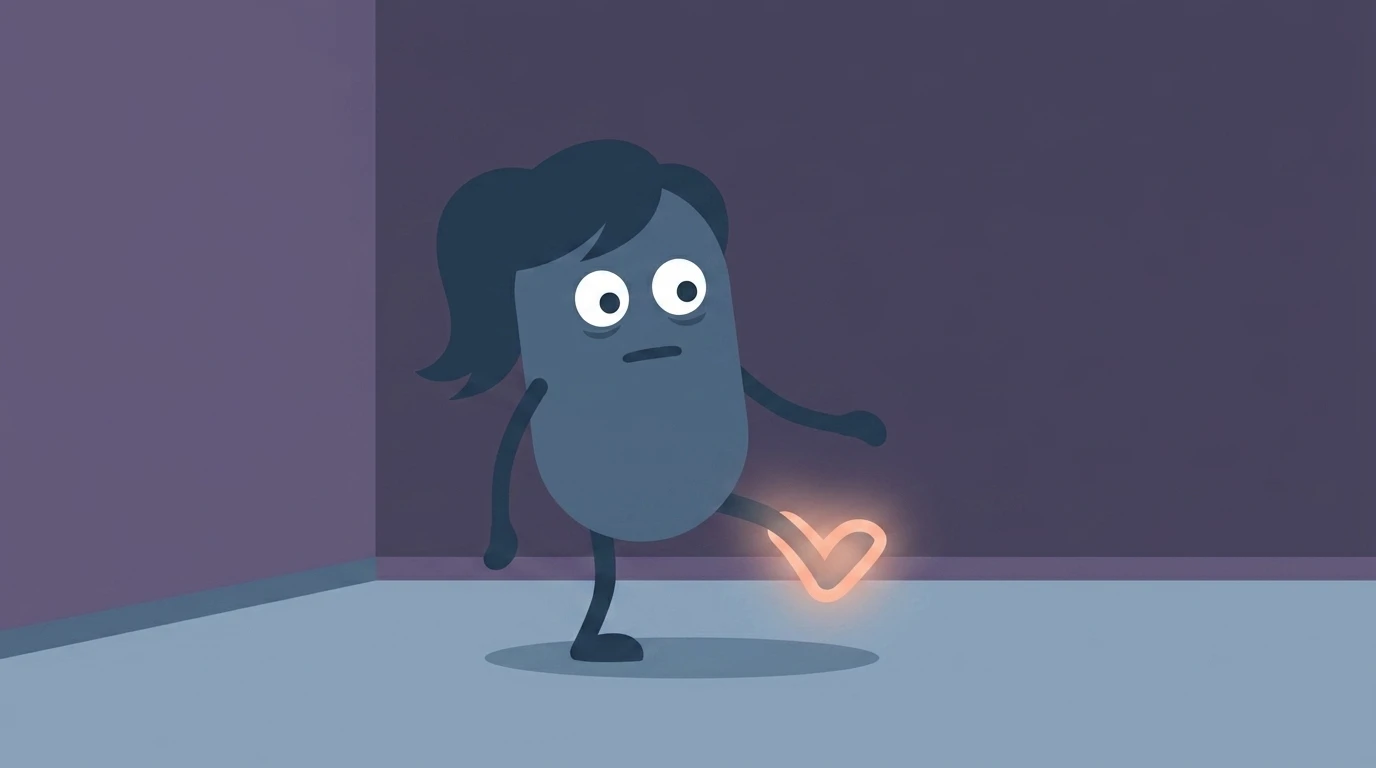
Why is it so hard to concentrate when you're depressed?
Difficulty concentrating during low mood is a well-documented symptom, not a character flaw or a discipline gap. A study of 567 college students found that attention control (your ability to direct and hold focus) was negatively correlated with both depression and anxiety, and a serial mediation model showed that weakened attention control, combined with a heightened bias toward negative information, explained part of how everyday behaviors translate into worse mood. In plain terms, when mood drops, the attentional system that normally filters out distraction and holds a task in mind gets measurably weaker at the same time. You are not imagining that studying feels harder. The mechanism doing that to you has been measured.
A note before anything else: this article is about concentration and study habits, not a diagnosis or a treatment plan. If low mood is persistent, intense, or interfering with daily life, that's worth bringing to a doctor or counsellor. Nothing here replaces that conversation.
Is trouble focusing a symptom of depression, or a separate problem?
Concentration difficulty is one of the recognized symptoms of depression, and the research on attention control explains why it shows up specifically as an inability to hold focus rather than as general fatigue or lack of interest. In the 567-student study, attention control didn't just correlate with depression, it functioned as a step in the pathway: certain behaviors reduced attention control, which increased attentional bias toward negative information, and that combination was linked to worse depression and anxiety scores. The concentration problem and the low mood aren't two separate issues sitting side by side. They're connected through the same attentional system, each one able to worsen the other.
This matters practically because it means the goal isn't to force concentration through willpower while the underlying attentional system is depleted. It means addressing the mechanism, the attention control and the negative bias, tends to move both symptoms at once.
Why does everything read as more discouraging when you're depressed?
The 567-student study measured what researchers call negative information attentional bias, the tendency to notice and dwell on negative information more than neutral or positive information. This bias was a direct link in the pathway to worse depression and anxiety. Practically, this means the same paragraph, the same low quiz grade, the same feedback comment, gets processed through a lens that weights the discouraging parts more heavily when mood is low. It isn't that a depressed brain fabricates negativity. It's that attention gets pulled toward the negative details in real information and holds there longer, which makes the actual work feel more discouraging than it would on a better day, and that discouragement adds a second obstacle on top of the concentration problem itself.