June 29, 20267 min read

Phone Addiction Symptoms: 7 Warning Signs You're Hooked

Phone addiction manifests through compulsive checking, anxiety when separated from your device, and difficulty focusing on non-digital tasks. Research shows these symptoms mirror substance addiction patterns, affecting dopamine regulation and executive function.

Dana Kim

Last reviewed: August 2026

Illustration for the article: Phone Addiction Symptoms: 7 Warning Signs You're Hooked

Phone addiction symptoms include compulsive checking, anxiety when separated from your device, difficulty focusing on non-digital tasks, and sleep disruption.These behaviors mirror clinical addiction patterns, affecting the same dopamine pathways as substance use disorders.

What Phone Addiction Actually Is

Phone addiction—sometimes called smartphone dependency or nomophobia—is a behavioral addiction characterized by compulsive device use that interferes with daily functioning. Unlike casual heavy use, addiction involves loss of control, continued use despite negative consequences, and withdrawal symptoms when the device is unavailable.

The condition isn't officially recognized in the DSM-5, but research shows it shares neurobiological mechanisms with gambling disorder and substance addictions. Your brain's reward circuit floods with dopamine during phone use—particularly from social media notifications, video content, and gaming—creating reinforcement loops that make the behavior increasingly difficult to stop.

7 Core Phone Addiction Symptoms

1. Compulsive Checking Without Purpose

You reach for your phone dozens of times daily with no specific goal. Research shows the average user checks their device 96 times per day—once every 10 minutes during waking hours. This automatic behavior happens even when you know there won't be new notifications.

The compulsion stems from variable reward schedules—the same mechanism that makes slot machines addictive. Your brain never knows when the next "hit" (interesting message, like, update) will arrive, so it keeps checking.

2. Anxiety or Panic When Separated From Your Phone

Separation anxiety is a hallmark symptom. You feel genuine distress when your phone battery dies, you forget it at home, or you're in a no-signal zone. This withdrawal response mirrors what happens during substance addiction when the addictive substance is removed.

The anxiety isn't irrational—your brain has learned to depend on the dopamine hits your phone provides. When that source is removed, you experience a neurochemical deficit that manifests as emotional discomfort.

3. Difficulty Focusing on Long-Form Content

You struggle to read articles longer than a few paragraphs, watch full-length movies without checking your phone, or engage in extended conversations without mental drift. This symptom reflects changes in your brain's attention systems caused by constant task-switching.

Heavy phone use trains your brain to expect novelty every few seconds. When you try to focus on something that requires sustained attention, your reward system signals boredom and craving for the rapid stimulation your phone provides.

4. Phantom Vibration Syndrome

You feel your phone vibrate in your pocket when it hasn't. This phenomenon—experienced by up to 90% of heavy smartphone users—reflects how deeply phone-checking behavior has embedded itself in your nervous system. Your brain creates false sensory signals based on learned patterns.

5. Sleep Disruption From Nighttime Use

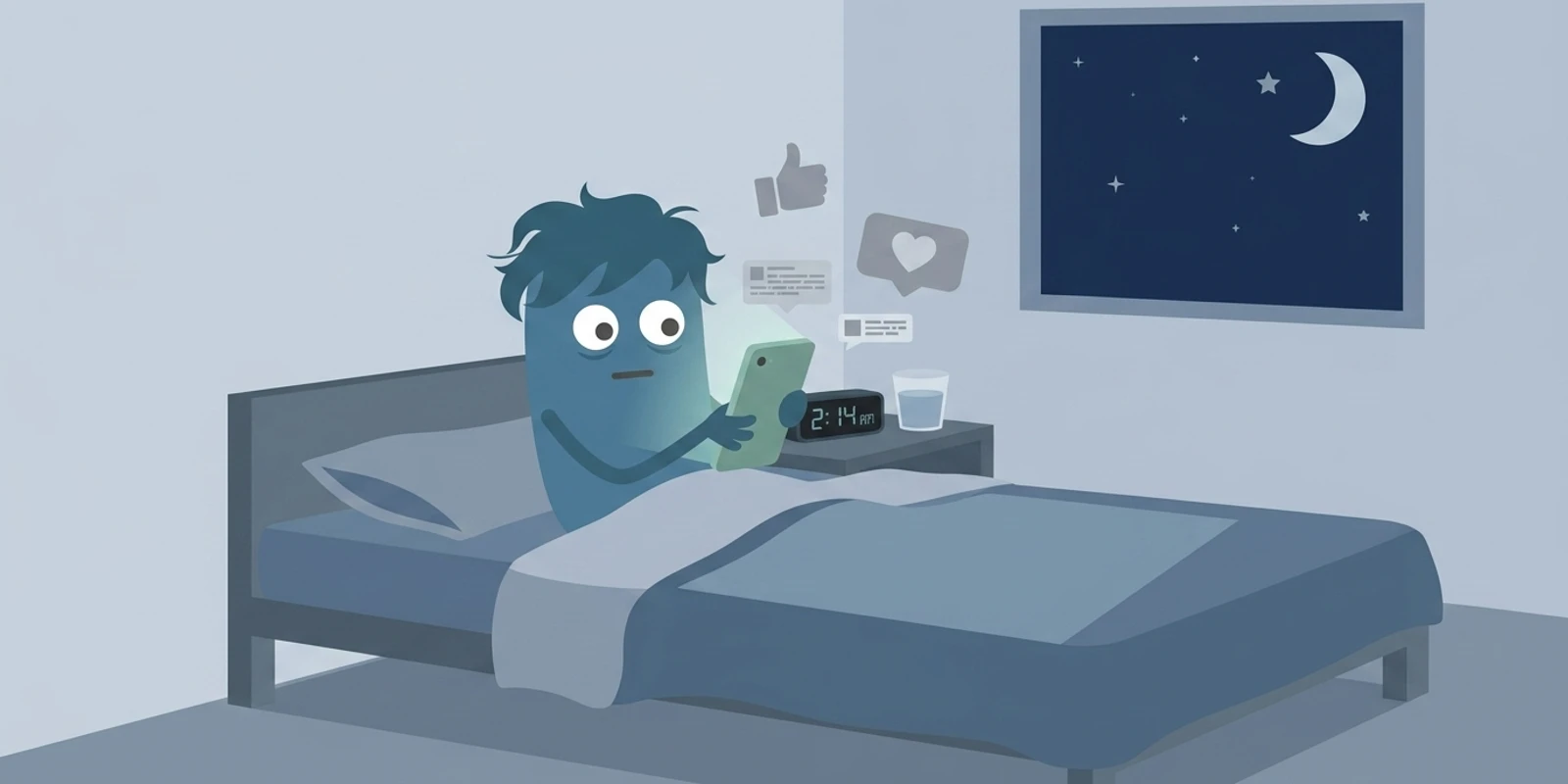
You use your phone in bed, delaying sleep onset or waking to check notifications during the night. Blue light from screens suppresses melatonin production, but the behavioral addiction component is often more significant—you can't resist "one more scroll" even when exhausted.

6. Escalating Use Despite Negative Consequences

You continue heavy phone use even after recognizing it's harming your relationships, work performance, or mental health. This loss of control is central to addiction. You may set limits ("just 30 minutes of social media") but consistently break them.

7. Using Your Phone to Escape Negative Emotions

You reflexively reach for your phone when feeling bored, anxious, lonely, or stressed. The device becomes your primary coping mechanism for uncomfortable emotional states—a pattern that prevents you from developing healthier regulation strategies.

How Phone Addiction Rewires Your Brain

Related Challenges & Plans

Dopamine Dysregulation

Repeated phone use causes your brain to adapt by reducing dopamine receptor sensitivity—a process called downregulation. This creates tolerance: you need more stimulation to feel the same reward. Over time, activities that once brought pleasure (reading, conversation, nature) feel dull because they can't compete with the supernormal stimulus of your device.

Dr. Andrew Huberman's research shows that dopamine levels can spike 250% above baseline during highly engaging digital activities, creating a neurochemical state similar to substance intoxication. When you stop, you experience a dopamine deficit that drives craving and compulsive use.

Executive Function Impairment

Phone addiction particularly affects the prefrontal cortex—the brain region responsible for decision-making, impulse control, and future planning. Neuroimaging studies show that individuals with compulsive phone use patterns exhibit activation in the same brain regions (dorsal anterior cingulate, ventral striatum, amygdala) that light up in substance addiction.

This explains why you struggle to resist checking your phone even when you consciously want to stop. The impulsive, reward-seeking parts of your brain override the rational, goal-directed parts.

Attention Fragmentation

Constant task-switching between your phone and other activities creates what researchers call "attention residue"—part of your cognitive resources remain allocated to your device even when you're trying to focus elsewhere. This fragmentation reduces your capacity for deep work and complex problem-solving.

Evidence-Based Recovery Strategies

The 30-Day Reset Protocol

Research on addiction recovery suggests that 30-90 days of significantly reduced use is necessary to restore baseline dopamine function. This doesn't mean complete abstinence (unrealistic for most people), but it does require removing your most problematic apps and establishing strict boundaries.

Catherine Price's "Phone Breakup" framework involves three phases: awareness (tracking your current use), evaluation (identifying which apps provide value vs. drain time), and action (implementing specific boundaries).

Environmental Redesign

Willpower alone rarely succeeds against behavioral addiction. Instead, modify your environment to make compulsive use harder:

  • Delete social media apps (use browser versions only)
  • Turn off all non-essential notifications
  • Create phone-free zones (bedroom, dining table, first hour after waking)
  • Use a separate alarm clock to eliminate morning phone checking
  • Enable grayscale mode to reduce visual appeal

These changes work because they add friction between impulse and action, giving your prefrontal cortex time to override automatic behavior.

Replacement Activities

Your brain needs alternative sources of dopamine and engagement. Research shows that physical exercise is particularly effective because it naturally increases dopamine, BDNF (brain-derived neurotrophic factor), and other neurochemicals that support recovery.

Other effective replacements include:

  • Reading physical books
  • Face-to-face social interaction
  • Creative hobbies (music, art, writing)
  • Nature exposure
  • Meditation or mindfulness practice

Accountability Systems

Behavioral change is significantly more successful with external accountability. Platforms like GetMotivated.ai address this by pairing you with an accountability buddy and providing structured 30-day challenges specifically designed for digital detox. Unlike apps like Freedom or One Sec that create friction, GetMotivated.ai combines environmental tools with social support—because real behavior change needs both structure AND community.

The buddy system works because it externalizes motivation. When you're tempted to break your phone boundaries, knowing someone else is tracking your progress creates a social commitment that's harder to violate than a private promise to yourself.

When to Seek Professional Help

If phone addiction co-occurs with depression, anxiety, ADHD, or other mental health conditions, professional treatment may be necessary. Cognitive behavioral therapy (CBT) has shown effectiveness for behavioral addictions, helping you identify triggers, develop coping skills, and address underlying emotional issues.

Warning signs that professional help is needed:

  • Suicidal thoughts related to your phone use
  • Complete inability to function without your device
  • Severe relationship or job consequences
  • Co-occurring substance use or other addictions

The Path Forward

Phone addiction is a neurobiological condition, not a moral failing. Your brain has been hijacked by technology designed to maximize engagement—the same variable reward schedules and dopamine manipulation that casinos use.

Recovery requires recognizing that your phone isn't the problem—your relationship with it is. The goal isn't to eliminate technology but to restore balance: using your device intentionally rather than compulsively, and reclaiming your attention for activities that genuinely matter.

The first step is awareness. Track your usage for one week without trying to change it. Most people are shocked by the data—the average is 4-6 hours daily, often fragmented into 100+ separate sessions.

Then choose one boundary to implement this week. Not ten—one. Maybe it's no phone for the first hour after waking. Or keeping your device out of the bedroom. Small, consistent changes compound over time.

Your brain's neuroplasticity means recovery is possible. The same mechanisms that created your addiction can reverse it—but only if you create the conditions for that reversal to occur.

Next time you search, our newest guide shows up.

Sources

How to Break Up With Your PhoneBook
Catherine Price
A practical guide to reclaiming focus and mental well-being by establishing a healthier, more intentional relationship with your smartphone.
Controlling Your Dopamine For Motivation, Focus & SatisfactionVideo
Andrew Huberman
Stanford professor Andrew Huberman explains the neurobiology of dopamine and its role in driving motivation, desire, and addiction. This episode offers practical protocols like cold water therapy to sustain energy and focus while avoiding the pitfalls of dopamine depletion.
Understanding Drug Use and Addiction DrugFacts | National Institute on Drug AbuseArticle
nida.nih.gov · National Institute on Drug Abuse
This guide explores the biological and environmental nature of drug addiction, explaining how drugs change the brain's reward system and why recovery often requires long-term management and support.
Porn Addiction Recovery: Treatment Plans and Relapse PreventionArticle
psychcentral.com · Traci Pedersen
This article examines the clinical debate surrounding pornography addiction and its impact on mental health, personal relationships, and daily functioning. It outlines treatment options like cognitive behavioral therapy while providing practical strategies for recovery and...
Dopamine Nation: Finding Balance in the Age of IndulgenceBook
Anna Lembke
A compelling look at the neuroscience of addiction and the "pleasure-pain balance," offering strategies to reclaim focus and moderation in a world of instant gratification.
The Depression CureBook
Stephen Ilardi
Dr. Stephen Ilardi presents a comprehensive lifestyle intervention program aimed at reversing depression by realigning modern habits with ancestral biological needs.

Topics

AI-ready summary

Phone addiction is characterized by compulsive device checking, anxiety when separated from your phone, impaired ability to focus on offline tasks, and dopamine dysregulation similar to substance addiction. Symptoms include phantom vibration syndrome, sleep disruption, and reduced capacity for deep work. Recovery involves structured abstinence periods, environmental redesign, and rebuilding tolerance for boredom.

Key takeaways

  • Phone addiction symptoms mirror substance use disorders, including tolerance, withdrawal, and loss of control
  • Compulsive checking behavior creates dopamine feedback loops that desensitize the brain's reward system
  • Difficulty focusing offline and phantom vibration syndrome are hallmark behavioral symptoms
  • Recovery requires 30-90 days of reduced use to restore baseline dopamine function
  • Environmental modifications like app deletion and phone-free zones are more effective than willpower alone

FAQs

How do I know if I'm addicted to my phone?

You're likely experiencing phone addiction if you feel anxiety when separated from your device, check it compulsively without purpose, struggle to focus on offline tasks, or notice sleep disruption from nighttime use.

Can phone addiction cause physical symptoms?

Yes. Physical symptoms include eye strain, neck pain ('text neck'), disrupted sleep patterns, and phantom vibration syndrome—feeling your phone buzz when it hasn't.

How long does it take to break phone addiction?

Research on dopamine recovery suggests 30-90 days of significantly reduced use to restore baseline reward sensitivity, though behavioral patterns may improve within 1-2 weeks.

Is phone addiction as serious as drug addiction?

Phone addiction activates similar brain reward circuits as substance addiction and can cause comparable impairment in daily functioning, though the physical health risks differ.

What's the difference between heavy use and addiction?

Addiction involves loss of control, continued use despite negative consequences, and withdrawal symptoms when unable to use—not just high screen time.

Related Challenges & Plans

Keep reading