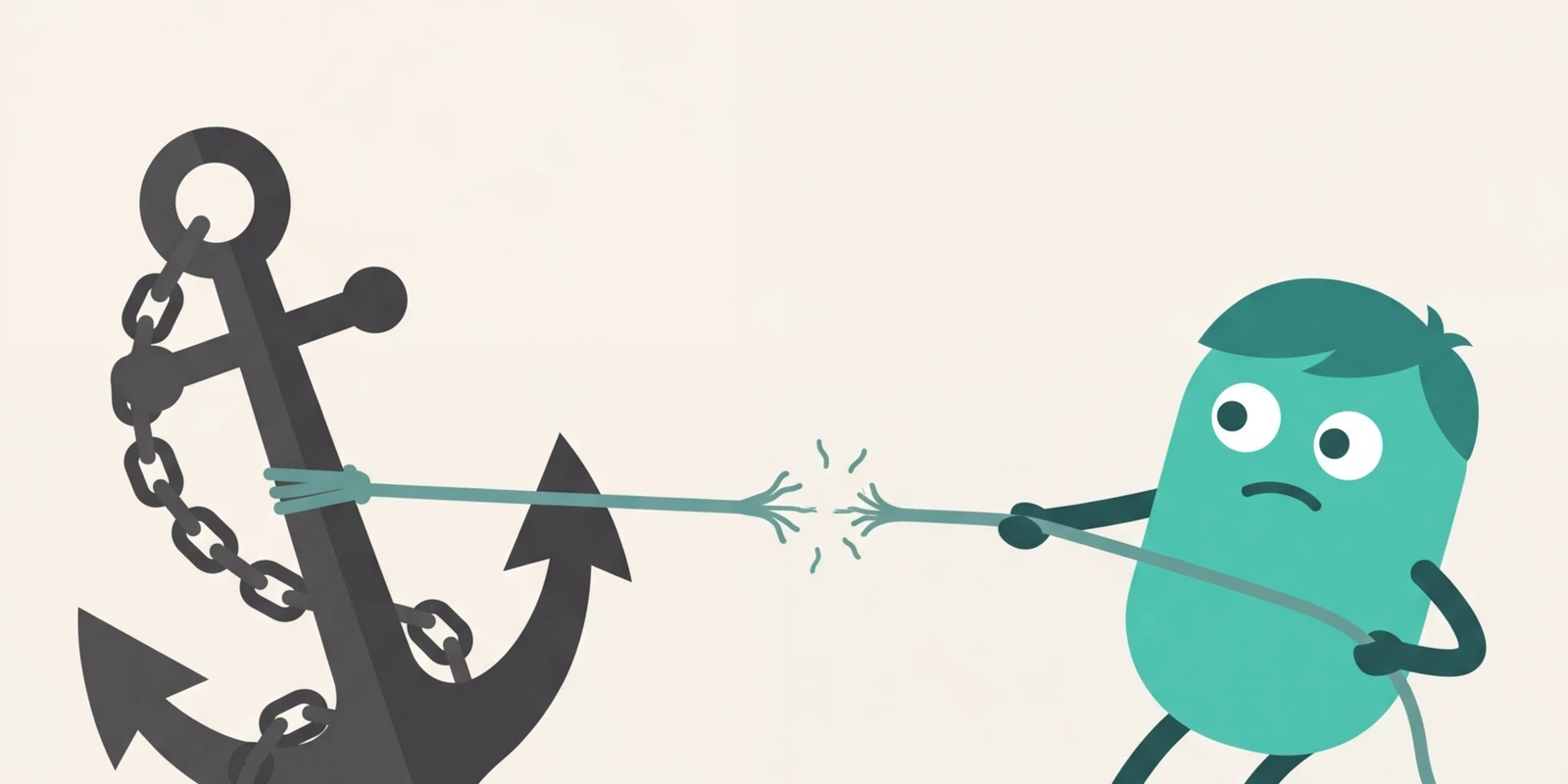
Every year, millions of people attempt to quit an addiction through sheer determination. They make promises to themselves, they white-knuckle through cravings, they repeat mantras about strength and character. And then, months or sometimes days later, they relapse — and conclude that they simply don't have enough willpower.
This conclusion is wrong. Not morally wrong — it is factually, neurologically wrong. And it is doing serious damage to people who deserve better.
The science is unambiguous: addiction is not a willpower deficit. It is a structural brain condition that systematically dismantles the mechanisms willpower requires to function. Telling someone to "just stop" is not a recovery strategy — it is a description of how recovery is supposed to feel after it actually works.
The Prefrontal Cortex vs. the Limbic System
To understand why willpower fails, you need to understand the two competing systems in the human brain.
The prefrontal cortex (PFC) is responsible for executive function: planning, impulse control, long-term decision-making, and the ability to weigh consequences against immediate urges. When you decide not to eat the second slice of cake because you're trying to lose weight, that is your PFC overriding a limbic impulse.
The limbic system — particularly the nucleus accumbens and the ventral tegmental area — is the brain's reward and survival circuit. It operates on a simpler calculus: seek pleasure, avoid pain. It is fast, automatic, and ancient.
In a healthy brain, these two systems exist in rough balance. The PFC can regulate limbic impulses. You feel the urge; you pause; you choose.
Addiction breaks this balance at the structural level.
How Addiction Hijacks the Reward Circuit
Dr. Nora Volkow, Director of the National Institute on Drug Abuse (NIDA) and one of the foremost researchers in addiction neuroscience, has spent three decades documenting what chronic substance use does to the brain. Her work, supported by hundreds of PET and fMRI studies, shows a consistent pattern.
When someone uses an addictive substance or engages in an addictive behavior, the limbic system releases dopamine — the neurotransmitter associated with reward and motivation — at levels far exceeding what any natural reward produces. Food, sex, social connection — these activities generate dopamine spikes. Addictive substances generate spikes that are two to ten times larger, depending on the substance and the delivery mechanism.
The brain's response to this flood is to recalibrate. It downregulates dopamine receptors, reducing the number of available receptor sites. The system becomes less sensitive. This is why tolerance develops.
The downstream consequences are severe:
• Natural rewards feel flat. Things that once produced satisfaction — food, relationships, accomplishment — now barely register. The addicted brain has, in effect, reset its baseline pleasure threshold upward.
• The substance becomes salient above everything else. NIDA imaging studies show that people with addiction show heightened activation in reward circuits specifically in response to cues associated with their substance, even when they consciously report not wanting to use.
• The prefrontal cortex shows reduced activity. Chronic use produces measurable reductions in PFC gray matter volume and metabolic activity, directly impairing the executive functions that make self-regulation possible.
This last point is critical. The very tool you need to resist addiction — the prefrontal cortex — is the part of the brain that addiction most directly damages.