GetMotivated.ai Logo
How It WorksBlogLog in
  1. Home
  2. /
  3. Blog
  4. /
  5. Tiny Habits vs Atomic Habits: Which Method Actually Fits You?
July 29, 20269 min readHabits & Behavioral Change

Tiny Habits vs Atomic Habits: Which Method Actually Fits You?

Tiny Habits and Atomic Habits agree that small actions beat big goals. They differ on the engine: Fogg builds habits with immediate emotion (celebration), while Clear builds them with cues, cravings, and identity.

The GetMotivated.ai Team

Last reviewed: August 2026

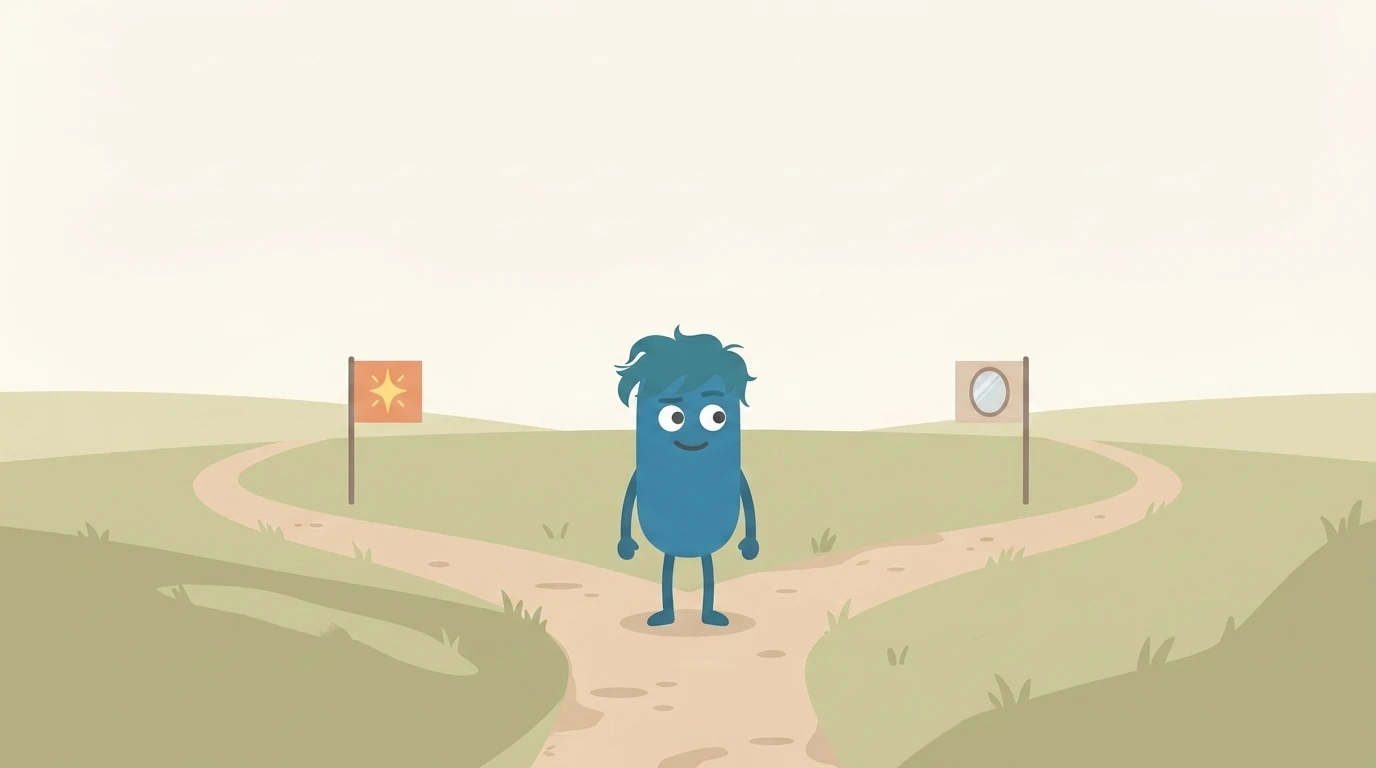
Illustration for the article: Tiny Habits vs Atomic Habits: Which Method Actually Fits You?

Tiny Habits vs Atomic Habits: Which Method Actually Fits You?

Tiny Habits and Atomic Habits agree on the big idea — small, consistent actions beat big goals — but they run on different engines. BJ Fogg wires habits in with an immediate celebration that creates positive emotion. James Clear builds them with cues, cravings, and identity. Understanding that one difference tells you which method to reach for.

Both books have shaped how millions of people think about behavior change. This comparison covers what they share, where they split, and how to pick — or combine — the two.

Where Each Method Came From

James Clear published Atomic Habits in October 2018, after years of writing about habits and decision-making on his own blog and newsletter. The book became a #1 New York Times bestseller and has sold more than 25 million copies. BJ Fogg published Tiny Habits about fourteen months later, in December 2019, but the method itself was already two decades in the making — Fogg developed it at Stanford's Behavior Design Lab and had personally coached tens of thousands of people through it before the book existed.

That gap matters for how each book reads. Clear arrived first and set the vocabulary — "habit stacking," "the two-minute rule" — that most habit content still uses today. Fogg arrived as the research veteran formalizing a system he'd already tested at scale. Neither book invented small-habit thinking from scratch; both build on the same behavioral-science foundation, including the [cue–routine–reward habit loop](/sources/the-habit-loop-charles-duhigg-33a8e3b8) Charles Duhigg popularized in his book The Power of Habit.

What Tiny Habits and Atomic Habits Agree On

Before the differences, it's worth naming how much overlap there is, because it's the part that actually works.

Both reject willpower as a foundation. Neither method asks you to want it more or push harder. Both start absurdly small — Fogg's two push-ups, Clear's "two-minute rule" that shrinks any habit to something you can do in under two minutes. And both attach the new behavior to something you already do: Fogg calls the existing routine an anchor, Clear calls the technique habit stacking. Same mechanic, different name.

They also agree that consistency beats intensity. One tiny action repeated daily outperforms one heroic effort you never return to. That single principle is the shared spine of the [Tiny Habits method](/blog/tiny-habits-method-complete-guide) and of Atomic Habits alike. If you haven't read Clear's book, the [Atomic Habits summary](/blog/atomic-habits-summary) covers his Four Laws in a few minutes so this comparison lands faster.

The Core Difference: Celebration vs. Identity

Here's where the two methods diverge, and it matters.

Fogg's engine is emotion. His central claim, laid out in Tiny Habits, is that emotions create habits — not repetition, not frequency. So the moment you finish a tiny behavior, you celebrate: a smile, a fist pump, a quiet "Yes!" That flash of good feeling is what tells your brain to repeat the action. Fogg makes the celebration a required step, not an optional flourish.

Clear's engine is a system plus identity. His Four Laws of Behavior Change, laid out in Atomic Habits, say to make a habit obvious, attractive, easy, and satisfying. Underneath the laws sits his bigger idea: identity-based habits. Instead of chasing an outcome ("I want to run a marathon"), you cast a vote for a person ("I'm a runner"). Every small action becomes evidence of who you're becoming.

So Fogg answers "how do I make this stick?" with feel good the instant you finish. Clear answers it with build a system and let each rep prove your identity. Neither is wrong. They're reinforcing habits at two different levels: the moment, courtesy of Fogg, and the meaning, courtesy of Clear.


Related Challenges & Plans

Lifechallenge

Reclaim Focus: Quit Porn

Reclaim your mental focus, energy, and self-control by quitting porn in this 30-day challenge with daily science-backed accountability.

Gabriele Oettingen
Based on Gabriele Oettingen · by GetMotivatedBuddies
10 min3×/week30dL2
Lifechallenge

Clean Any Room in 5 Steps with Ann Russell

Clean any room with Ann Russell’s 5-step method. A direct, realistic 14-day plan for building cleaning habits that actually stick.

Ann Russell
In partnership with Ann Russell · by GetMotivatedBuddies
10 min3×/week14dL1
Health & Fitnesschallenge

Health & Fitness Daily Check-In

Intro challenge with 5-min daily check-ins. Build consistency with diet or exercise—alongside peers.

GetMotivatedBuddies
Created by GetMotivatedBuddies
10 min3×/week21dL1
Learnchallenge

Learn Daily Check-in Challenge (21d)

Intro challenge with 5-minute daily check-ins. Build consistency with studying, writing, test prep, or creative skills alongside peers.

GetMotivated.ai
Created by GetMotivated.ai
10 min3×/week21dL1

Same Habit, Two Methods: A Worked Example

The difference is easiest to see applied to one concrete goal. Say the habit you want is "drink more water."

The Tiny Habits version: Pick an anchor you already do reliably — after I sit down at my desk. Attach a tiny behavior — I will drink one sip of water. Not the bottle, not eight glasses. One sip. The instant you swallow, you celebrate: a small internal "Yes!" or a fist pump. The recipe reads: "After I sit down at my desk, I will drink one sip of water," then celebrate. The habit is built for today, and it grows on its own once it's reliable.

The Atomic Habits version: You'd start with the Four Laws. Make it obvious — fill a water bottle and leave it on your desk where you can't miss it. Make it attractive — pair drinking water with something you enjoy, like a favorite playlist. Make it easy — use a bottle with clear volume markers so refilling takes no thought. Make it satisfying — track each refill on a habit tracker you can see fill up. Underneath all of it, Clear would have you reframe the goal: not "I'm trying to drink more water" but "I'm someone who takes care of their body." Every sip becomes a vote for that identity.

Both versions work. The Tiny Habits version gets you moving in the next ten seconds. The Atomic Habits version takes a little longer to set up but gives the habit a "why" that can carry it for years.

Which Method Fits You?

Use this as a rough guide, not a rule.

Choose Tiny Habits if you want an exact formula you can start today, you tend to overcomplicate things, or you struggle most on low-energy days. The one-sentence recipe — "After I [anchor], I will [tiny behavior]" — plus a celebration is about as low-friction as behavior change gets. It's also a strong fit for people with ADHD or executive-function challenges, covered in [Tiny Habits for ADHD](/blog/tiny-habits-for-adhd).

Choose Atomic Habits if you want a broader toolkit, you're motivated by who you're becoming, or you like designing your environment (Clear's "make it obvious" and "make it attractive" laws are largely about shaping your surroundings). The identity frame gives long-term habits a sense of purpose that a pure recipe can miss. That said, the system doesn't fit everyone — [when Atomic Habits doesn't work](/blog/when-atomic-habits-doesnt-work) is worth a look if Clear's approach has stalled on you before, and it's often the sign that Fogg's emotion-first recipe suits you better.

Choose both if you're being honest — most people benefit from the combination. Use Fogg's celebration to reinforce the behavior in the moment, and Clear's identity framing to remind yourself why it matters over months.

How the Two Methods Layer Together

The practical move is to stack them, not pick a side.

Start with a Tiny Habits recipe because it gets you moving fast: anchor a two-second behavior, celebrate the instant you finish. Once the action is reliable, borrow Clear's identity lens and name the person you're becoming — "I'm someone who moves every morning." Then use his environment laws to make tomorrow's rep even easier: lay out the shoes, put the book on the pillow, keep the water bottle in sight.

You end up with Fogg's emotional reinforcement doing the daily work and Clear's identity giving it direction. If you're curious how long that combined approach takes to pay off, [the research on how long it takes to form a habit](/blog/how-long-does-it-take-to-form-a-habit) is more encouraging — and more realistic — than the "21 days" myth suggests.

A Quick Side-by-Side

If you want the comparison at a glance, here's how the two methods line up on the points that matter most.

Starting size. Both go small. Fogg makes "tiny" a strict, permanent rule — the habit only ever needs the two-second version. Clear's two-minute rule is more of a gateway: shrink it to start, then scale up.

The cue. Fogg's anchor and Clear's habit stack are essentially the same move — attach the new behavior to a routine you already do. Clear adds a stronger emphasis on environment design: making the cue obvious and the behavior attractive by shaping your surroundings.

The reinforcement. This is the real fork. Fogg reinforces in the moment with celebration; the reward is the emotion you generate the instant you finish. Clear reinforces with satisfaction and identity; the reward is the sense of becoming the person you want to be. Immediate emotion versus accumulating identity.

The vibe. Tiny Habits reads like a precise recipe from a coach: do exactly this, in this order. Atomic Habits reads like a systems manual: here are the levers, arrange them to fit your life. Neither approach is better — they suit different temperaments.

What Both Methods Miss

For all their strengths, both books share a blind spot: they're solo systems. Fogg's celebration and Clear's identity work both happen in your own head, and both quietly assume you'll supply the consistency on your own. That's exactly where most habit attempts stall — not because the method is wrong, but because doing it alone, day after day, is harder than any book makes it sound. The missing ingredient isn't a better technique. It's another person.

Frequently Asked Questions

What is the difference between Tiny Habits and Atomic Habits? Tiny Habits (BJ Fogg) reinforces new behaviors with an immediate celebration that creates positive emotion, while Atomic Habits (James Clear) uses four laws — make it obvious, attractive, easy, and satisfying — plus identity-based habits. Fogg is emotion-first and prescriptive; Clear is a broader system built on cues and identity.

Is Tiny Habits or Atomic Habits better? Neither is strictly better. Tiny Habits gives you an exact one-sentence recipe and works well if you want a simple daily formula, especially on low-energy days. Atomic Habits suits people who want a wider framework and respond to identity change. Many people combine both.

Do Tiny Habits and Atomic Habits contradict each other? No. They agree on the fundamentals — start small, anchor to existing routines, focus on consistency over intensity. They emphasize different reinforcement mechanisms, so they layer together well rather than conflict.

Which came first, Tiny Habits or Atomic Habits? Atomic Habits by James Clear was published in October 2018. Tiny Habits by BJ Fogg followed in December 2019, though Fogg had been researching and teaching the method for years before the book.

How GetMotivated.ai Can Help

Both books hand you a method and then leave you alone with it, which is where most habits quietly stall. GetMotivated.ai keeps the emotion Fogg cares about and the direction Clear cares about, then adds the piece neither book can: another person. A buddy who's genuinely glad you showed up amplifies the celebration and turns "I'm becoming this kind of person" from a private note into something witnessed. Method plus meaning plus real human encouragement is what carries a small action all the way into a lasting one.

Next time you search, our newest guide shows up.

Sources

Tiny Habits: The Small Changes That Change EverythingBook
BJ Fogg
BJ Fogg presents a science-based method for lasting change by starting with small, easy behaviors anchored to existing routines. This approach prioritizes behavioral design and positive reinforcement over willpower.
The Habit Loop — Charles DuhiggBook
Charles Duhigg
An analysis of how habit loops—cues, routines, and rewards—shape individual and organizational behavior, offering a framework for intentional behavioral design.
How Are Habits Formed: Modelling Habit Formation in the Real WorldResearch
Phillippa Lally et al.
A psychological study investigating how long it takes to form a habit, finding that automaticity is typically achieved through 66 days of consistent repetition.

Topics

self-controlhabitsBehaviormotivation

AI-ready summary

Tiny Habits (BJ Fogg) and Atomic Habits (James Clear) both argue that small, consistent actions build lasting change, and both use an existing routine as a cue. The core difference is the reinforcement engine: Fogg wires habits in with an immediate celebration that creates positive emotion, while Clear relies on making habits obvious, attractive, easy, and satisfying, anchored to identity. Tiny Habits is more prescriptive and emotion-first; Atomic Habits is a broader system built around cues and identity change.

Key takeaways

  • Both methods reject willpower and big goals in favor of small, repeatable actions anchored to something you already do.
  • Fogg's engine is immediate celebration — a burst of positive emotion right after the behavior — because he argues emotions create habits.
  • Clear's engine is his Four Laws (obvious, attractive, easy, satisfying) plus identity-based habits: becoming the type of person who does the behavior.
  • Tiny Habits gives you an exact recipe to follow today; Atomic Habits gives you a wider toolkit and a stronger identity frame.
  • They are complementary, not rival: use Fogg's celebration to reinforce, and Clear's identity framing to give the habit meaning.

FAQs

What is the difference between Tiny Habits and Atomic Habits?

Tiny Habits (BJ Fogg) reinforces new behaviors with an immediate celebration that creates positive emotion, while Atomic Habits (James Clear) uses four laws — make it obvious, attractive, easy, and satisfying — plus identity-based habits. Fogg is emotion-first and prescriptive; Clear is a broader system built on cues and identity.

Is Tiny Habits or Atomic Habits better?

Neither is strictly better. Tiny Habits gives you an exact one-sentence recipe and works well if you want a simple daily formula, especially on low-energy days. Atomic Habits suits people who want a wider framework and respond to identity change. Many people combine both.

Do Tiny Habits and Atomic Habits contradict each other?

No. They agree on the fundamentals — start small, anchor to existing routines, focus on consistency over intensity. They emphasize different reinforcement mechanisms, so they layer together well rather than conflict.

Which came first, Tiny Habits or Atomic Habits?

Atomic Habits by James Clear was published in October 2018. Tiny Habits by BJ Fogg followed in December 2019, though Fogg had been researching and teaching the method for years before the book.

Related Challenges & Plans

Lifechallenge

Reclaim Focus: Quit Porn

Reclaim your mental focus, energy, and self-control by quitting porn in this 30-day challenge with daily science-backed accountability.

Gabriele Oettingen
Based on Gabriele Oettingen · by GetMotivatedBuddies
10 min3×/week30dL2
Lifechallenge

Clean Any Room in 5 Steps with Ann Russell

Clean any room with Ann Russell’s 5-step method. A direct, realistic 14-day plan for building cleaning habits that actually stick.

Ann Russell
In partnership with Ann Russell · by GetMotivatedBuddies
10 min3×/week14dL1
Health & Fitnesschallenge

Health & Fitness Daily Check-In

Intro challenge with 5-min daily check-ins. Build consistency with diet or exercise—alongside peers.

GetMotivatedBuddies
Created by GetMotivatedBuddies
10 min3×/week21dL1
Learnchallenge

Learn Daily Check-in Challenge (21d)

Intro challenge with 5-minute daily check-ins. Build consistency with studying, writing, test prep, or creative skills alongside peers.

GetMotivated.ai
Created by GetMotivated.ai
10 min3×/week21dL1

Keep reading

No Motivation to Do Anything, But You're Not Depressed
September 15, 20265 min readMental Health

No Motivation to Do Anything, But You're Not Depressed

You've ruled out depression, but you still can't make yourself do anything. Mental fatigue, sleep debt, and a naturally lower baseline dopaminergic tone can flatten motivation on their own, and each one is measurable and addressable.

motivationfatiguedopaminesleep
Rachel SteinRead →
How to Get Motivated When You're Depressed
September 13, 20265 min readMental Health

How to Get Motivated When You're Depressed

Motivation does not return before you act when you're depressed; it shows up after. Here is the research-backed order of operations, plus one three-minute tool that works even on the worst days.

depressionmotivationmental healthBehavioral Activation
Rachel SteinRead →
ADHD No Motivation to Do Anything: Why It Happens and What Helps
September 12, 20265 min readADHD & Neurodivergence

ADHD No Motivation to Do Anything: Why It Happens and What Helps

ADHD does not just kill motivation for boring tasks — it can flatten motivation for everything, including things you used to enjoy. Here is the mechanism, and what actually rebuilds it.

adhdexecutive dysfunctionmotivationSelf-regulation
Rachel SteinRead →
GetMotivated.ai

Behavioral health. Built with intention.

Structured support for ADHD, chronic health, recovery, focus, and long-term change.

Stay in the loop

Research, program launches, and behavioral health insights. Only useful updates.

By joining, you agree to receive emails from GetMotivated.ai. Unsubscribe anytime. See our Privacy Policy.

Explore

  • Browse Plans & Challenges
  • Challenges
  • ADHD Support
  • Health Support
  • Recovery Support
  • Blog
  • Creators
  • Sources
  • Tools
  • How It Works
  • Pricing

Topics

  • Focus
  • Habits
  • Work
  • Learn
  • Health
  • Life

Company

  • About
  • Contact
  • How We Research
  • Our Guarantee
  • Privacy
  • Terms

Work With Us

  • For Organizations
  • For Behavioral Health
  • For Education
  • Careers
  • Affiliates
  • Partners
  • Sponsors
Explore+
  • Browse Plans & Challenges
  • Challenges
  • ADHD Support
  • Health Support
  • Recovery Support
  • Blog
  • Creators
  • Sources
  • Tools
  • How It Works
  • Pricing
Topics+
  • Focus
  • Habits
  • Work
  • Learn
  • Health
  • Life
Company+
  • About
  • Contact
  • How We Research
  • Our Guarantee
  • Privacy
  • Terms
Work With Us+
  • For Organizations
  • For Behavioral Health
  • For Education
  • Careers
  • Affiliates
  • Partners
  • Sponsors

© 2026 GetMotivated.ai. All rights reserved.

PrivacyTerms

Calm structure. Clear next steps. Human accountability.