What Actually Works: Structure Over Willpower
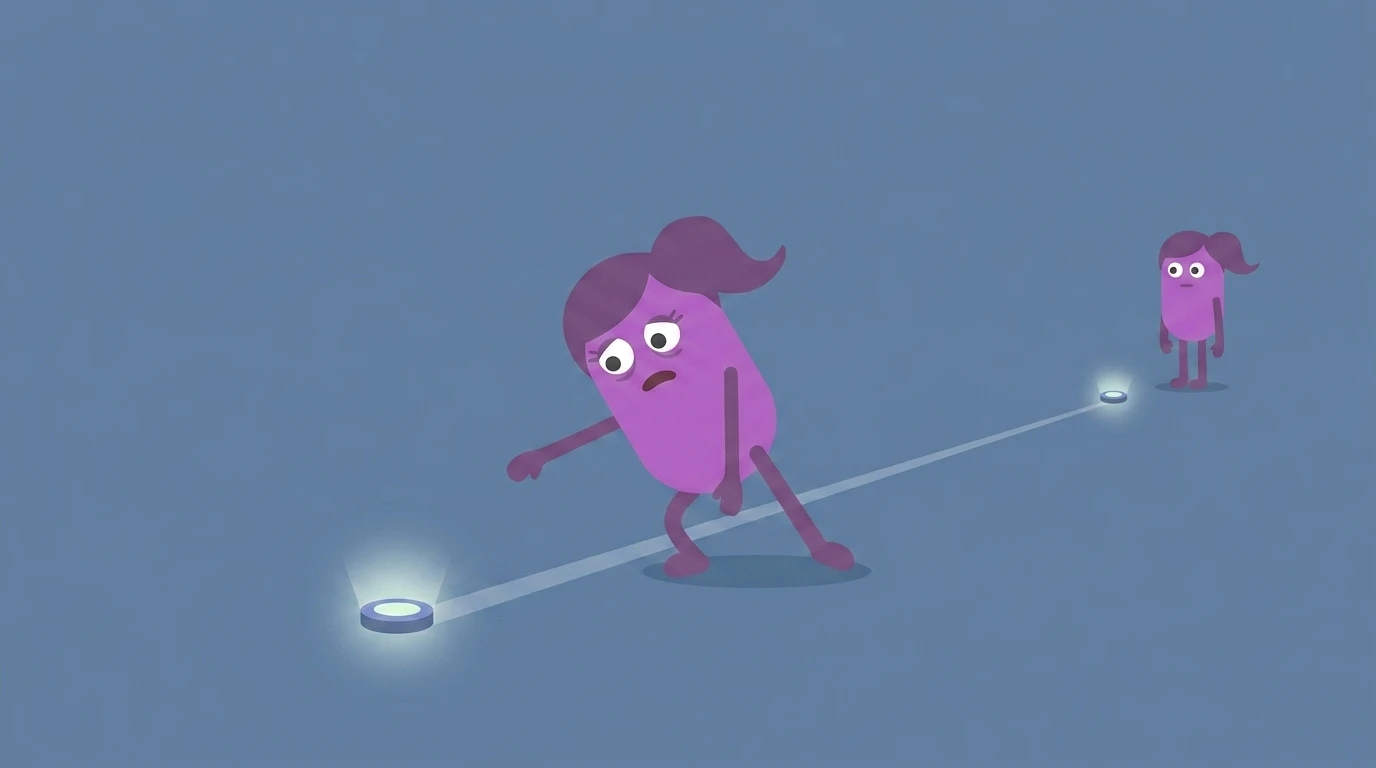
The ADHD brain doesn't need more motivation. It needs scaffolding — external structures that reduce the number of decisions between you and the action.
Here's what that looks like in practice:
Lower the bar until it's almost impossible to fail. Instead of "work out for an hour, five days a week," try "move your body for ten minutes, twice this week." That's your floor. If you do more, great. If you don't, you still succeeded. The research backs this up: people who set minimum-viable goals and build gradually are significantly more consistent than those who aim high and flame out. For the ADHD brain, the floor matters more than the ceiling because every time you hit the floor, you get a small dopamine hit of completion — the exact neurochemical your brain is starved for.
Kill the binary. The biggest psychological shift isn't about exercise at all — it's about how you measure it. Most systems track habits as done or not done. Pass or fail. This is catastrophic for the ADHD brain, which already tends toward rejection sensitivity and perceived failure. A spectrum approach — where a 20% day still counts as participation — fundamentally changes your emotional relationship with consistency. You stop asking "did I do it?" and start asking "how much did I do?" That's a different question entirely, and it produces a different feeling.
Add external accountability that isn't punitive. The ADHD brain is far more responsive to social accountability than internal discipline. A buddy who sees your check-ins — not to judge, but to witness — creates just enough external structure to bridge the task-initiation gap. The research on the Kohler Effect demonstrates that people working alongside others with slightly higher performance tend to increase their own effort — not because of competition, but because of connection.
Use your plan as a container, not a sentence. A plan should tell you what to do so you don't have to decide in the moment — because decision fatigue is an executive function tax, and the ADHD brain pays it at a premium. But the plan should also bend. If your plan says "30-minute run" and you've got 12 minutes and zero energy, a 12-minute walk is not a failure. It's a data point.
How This Connects to GetMotivated.ai
This isn't theoretical. GetMotivated.ai was built for exactly this pattern.
The platform's spectrum check-in system replaces pass/fail with a 0–100% slider. A 15% day — the day you stretched for five minutes and called it done — still registers as participation. Over time, you see your own consistency pattern, and the data tells a more honest story than your inner critic ever will.
The ADHD Fitness Consistency Plan is built specifically for the executive dysfunction stack described above. It starts with a low floor (your minimum viable movement), provides daily structure so you don't waste energy deciding what to do, and sends intention reminders before each session — because research on implementation intentions shows that a simple pre-commitment ("I will do X at Y time in Z location") significantly increases follow-through.
And you don't do it alone. Cohort-based challenges pair you with others working on the same thing. They see your check-ins. You see theirs. No feeds, no likes, no performance pressure. Just the quiet accountability of knowing someone else is in it with you.
The point isn't to become a person who never misses a workout. The point is to become a person who shows up — at whatever percentage today allows — and measures that honestly over time.
The Bottom Line
Exercise helps your ADHD. You already know this. The gap isn't knowledge — it's execution.
Traditional fitness advice asks you to build habits through willpower and consistency. Your brain isn't wired for that approach. What it is wired for: external structure, social accountability, low-barrier entry points, and a measurement system that doesn't punish imperfection.
Stop designing workout routines for the idealized version of yourself. Start building systems for the real one — the one who has great days and terrible days and everything in between.
A 20% day is still a day you showed up. And showing up is the whole game.