Externalise the clock
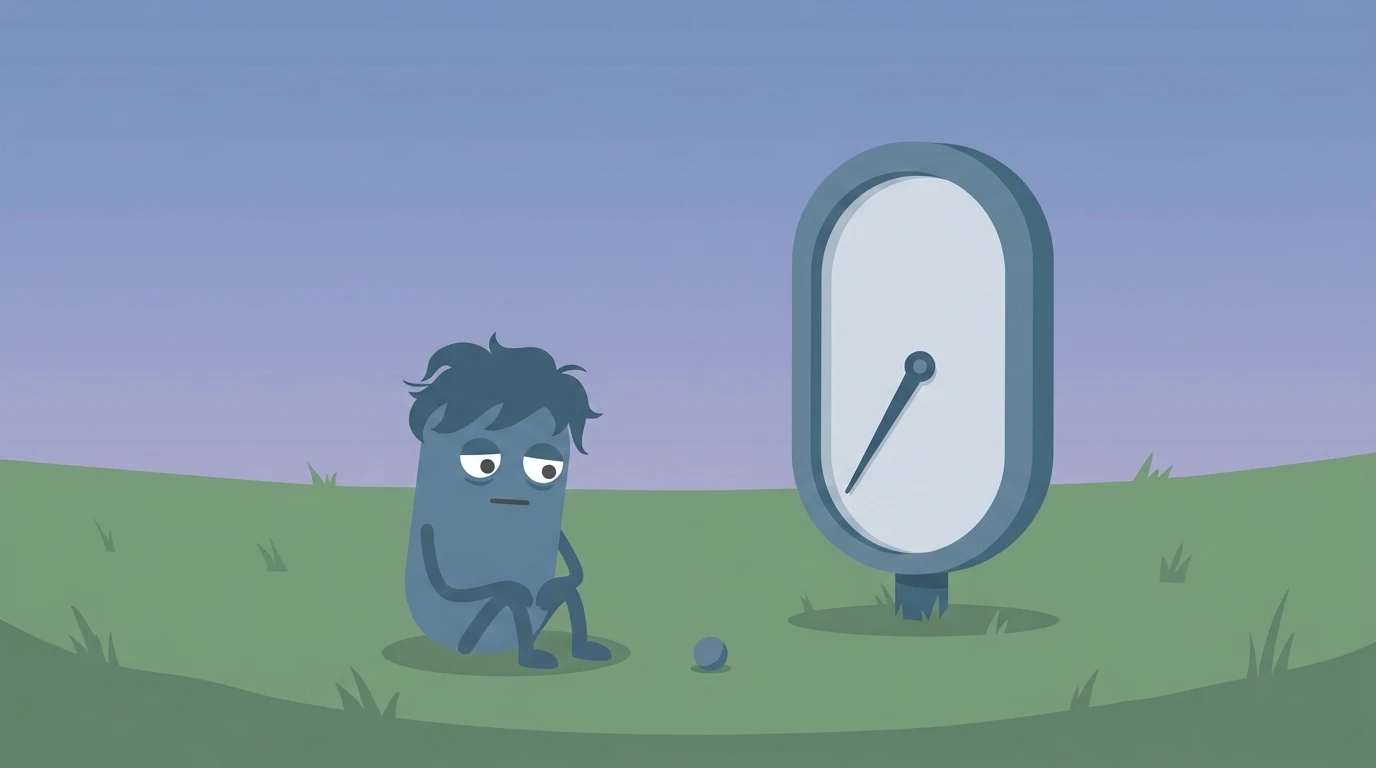
A review of time perception in ADHD found measurable differences in how intervals are judged, and the direction of the error is not random. You are not misjudging effort. You are reading an inaccurate instrument and treating its output as fact.
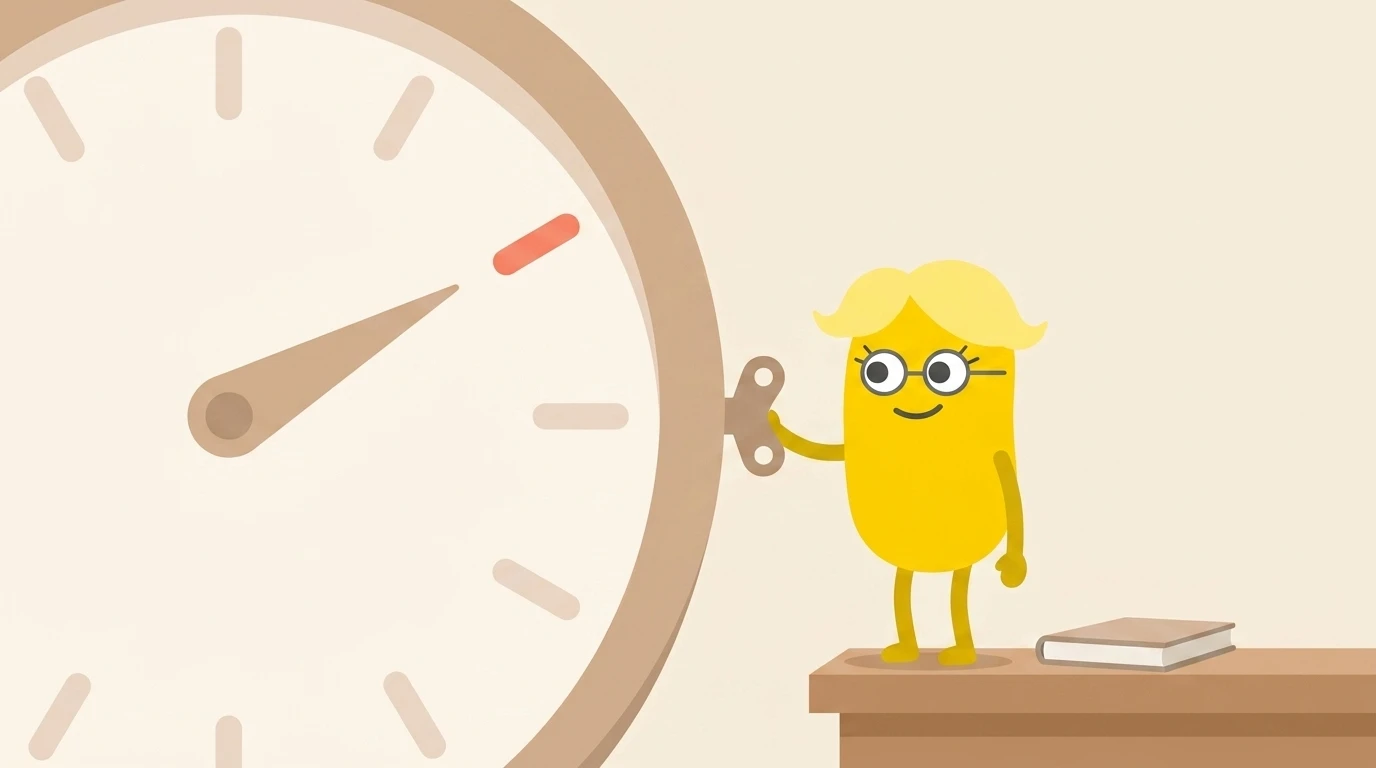
Kreider and colleagues found that externalising time was central to the strategies that actually worked for students with ADHD in their study. In practice that means a visible timer, a clock in view rather than on a phone that gets checked for other reasons, and an alarm at the halfway point rather than only the end. These time-blindness strategies go further into the mechanics of building this into a daily habit.
Plan for the overshoot as well as the undershoot
Hyperfocus is documented as its own attentional state rather than an absence of attention, and it costs the same lost hours as procrastination does, just in the opposite direction. A session that runs four hours on one topic and skips three others has still gone wrong, even though it felt productive the entire time it was happening.
Set an end alarm, not only a start time. The alarm that gets you moving is not the same alarm that gets you to stop, and a session without a planned stop tends to either collapse early or run over into subjects that never get touched.
Put the distraction outside the room
Willpower spent resisting a phone is willpower not spent on the material, and resisting it forty times in an hour uses more energy than the studying itself. Physical distance beats intention every time: another room, a drawer, a bag by the door. A phone in reach "just in case" gets checked whether or not the case ever arrives.
Retaining
Make the material ask you questions
Rereading feels productive and produces little, because recognising a sentence you already read is not the same skill as producing the answer from memory. Turning a heading into a question and answering it from memory produces more, because it fails visibly when the answer is not there, and a visible failure is useful information about exactly what to study next rather than a vague feeling of not being ready.
Study in the order things will be tested
Where a subject builds on itself, studying out of order costs a re-derivation each time a later concept needs an earlier one that was skipped. Following the sequence removes work that does not need doing twice, and it matters more for cumulative subjects like math and science than for subjects made of separate topics.
Use the interest that is already there
Morsink and colleagues examined motivation in ADHD through self-determination theory and found internal motives matter for engagement rather than being incidental to it. Where a topic connects to something already cared about, a historical event tied to a favourite film, a formula tied to a hobby, that connection is doing real work and is worth using on purpose rather than treating as a distraction from the "real" studying.
Matching the tip to the obstacle
If a tip is not helping, it is usually aimed at the wrong obstacle. Timers do nothing for a session you never opened, which is a task-initiation problem rather than a focus problem, and no amount of externalising the clock fixes a session that was never going to start in the first place.
Making it a routine rather than a resolution
Any of these works once. The difficulty is the twelfth time, on a day with no deadline pressure and no exam close enough to create urgency on its own.
That is where a set time and a group do more than a better technique. The structure carries the days motivation does not, and it removes the daily decision of whether tonight is a studying night. The Learn Daily Check-in is built around exactly that: a fixed daily slot and other people showing up to the same one, so the twelfth session looks the same as the first.
Where to start
Pick the one obstacle costing you most this week, not the one on the top of this list. Choose the single matching change. Use it for the next three sessions before adding anything else.
One change that survives three sessions teaches you more than five changes abandoned after one. The accommodations side of this, what to ask school or work for, is in the ADHD accommodations guide, and these ADHD study habits cover the longer-term routine that makes the good sessions the normal ones.