Using AI as Scaffold, Not Substitute
None of this means avoid AI entirely. It means use it in a specific, constrained way.
Leslie Josel's practical work on ADHD and daily schedules makes the right point: structure is not the enemy of creative or flexible thinking. It is the container that makes thinking possible. The resistance ADHD adults feel toward schedules usually comes from experiencing rigid schedules that left no room for the brain's actual rhythms, not from structure itself.
Apply that principle to AI-assisted study:
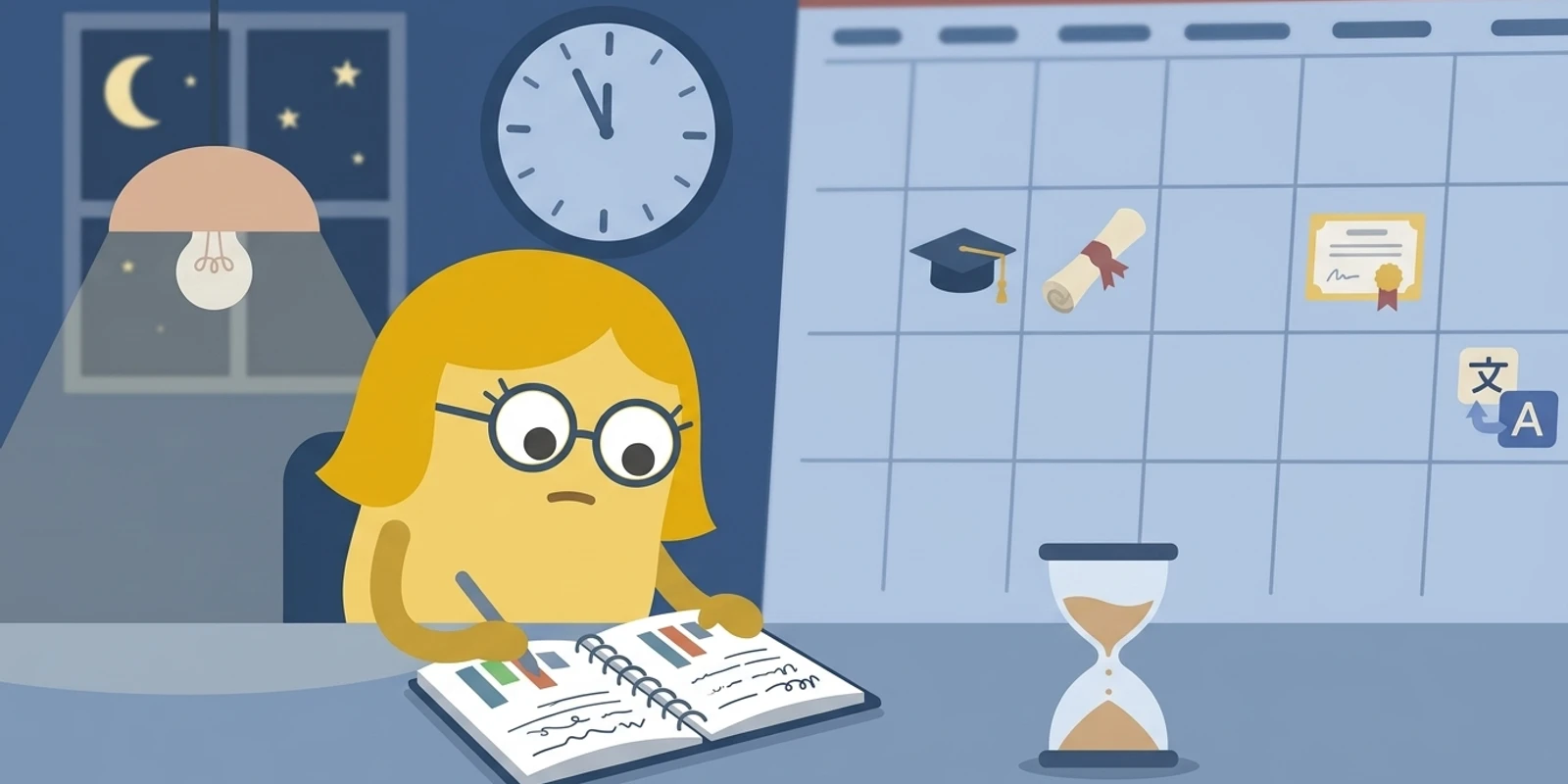
Build the external container first. Before opening any AI tool, write down on paper (not a screen): the topic, the single question you are trying to answer, and a 20-minute timer setting. The physical act of writing creates a commitment device. The timer creates a boundary.
Use AI only for retrieval practice. After a timed study block, close the source material. Open an AI chat and ask it to quiz you on what you just read. Generating answers from memory, then checking them, is one of the most well-supported techniques for durable retention. AI is excellent at this. It is terrible as a primary learning vehicle.
Set one topic per session, not one session per topic. ADHD brains hyperfocus or scatter. Narrowing to a single concept before you open any tool prevents the drift into seventeen subtopics.
The Contrarian Study Stack
Here is what actually works for ADHD learners trying to reskill in the AI era, ranked by evidence over novelty:
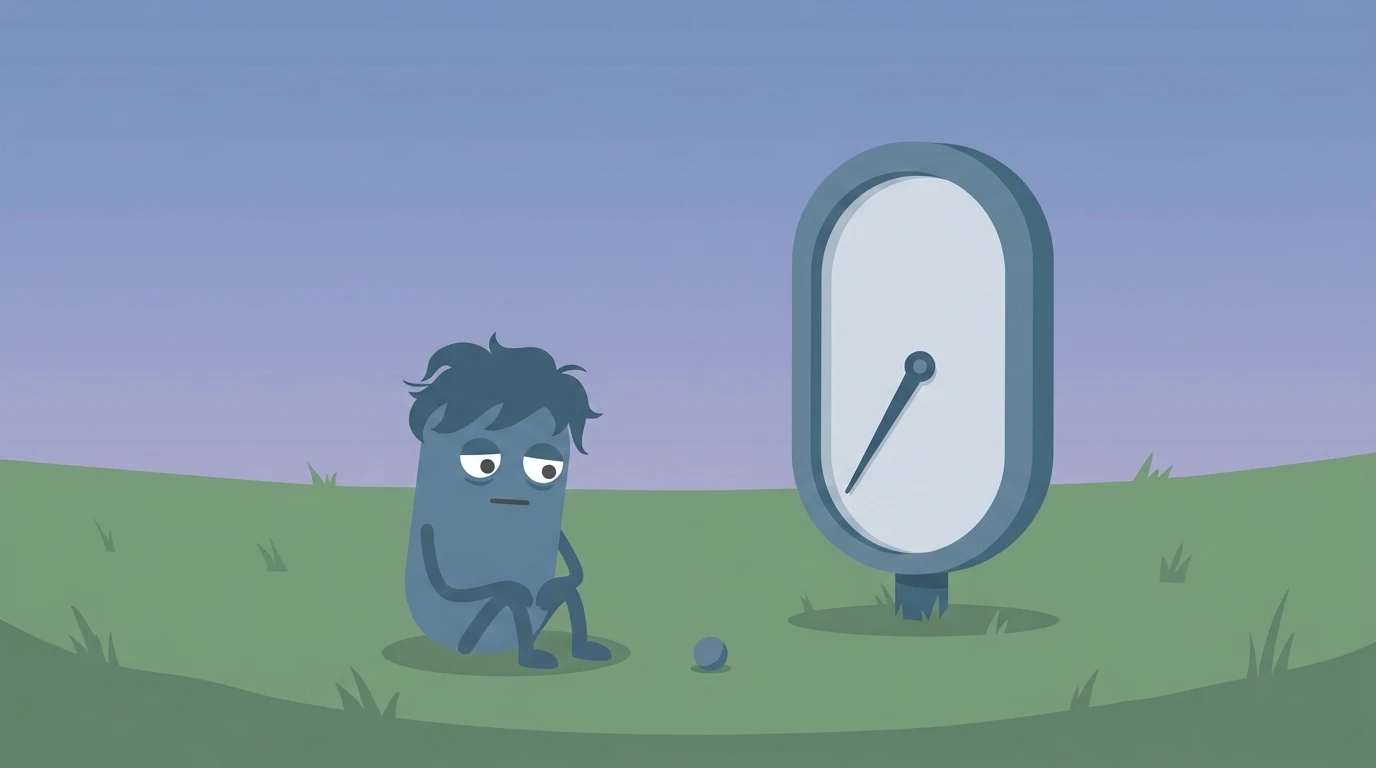
- Physical timer on your desk. Not a phone timer. A device with a visible display. Time blindness is real; make time visible.
- One handwritten sentence before you start. "Today I am learning [specific thing] so that I can [specific outcome]." This activates working memory and connects the session to a meaningful goal, which is the ADHD activation problem Barkley describes.
- 20-minute blocks, no exceptions. Not 25. Not 30. ADHD sustained attention has a shorter functional runway than most study advice assumes. Stop when the timer ends even if you feel in flow; restarting is easier than recovering from overextension.
- AI only in retrieval mode. After the block, use AI to test yourself. Not to explore more. Not to read more. To answer questions from memory.
- One-topic limit per sitting. Close the AI window after the retrieval session. Open a new one next time for a new topic.
This is less exciting than a personalized AI tutor that knows your learning style. It is also what the research supports.
---
Frequently Asked Questions
Can AI tools help ADHD learners study more effectively? Yes, but only when used inside a pre-built structure. Using AI as a starting point for open-ended exploration tends to trigger hyperfocus on novelty rather than retention. Use it for timed retrieval practice after you have already completed an initial timed study block.
Why do AI study sessions feel productive but leave nothing retained? The instant-reward loop of asking questions and getting answers activates the ADHD brain's dopamine system without triggering the effortful encoding that creates long-term memory. It mimics learning without producing it.
What is time blindness and why does it affect ADHD studying? Time blindness is the difficulty ADHD brains have sensing the passage of time. Barkley's research shows that people with ADHD struggle to use time as a bridge between intention and action. Studying without a visible timer often means losing an hour to a tangent without noticing.
What is the best study structure for adults with ADHD? Short fixed blocks of 20 to 25 minutes with a visible timer, one topic per block, a physical written task before starting, and a mandatory break between blocks. Kreider et al. (2019) found that college students with ADHD who used external environmental anchors outperformed those relying on internal motivation alone.
How is reskilling in the AI era different for people with ADHD? The AI era adds extra layers of novelty and distraction on top of already difficult executive function demands. The content is more fragmented, the tools are more stimulating, and the pace of change is faster. This makes external structure not just helpful but necessary for ADHD learners building durable new skills.
---
If you are trying to reskill and ADHD keeps getting in the way, the problem is rarely motivation. It is architecture. GetMotivated.AI's structured learning challenges are built around short, accountable daily commitments with built-in progress tracking, exactly the kind of external scaffold ADHD brains need to make reskilling stick. Browse the current challenge library and find one matched to where you are trying to go.