Why Standard Morning Routine Advice Fails for ADHD
Even setting aside sleep phase, ADHD brains face a specific set of challenges that make standard morning routine advice structurally mismatched.
Initiation difficulty is not about the clock time. Russell Barkley, whose research on ADHD as a disorder of executive function has been foundational to the field, describes ADHD not as an attention deficit but as a problem with self-regulation and the ability to initiate actions based on internal intention. ADHD brains need external cues, deadlines, and consequence to activate. Mornings, by design, are low-stimulus environments. There is no external urgency. There is no immediate consequence for delay. The conditions that ADHD brains need to function well are precisely absent in the typical morning.
Working memory deficits compound this. A person with ADHD may genuinely intend to follow their morning routine, may have written it down, may have rehearsed it the night before — and still find themselves standing in the kitchen forty minutes later, uncertain what they were supposed to do next. This is not forgetting. It is the difficulty of retrieving and executing a self-generated sequence without an external scaffold.
The emotional dimension matters too. Hyperfocus and emotional dysregulation mean that any friction point in a morning routine can derail the entire sequence. A notification on a phone, a minor irritant, an interesting thought — each of these is a potential exit ramp from the intended routine, not because the person doesn't care, but because the ADHD brain's ability to return to interrupted tasks is significantly impaired.
The Shame Cycle and Its Costs
There is a secondary problem with forcing an ill-fitting morning routine that gets less attention than it deserves: the psychological cost of repeated failure.
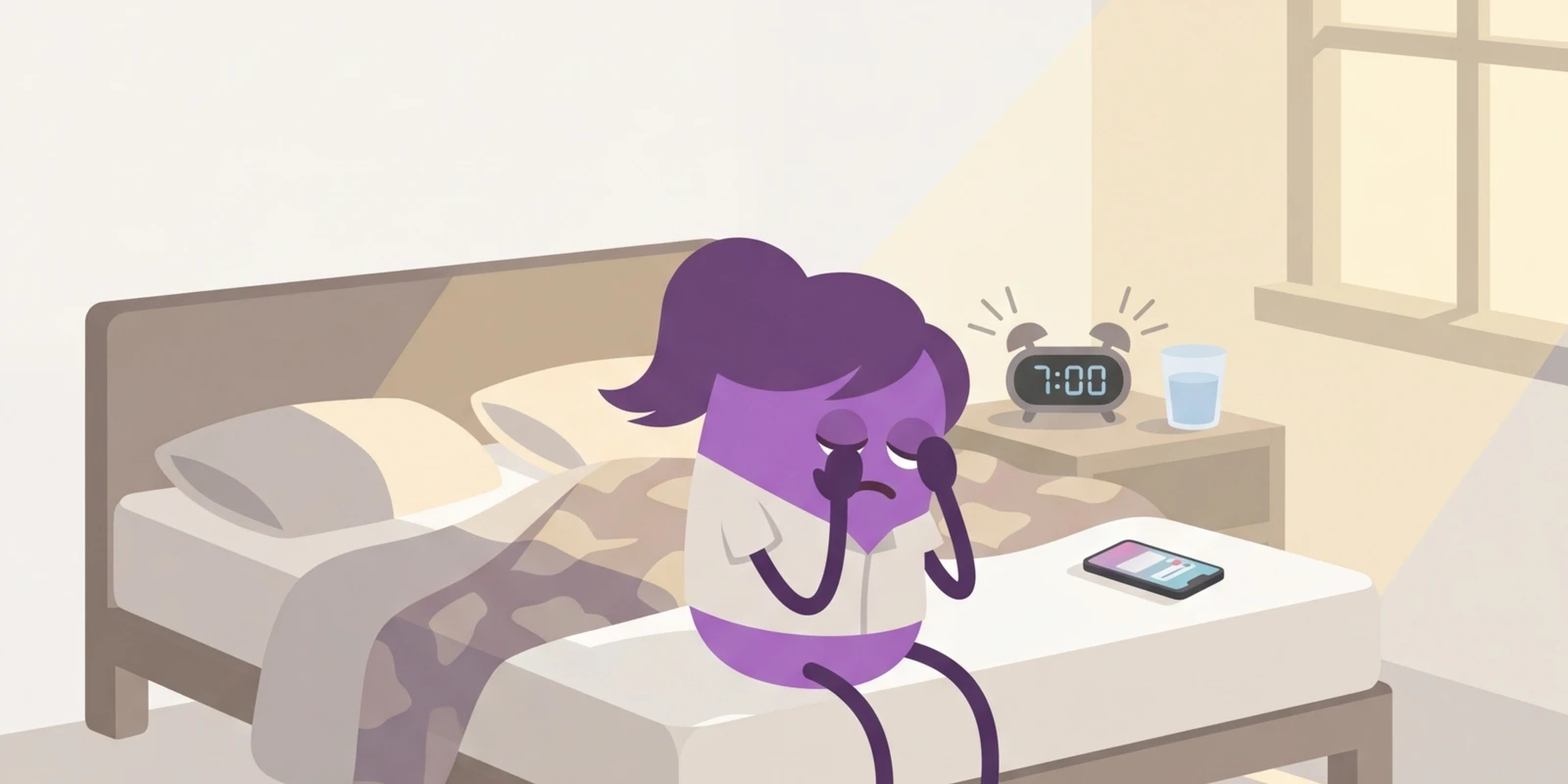
When someone with ADHD tries and fails to maintain a 5 AM routine — or any early morning routine that runs against their chronobiology — the visible result is a pattern of failed intentions. The narrative that follows is typically personal: "I'm not disciplined enough," "I don't want it badly enough," "successful people make this work, so the problem is me."
This narrative is factually wrong, and it is harmful. Dr. Ari Tuckman, a clinical psychologist who specializes in ADHD and author of several books on adult ADHD, has written extensively about how the gap between ADHD intention and execution is neurological, not motivational. Treating it as a motivation failure and responding with increased shame or self-criticism does not improve outcomes. It reliably makes them worse.
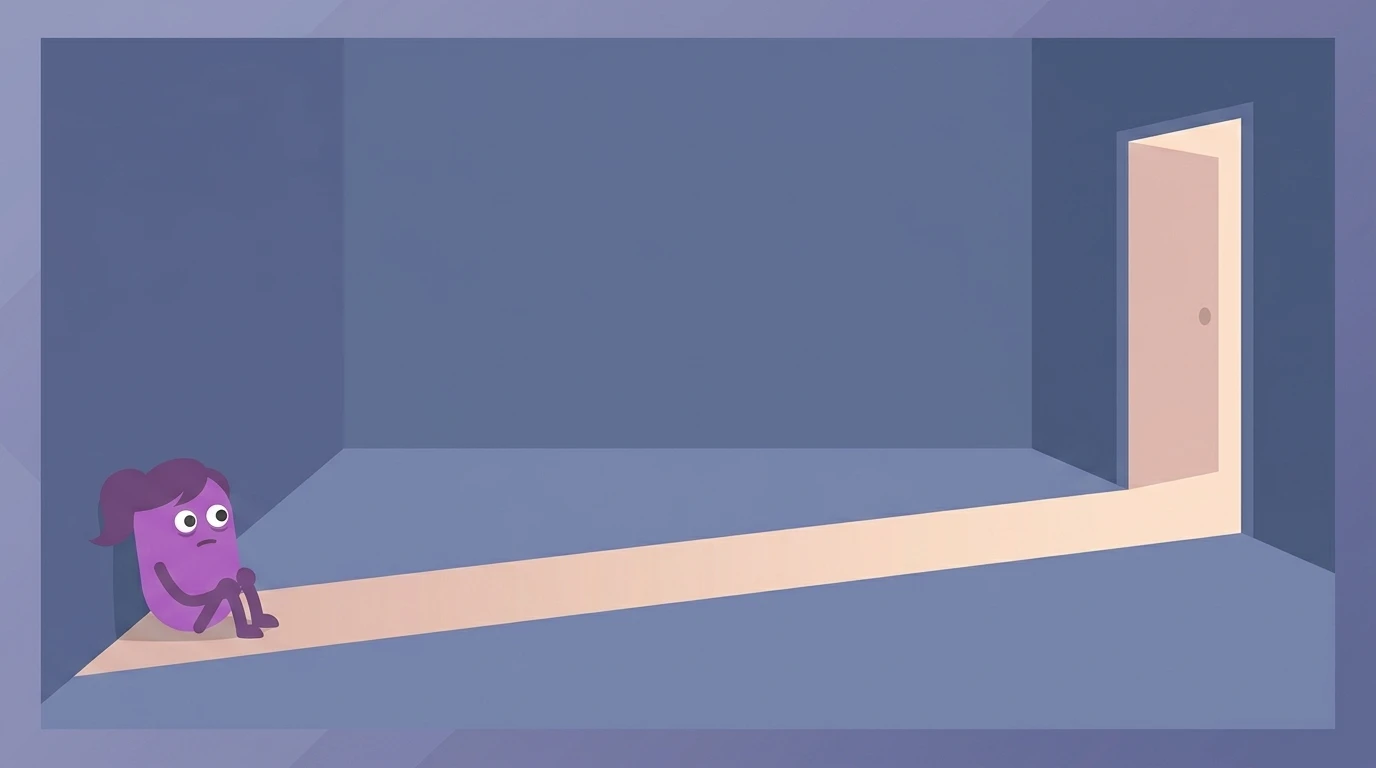
The shame cycle is not a minor inconvenience. Emotional dysregulation is a core feature of ADHD, and chronic shame activates that dysregulation in ways that compound executive function difficulties throughout the day. A morning routine designed around an unrealistic wake time doesn't just fail in the morning — it sets a negative emotional trajectory for everything that follows.
What Actually Works: Building a Routine Aligned With Your Chronotype
The goal is not to wake up at 5 AM. The goal is a consistent, functioning morning routine that enables a productive day. Those are very different targets, and conflating them is a mistake.
Find your actual sustainable wake time. This is the earliest time at which you can wake up without sleep deprivation — meaning you fall asleep within a reasonable window the night before and wake feeling functional. For many adults with ADHD, this is 7:30–8:30 AM, not 5:00 or 6:00. That is not a character flaw. It is a fact about your neurobiology, and building from that fact produces better outcomes than building from an aspirational schedule that collapses within two weeks.
Consistency on the wake time matters more than earliness. The research on circadian regulation is clear: irregular sleep timing is more damaging to cognitive function and mood than simply having a later-than-average schedule. Waking up at 8:00 AM every day is substantially better for ADHD brain function than waking at 5:30 AM on weekdays and 10:00 AM on weekends. Anchor the wake time and protect it.
Use bright light immediately. Light is the primary zeitgeber — the external cue that resets the circadian clock. For someone with DSPS, ten to thirty minutes of bright light exposure (ideally sunlight, or a 10,000-lux light therapy lamp) immediately upon waking advances the circadian phase over time and increases morning alertness. This is an evidence-based intervention with documented efficacy in both DSPS and ADHD populations.
Remove decisions from the morning. Decision fatigue is a real constraint for ADHD brains, and it is most acute in the morning when dopamine is lowest. Lay out clothes the night before. Prepare coffee materials the night before. Identify the one or two non-negotiable morning tasks and make them as close to automatic as possible. Complexity is the enemy of execution for ADHD morning routines. A three-step routine that runs reliably is worth vastly more than a twelve-step routine that collapses every Thursday.
Build in external structure. ADHD brains regulate behavior significantly better with social accountability than with internal motivation alone. This is not a personality trait — it is a documented feature of how the ADHD brain's dopamine system responds to consequence. A check-in with another person, a commitment device, or a structured program that creates external accountability at the start of the day is not a crutch. It is a neurologically appropriate tool.
How GetMotivated.ai Fits Into This
GetMotivated.ai is built around a core insight that is directly relevant to ADHD morning routines: behavior change works better with structure, accountability, and community than it does through willpower alone.
The platform's group challenges and AI coaching features are designed specifically for people who struggle with the self-regulation and initiation problems that characterize ADHD. Rather than providing another productivity framework to internalize and execute on your own, the platform creates external scaffolding — scheduled check-ins, peer accountability, and structured daily tasks that remove the initiation burden from the individual.
For someone building a morning routine with ADHD, this means starting each day with a structured prompt rather than an open-ended intention. It means having an accountability partner or group that creates mild social consequence — the kind of consequence that ADHD brains actually respond to. And it means having a system that adapts to real-world inconsistency rather than treating every missed day as a failure that restarts the clock.
The research on external accountability in ADHD is robust. A study published in the Journal of Attention Disorders found that social facilitation — the presence of others engaged in similar tasks — significantly improved task completion and focus in adults with ADHD. The mechanism is straightforward: external social context provides the cue and consequence that the ADHD brain cannot reliably generate internally.
The Bottom Line
The 5 AM routine is not a moral standard. It is a schedule that happens to work for a subset of people with neurotypical circadian rhythms and morning-type chronotypes. For the majority of adults with ADHD — most of whom have measurable delayed sleep phases — it is the wrong target.
The correct question is not "how do I wake up earlier?" It is "what is the most effective morning structure for my actual brain?"
That structure will probably involve a later wake time than productivity culture recommends. It will definitely involve consistency over earliness. It will involve external accountability rather than reliance on internal motivation. And it will involve ruthless simplicity rather than aspirational complexity.
Stop trying to wake up at 5 AM. Build a routine that your brain can actually maintain.