March 27, 20268 min readADHD & Neurodivergence

Body Doubling for ADHD: The Science, How to Do It, and Where to Find a Partner

Body doubling is the practice of working alongside another person to activate focus — and for ADHD brains, it's one of the highest-leverage productivity strategies available. Here's the science, how to do it, and where to find a partner.

Rachel Stein

Last reviewed: August 2026

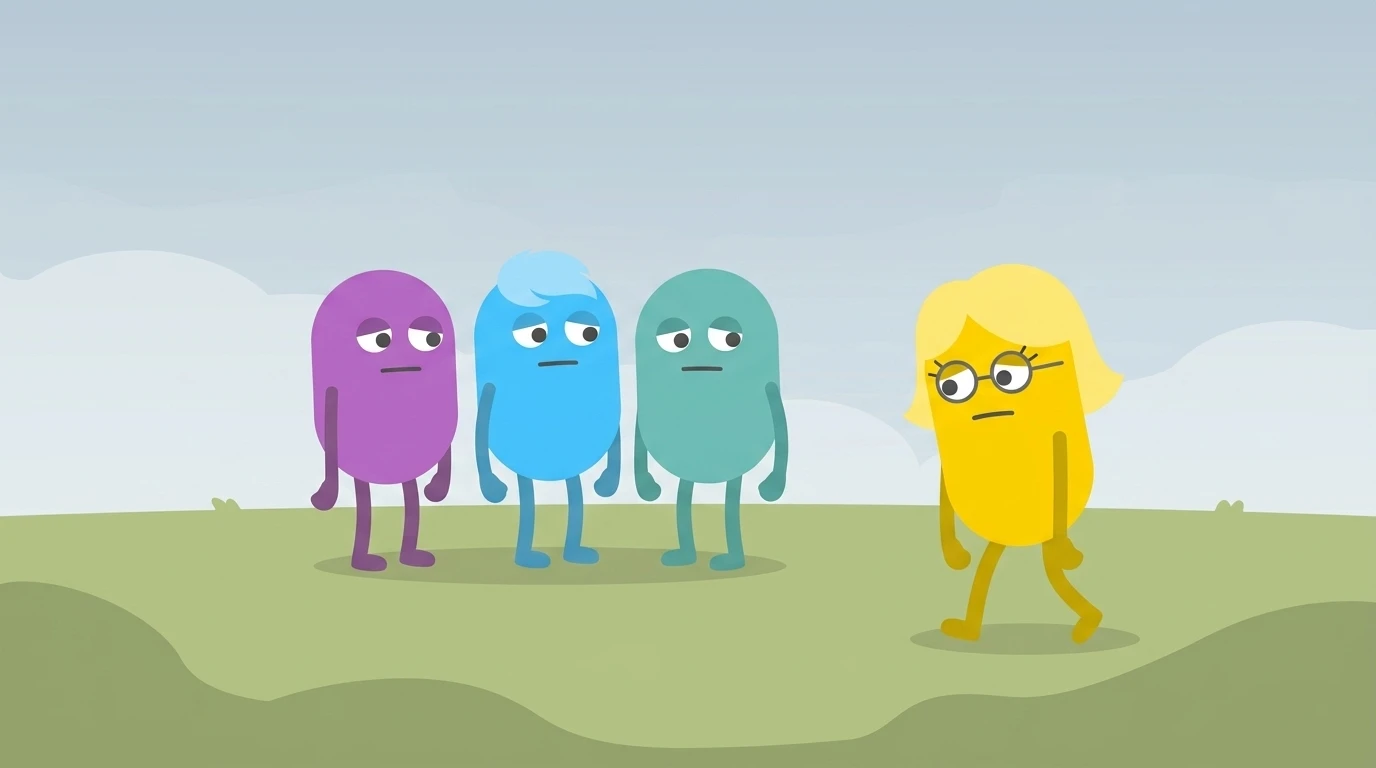
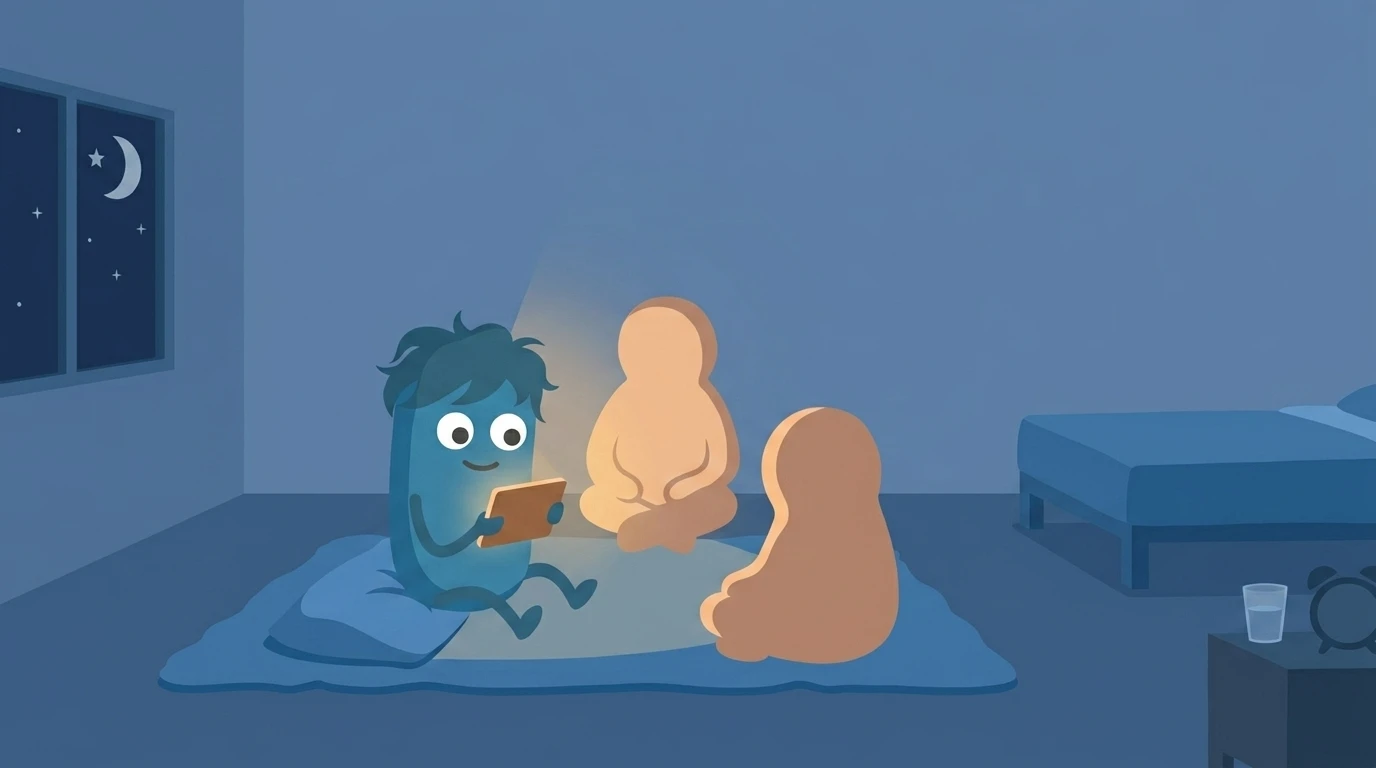
Illustration for the article: Body Doubling for ADHD: The Science, How to Do It, and Where to Find a Partner

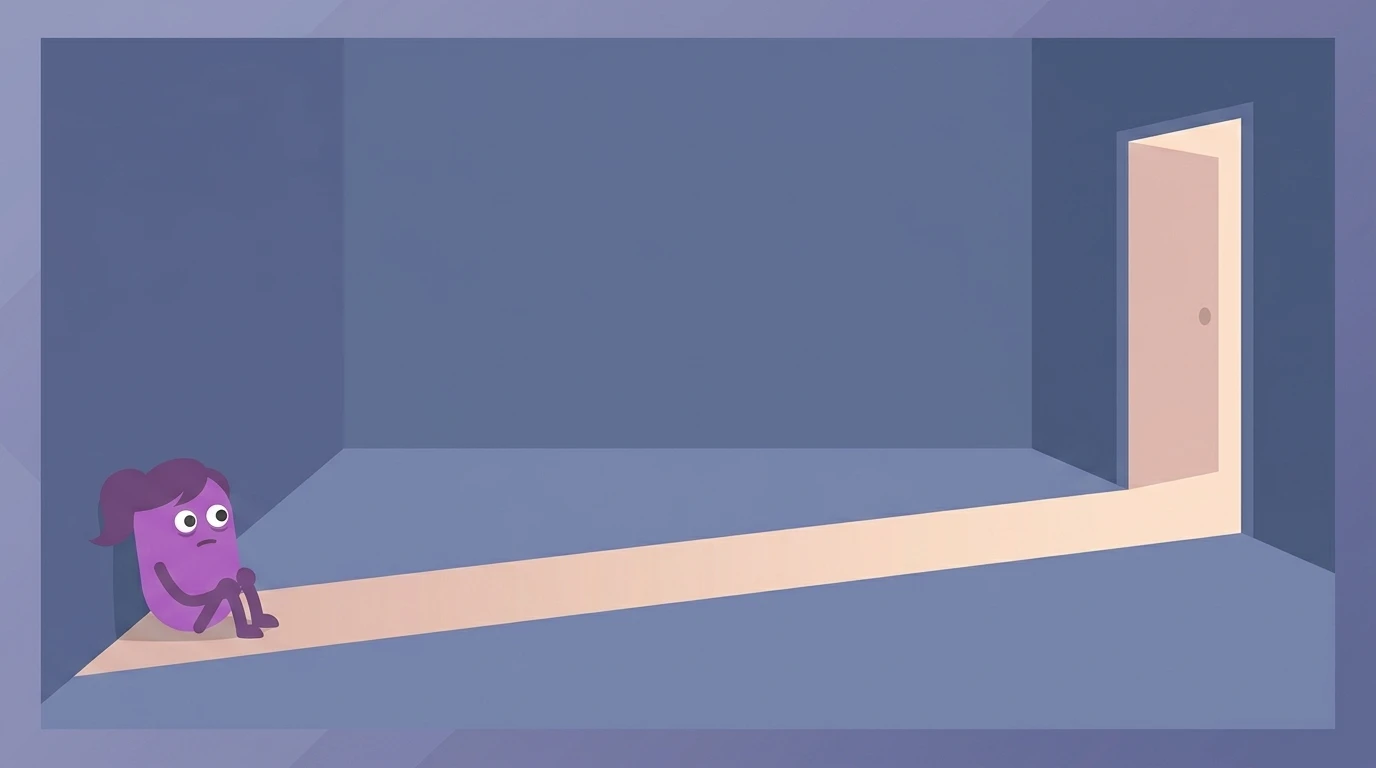
Body doubling for ADHD is the practice of working alongside another person — in person or on a video call — not for their help, but for the neurological effect of their presence. For ADHD brains, social presence provides the external arousal that a dysregulated dopamine system cannot reliably generate alone. A task that feels impossible at a home desk often becomes manageable the moment someone else is in the room.

If you've ever noticed that you can work for three hours at a coffee shop but can't start a single paragraph at home — this is why. And once you understand the mechanism, you can replicate that effect deliberately.

What Is ADHD Body Doubling?

Body doubling is the practice of working alongside another person, not for their assistance, but for the ambient effect of their presence. The term originates in ADHD coaching, where practitioners repeatedly observed that clients who struggled to initiate or sustain tasks alone would complete those same tasks without difficulty when someone else was nearby.

The other person doesn't need to be involved in your work. They can be silent. They can be across a video call. They might be doing something completely unrelated. What matters is that they exist in the space — and that your brain registers their presence.

This is documented widely in ADHD coaching literature as one of the highest-leverage, lowest-friction interventions available for task initiation and sustained attention. It doesn't require medication adjustments, expensive therapy, or significant behavioral change. It requires another person.

Body Doubling Meaning: Why the Name

The "double" in body doubling refers to the second body in the room. ADHD coaching practitioners started using the term to describe a simple clinical observation: a second person's presence acted like an anchor, grounding the ADHD brain in the present task. The phrase stuck because it captures something literal — you're working, and so is your body double.

Why Does Body Doubling Help ADHD?

The theoretical foundation is Robert Zajonc's social facilitation theory, first published in Science in 1965. Zajonc demonstrated that the mere presence of others increases physiological arousal in both humans and animals — and that this heightened arousal improves performance on familiar, well-structured tasks.

For neurotypical people, this effect is real but modest. For people with ADHD, the effect appears significantly amplified, and the reason is neurological.

ADHD is fundamentally a dopamine regulation disorder. The prefrontal cortex — which governs executive functions like task initiation, sustained attention, and impulse control — depends heavily on dopamine signaling. In ADHD brains, this system is underactive at baseline. The brain struggles to generate the internal motivation and alertness needed to engage with tasks that aren't immediately stimulating or high-stakes.

Social presence changes the equation. The mild activation that comes from having another person nearby — the subtle awareness of being observed, the low-level social engagement — provides an external source of the arousal that the ADHD brain cannot reliably generate from within. It's not pressure. It's stimulation at the right level.

Key Stat: Research published in the Journal of Attention Disorders shows that individuals with ADHD demonstrate significantly better task completion and reduced procrastination when working in the presence of others compared to working alone. The effect is consistent across age groups and task types.

The mechanism also explains why body doubling works even when the other person isn't watching, isn't helping, and doesn't know what you're working on. Their presence alone is the active ingredient.

Is Body Doubling Only for ADHD?

No — but ADHD brains benefit most dramatically. Anyone can find it easier to work in a library than alone at home. The difference is that neurotypical brains can access focus without external support more reliably. For ADHD brains, where the prefrontal cortex's baseline activation is structurally lower, social presence isn't a nice-to-have. For many people, it's functionally necessary.

Related Challenges & Plans

Body Doubling vs. Accountability: A Critical Distinction

These two concepts are often conflated, and the distinction matters for choosing the right strategy.

Accountability works through social consequence. You report what you did or didn't do, and the mild social cost of admitting failure motivates follow-through. Accountability partners check in, ask for updates, and create soft external deadlines.

Body doubling works through co-presence in real time, not consequence. There's no report-out, no check-in structure, no social cost for losing focus. The mechanism is purely neurological: another person's presence activates the arousal that enables you to start and stay on task.

Both have value. Accountability helps with commitment and follow-through over longer timeframes. Body doubling helps with the moment-to-moment capacity to sit down and work at all.

For ADHD, the inability to initiate is often the primary obstacle — not a lack of commitment. A person who genuinely wants to complete their tax return and cannot start it does not have a commitment problem. They have an activation problem. That's what body doubling addresses.

How to Body Double Effectively

In-Person Body Doubling

The most natural form. Working in a library, coffee shop, or co-working space provides ambient social presence continuously. The key is finding the right level of stimulation — enough social presence to activate focus, not so much interaction that attention is pulled away from the task.

A quiet library reading room typically hits the optimal range. A loud restaurant during peak service usually doesn't.

Structured in-person body doubling involves arranging to work alongside a specific person — a friend, partner, or colleague — with an explicit agreement that both will work independently for a set time. No helping each other. Minimal conversation. Just parallel presence.

Virtual Body Doubling

Virtual body doubling has become standard practice since remote work normalized video calls. Two people join a call, briefly state what they're working on, mute, and work in silence for 25–90 minutes. Camera-on versus camera-off matters less for most people than the shared commitment to the session.

Several platforms now host virtual co-working rooms where strangers work silently together in real time. Focusmate pairs users for 50-minute sessions with a light accountability layer — you book a slot, a stranger shows up, you both state your intentions, and you work. Focusmate's own data shows task completion rates above 90% in sessions.

Choosing the Right Body Doubling Partner

Partner selection matters more than most guides acknowledge. The ideal body doubling partner is:

Engaged in their own focused work during the session — not distracted, browsing, or checking their phone

Non-interruptive — comfortable with silence, not prone to starting conversations mid-session

Consistent — reliably available at scheduled times, reducing the friction of organizing each session

Non-judgmental — doesn't comment on what you're working on, how fast you're going, or whether you seem on-track

Partners who check in too frequently, offer unsolicited help, or treat the session as social time undermine the mechanism. The presence should be calming and activating at the right level — not socially demanding.

Body Doubling Apps and Virtual Platforms

The demand for body doubling support has produced a growing ecosystem of tools. Here's how the main options compare:

Focusmate — The most established virtual body doubling platform. Pairs strangers for 50-minute video co-working sessions. The combination of social presence and soft accountability (another person expects you to show up) makes it particularly effective. Free tier available with limited sessions per week.

Dubbii — A body doubling app built specifically for ADHD. Offers on-demand sessions without requiring scheduling coordination, which reduces one of the friction points that prevents consistent use.

Deepwrk — A virtual body double service positioned as a professional co-working tool. Offers longer session formats and a community component.

Discord productivity communities — Many productivity Discord servers maintain always-on "study with me" or "co-working" voice channels. The ambient sound of others typing and the visual indicator that others are present replicates the coffee shop effect digitally, with zero scheduling friction.

YouTube "study with me" videos — Extended recordings of someone working at a desk, often with ambient sound. These lack the reciprocal presence element but provide low-friction access to a social atmosphere. Many people with ADHD report them genuinely helpful for low-demand tasks.

How GetMotivated.ai Solves the Body Doubling Problem

The most consistent feedback about body doubling tools is a friction problem: you have to find a partner, schedule a session, show up, and do this repeatedly. When ADHD is the reason you need body doubling in the first place, those coordination steps can be exactly the barrier that prevents consistent use.

GetMotivated.ai's buddy matching feature addresses this directly. Rather than pairing you with a random stranger for a one-off session, the platform matches you with a compatible focus partner based on your working style, schedule, goals, and personal context. The match is ongoing — your buddy becomes a consistent body doubling partner who's reliably available at the times when focus is hardest to find.

While apps like Focusmate focus on structured one-off co-working sessions, and Dubbii and Deepwrk offer on-demand pairing, GetMotivated.ai builds the body doubling relationship into an ongoing habit — combining the social presence mechanism with actual knowledge of each other's goals and challenges.

The platform's group challenges extend body doubling to cohort-level co-working: groups of people working toward shared goals with structured check-ins that blend accountability with the social presence that makes starting work feel possible. Members consistently report the same shift they notice in coffee shops — showing up to a group session, even silently, produces focus that a solo home-office setup doesn't.

AI coaching adds a third layer: helping you understand when body doubling is the right tool and when something else is driving the struggle — sleep, overwhelm, task structure, or a problem that needs a different intervention entirely.

For adults who have spent years trying to force productivity alone, the shift to a social-presence-based approach is often the reframe that changes everything. The person who can write for three hours at a café but can't start a paragraph at home isn't lacking discipline. Their brain is working exactly as it was built to.

Next time you search, our newest guide shows up.

Sources

Topics

AI-ready summary

Body doubling for ADHD is the practice of working alongside another person — in person or virtually — to provide the social presence that activates focus. ADHD brains underperform on dopamine regulation, and another person's presence supplies the external arousal that compensates for this. Research on social facilitation (Zajonc, 1965) and ADHD executive function shows significantly better task completion rates when working alongside others versus alone.

Key takeaways

  • Body doubling works by providing external social arousal that ADHD brains cannot reliably generate internally — the other person's presence, not their attention, is the active ingredient.
  • ADHD is fundamentally a dopamine regulation disorder; social presence provides the ambient stimulation the prefrontal cortex needs to activate.
  • Virtual body doubling is effective for most people — Focusmate sessions show task completion rates above 90%.
  • Body doubling and accountability are different mechanisms: body doubling helps initiation in the moment, accountability helps long-term follow-through.
  • Consistent access to a matched body doubling partner produces better results than occasional co-working sessions.

FAQs

What is ADHD body doubling?

Body doubling is the practice of working alongside another person — in person or virtually — not for their help or input, but for the neurological benefit of their presence. For ADHD brains, social presence provides external arousal that activates the prefrontal cortex and enables focus on tasks that feel impossible alone.

Does body doubling actually help ADHD?

Yes. Research on social facilitation (Zajonc, 1965) established that human presence increases arousal and improves task performance. Studies in the Journal of Attention Disorders show significantly better task completion and reduced procrastination when people with ADHD work alongside others. Focusmate data shows task completion rates above 90% in virtual co-working sessions.

How do you find a body double for ADHD?

Options include informal arrangements with a friend or colleague who does focused work, virtual platforms like Focusmate that pair strangers for scheduled 50-minute sessions, Discord productivity communities with co-working voice channels, and buddy-matched platforms like GetMotivated.ai that pair people based on schedule, working style, and goals.

Is body doubling only for ADHD?

No. Body doubling works for anyone who benefits from social presence — but ADHD brains experience the effect more dramatically because dopamine underactivity in the prefrontal cortex is directly compensated by the external arousal social presence provides. Neurotypical people can focus alone more reliably; ADHD brains often cannot.

What is the best body doubling app for ADHD?

Popular options include Focusmate (stranger-paired 50-minute sessions with accountability layer), Dubbii (body doubling app for ADHD specifically), and Deepwrk (virtual body double service). GetMotivated.ai's buddy matching goes further by pairing people based on working style, schedule, and goals for ongoing focus partnership — not just one-off sessions.

What is the difference between body doubling and accountability?

Accountability works through social consequence — you report what you did or didn't do, and the mild social cost of admitting failure motivates follow-through. Body doubling works through co-presence — the other person's existence activates focus neurologically in real time. Body doubling helps you start and stay on task; accountability helps you follow through over time.

Related Challenges & Plans

Keep reading