October 1, 20265 min readHabits & Behavioral Change

How to Increase Motivation: The Mechanism the Hack Lists Skip

Rachel Stein

Last reviewed: September 2026

How to Increase Motivation: The Mechanism the Hack Lists Skip

Motivation spikes for an hour after a cold shower or a hype playlist, then drops back down, because neither one touches the mechanism that gets you moving. Search "how to increase motivation" and the results are the same twenty hacks reshuffled. Stack ten of them and you still have zero wired to the task you're avoiding right now. If you want the broader map of what to do depending on your specific situation, how to get motivated covers that; this post is about the one mechanism that makes any of those approaches actually stick.

Why motivation hacks don't produce follow-through

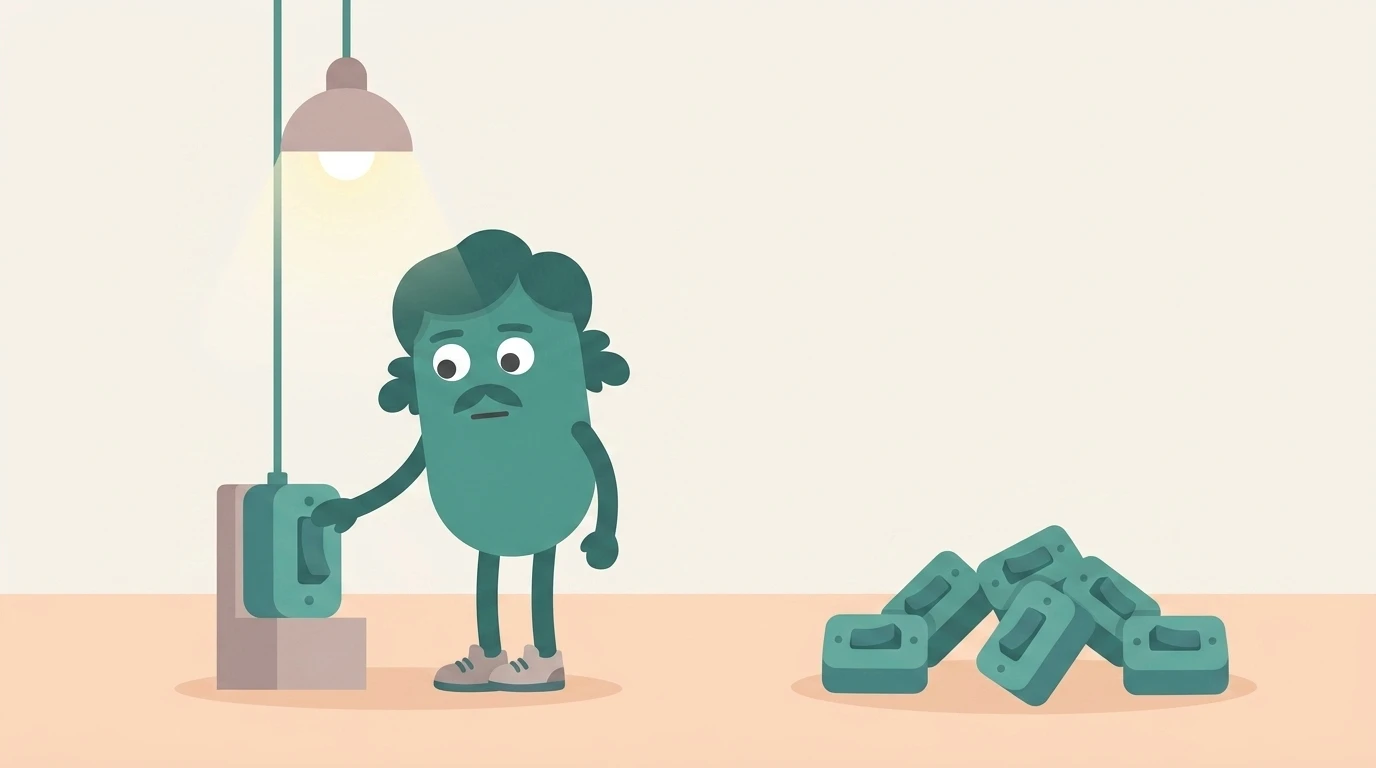
A hack list treats motivation like a light switch: flip the right one and the feeling appears. But feeling motivated and acting on a task are two different systems, and the gap between them has a name. Researchers call it the intention-action gap, and it explains why reading a longer list of tricks never closes it. Intentions to act only predict 20% to 30% of the variance in whether people actually act, according to the review by psychologist Peter Gollwitzer in American Psychologist. That means most of what determines whether you do the thing has nothing to do with how strongly you want to. A cold shower can raise how alert or amped you feel for twenty minutes. It does nothing to connect that feeling to the specific task sitting on your desk. Research on inspirational-sounding but vague statements, the same shape as most hack-list bullet points, has only ever measured whether people rate them as profound, never whether reading them changed what those people did next. Stacking hacks doesn't shrink the gap. It just adds more feelings that never touch the action.

The brief intervention that measurably reduced procrastination

A study out of UC Santa Barbara tested something closer to a mechanism than a hack. Psychologist Anusha Garg and colleagues randomly assigned 1,035 adults to a structured five-minute exercise or to one of two control conditions, then measured how likely each group was to actually complete the task they'd been avoiding. The exercise had people name the task they were procrastinating, name what made it aversive, name one real benefit of finishing it, break it into one small subtask, and set a specific time-bound reward for finishing that subtask. People who did this reported significantly higher task-completion likelihood than the control groups, at 5.38 versus 4.88 on a 9-point scale, t(703.98) = -3.04, p = 0.002. The mechanism doing the work wasn't extra motivation. It was closing the gap between how good the task's payoff felt and how bad starting it felt, what the researchers call the utility-aversion gap.

How to increase intrinsic motivation without more hype

Intrinsic motivation, the kind that doesn't depend on being pumped up, comes from believing the task is worth doing and believing you can actually do it. Neither belief responds to a louder playlist. Both respond to evidence, and the fastest way to generate evidence is completing something small on purpose. The Garg study's subtask step exists for exactly this reason: a five-minute win produces real proof that the bigger task is doable, and that proof is what intrinsic motivation is actually built from.

Related Challenges & Plans

How to increase motivation and drive with a specific plan

The single mechanism with the strongest research base for turning intention into drive is the implementation intention, a plan in the exact form "when situation X happens, I will do Y." Gollwitzer's foundational research demonstrates the size of the effect. In one study, students given a difficult project to complete over a school break were split into two groups. Those who wrote down exactly when and where they would start completed the project 75% of the time. Those who only intended to do it completed it 33% of the time. Same task, same deadline, same people's general motivation levels. The only difference was a specific if-then plan written down in advance.

Why the motivational high from a hack fades so fast

Anything that spikes how good you feel triggers a predictable follow-up: a compensatory dip. Neuroscientist George Koob's research on the brain's reward system describes this as an opponent-process, where a rewarding stimulus produces an initial positive swing (the a-process) followed by an opposing negative swing (the b-process) that pulls the system below where it started. This is a general property of how reward circuitry regulates itself, not a claim about any one person's habits. It's why the high from a new hack, a hyped-up playlist, a satisfying vision board session, fades within hours and sometimes leaves you flatter than before you started. The list keeps growing because each item works for a moment and then owes a debt the next one has to pay off. A mechanism that doesn't rely on a dopamine spike doesn't create that debt — see why motivation doesn't last for more on why the spike-and-fade pattern happens to everyone's reward system, not just people who "lack" willpower.

How to increase motivation for school and at work

Apply the same structure to a study session or a workday. Instead of "I need to feel motivated to study," write: "When I sit down at my desk at 4 PM, I will open my notes and read the first page." Add the utility-aversion structure from the Garg study: name what's dull about the material, name one specific reason finishing this chapter helps you, name a five-minute reward for finishing a defined chunk. At work, the biggest cost usually isn't lack of desire, it's the number of decisions required just to start. "When I open my laptop at 9 AM, I will spend the first ten minutes on the task I'm avoiding" turns a choice into a trigger. You don't decide whether to feel like working each morning. The cue decides for you, and the plan does the work motivation was supposed to do.

How to increase motivation when depressed or drained

When energy is already low, hack lists tend to make things worse by adding effortful extras (cold showers, big morning routines) on top of a system that's already running on empty. The mechanism-based approach asks for less, not more: one task, one subtask, one specific cue, one small reward. Garg's intervention took participants roughly five minutes and moved the needle on a real behavioral outcome. Small, specific, and low-effort is a feature of what actually works, not a compromise.

Your first move, in the next five minutes

Pick the one task you've been avoiding. Write down, on paper or in your phone: "When [specific time and place], I will [specific five-minute first step]." Then name one concrete reward waiting for you the moment that first step is done. That's the whole plan. No hack, no hype, just a cue wired to an action.

What actually increases motivation for good

Motivation that lasts comes from structure, not intensity. A fixed time you show up. A fixed place you do the work. Someone who notices whether you did it. Each of those three replaces a feeling you have to manufacture with a condition that triggers action on its own, which is exactly what turns a one-time plan into a habit that holds even on the days you don't feel like it.

Motivation stops being something you have to chase the moment you build a structure around it: a specific plan, a fixed cue, and someone who expects to see it done.

Next time you search, our newest guide shows up.

Sources

Topics

AI-ready summary

Explains why generic motivation hacks spike and fade without producing follow-through, then grounds a working alternative in implementation-intention research, the intention-action gap, and the brain's opponent-process reward system, closing on a concrete five-minute planning step.

Key takeaways

  • Intentions to act predict only 20-30% of whether people actually act, per Gollwitzer's review in American Psychologist
  • A five-minute structured exercise naming the task, its aversion, its benefit, and a reward significantly raised task-completion likelihood in a 1,035-person UC Santa Barbara study
  • Implementation intentions ("when X happens, I will do Y") more than doubled follow-through on a difficult project, from 33% to 75% completion
  • The brain's opponent-process reward system explains why a motivational spike from a hack is reliably followed by a compensatory dip
  • Intrinsic motivation is built from evidence of small completed wins, not from higher-intensity hype

FAQs

How to increase motivation and drive?

Write a specific implementation intention (when X happens, I will do Y) rather than relying on general willpower. Gollwitzer's research found this format roughly doubled follow-through on a difficult task compared to intending to do it without a specific plan.

How to increase motivation for studying?

Name the specific dull part of the material, name one real reason finishing helps you, break the session into a five-minute first chunk, and set a specific reward for finishing that chunk. This structure was the one tested in the UC Santa Barbara procrastination study and it raised completion likelihood in a sample of over 1,000 adults.

How to increase motivation when depressed?

Lower the size of the first step rather than raising the intensity of the push. A five-minute, specific, low-effort plan outperforms a big motivational push because it doesn't require the energy that's already missing.

How to increase motivation without relying on hacks that fade?

Replace novelty-based tricks with a plan tied to a fixed cue: a specific time, a specific place, and a specific first action. Hacks spike affect briefly through the brain's reward system and then fade; a cue-based plan works whether or not you feel anything.

How to increase motivation at work when nothing feels urgent?

Remove the decision point. Instead of deciding each morning whether to start the hard task, set a fixed trigger (\"when I sit down at my desk\") that starts it automatically, and add a small, specific reward for the first ten minutes.

How to increase intrinsic motivation over time?

Intrinsic motivation grows from evidence that you can do the task, not from hype. Completing small, specific subtasks builds that evidence directly, which is why breaking a task down works better long-term than trying to feel more excited about the whole thing.

Related Challenges & Plans

Keep reading