GetMotivated.ai Logo
How It WorksBlogLog in
  1. Home
  2. /
  3. Blog
  4. /
  5. How to Stop Procrastinating on Studying (Start With the Easy Question)
August 23, 20268 min readHabits & Behavioral Change

How to Stop Procrastinating on Studying (Start With the Easy Question)

You're not avoiding the work. You're avoiding the feeling that you can't do it. Research-backed method: start with the easiest question, not the exam.

Rachel Stein

Last reviewed: August 2026

Illustration for the article: How to Stop Procrastinating on Studying (Start With the Easy Question)

You are not avoiding the material. You are avoiding the feeling that you can't handle it. Study procrastination runs on a different engine than other kinds of procrastination: anxiety about the subject, and doubt that you're capable of the work, drive you to avoid opening the book in the first place. The fix isn't forcing yourself to start with the hardest part. It's starting with the easiest question you can answer, to rebuild the belief that you can do this before you touch the hard stuff.

You already know you should study. You have probably known for days. Knowing has not gotten you to open the notebook.

Why do I procrastinate on studying specifically

A survey of 3,370 college students found that trait anxiety significantly predicted academic procrastination, and the effect ran partly through academic self-efficacy: your belief that you can actually do the schoolwork in front of you. Students with lower confidence in their own capability procrastinated more. Over half the sample reported moderate or higher levels of academic procrastination.

This is different from putting off laundry or an email. Studying carries a built-in verdict. Open the textbook and you might discover you don't understand the chapter. Open the practice test and you might get every answer wrong. Avoiding the material avoids the verdict, for now.

A separate study of 2,523 undergraduates found the same pattern from another angle. Lower self-esteem predicted more procrastination, and perfectionism was one of the paths connecting them. If your standard for opening the book is "understand it perfectly," every attempt to start becomes a chance to fail that standard. Not opening the book protects you from that outcome, and guarantees the exam gets closer with nothing done.

Is procrastinating on studying laziness or something else

Laziness would mean you don't care about the outcome. Most students avoiding studying care a lot, which is part of why it hurts so much to sit down and not start.

A cross-sectional study of 108 adults tested this directly, using both self-report measures and performance-based cognitive tests of attention, working memory, and problem-solving. People who procrastinated more did not score worse on the cognitive tests. Their performance was normal.

What did predict procrastination was a specific reported difficulty: initiating a task. Task initiation was the strongest predictor in a model that explained 55% of the variance in procrastination scores. Your brain is not broken and it is not lazy. Something specific happens at the moment of starting, and that is what needs fixing, not your character.

Related Challenges & Plans

Lifechallenge

ADHD Sleep Reset

Reset your circadian rhythm in 30 days with a neurobiologically optimized screen shutdown protocol designed for ADHD brains.

GetMotivatedBuddies
Created by GetMotivatedBuddies
10 min3×/week30dL1
Lifechallenge

Clean Any Room in 5 Steps with Ann Russell

Clean any room with Ann Russell’s 5-step method. A direct, realistic 14-day plan for building cleaning habits that actually stick.

Ann Russell
In partnership with Ann Russell · by GetMotivatedBuddies
10 min3×/week14dL1
Learnchallenge

Learn Daily Check-in

Intro challenge with 5-minute daily check-ins. Build consistency with studying, writing, test prep, or creative skills alongside peers.

GetMotivated.ai
Created by GetMotivated.ai
10 min3×/week21dL1
Health & Fitnesschallenge

Health & Fitness Daily Check-In

Intro challenge with 5-min daily check-ins. Build consistency with diet or exercise—alongside peers.

GetMotivatedBuddies
Created by GetMotivatedBuddies
10 min3×/week21dL1

How do I make myself study when I feel like I can't

Start with a question you already know you can answer.

Not the hardest problem in the practice set. Not the concept you're most behind on. The easiest one. A flashcard you already know. A definition you can recite. One multiple-choice question from a section you understood.

This works because the anxiety driving your avoidance is about self-efficacy, your belief that you're capable of the work. That belief isn't restored by information about the material. It's restored by evidence that you, specifically, can do the task in front of you right now. An easy question you answer correctly is that evidence. It is small, but it is real, and it is immediate.

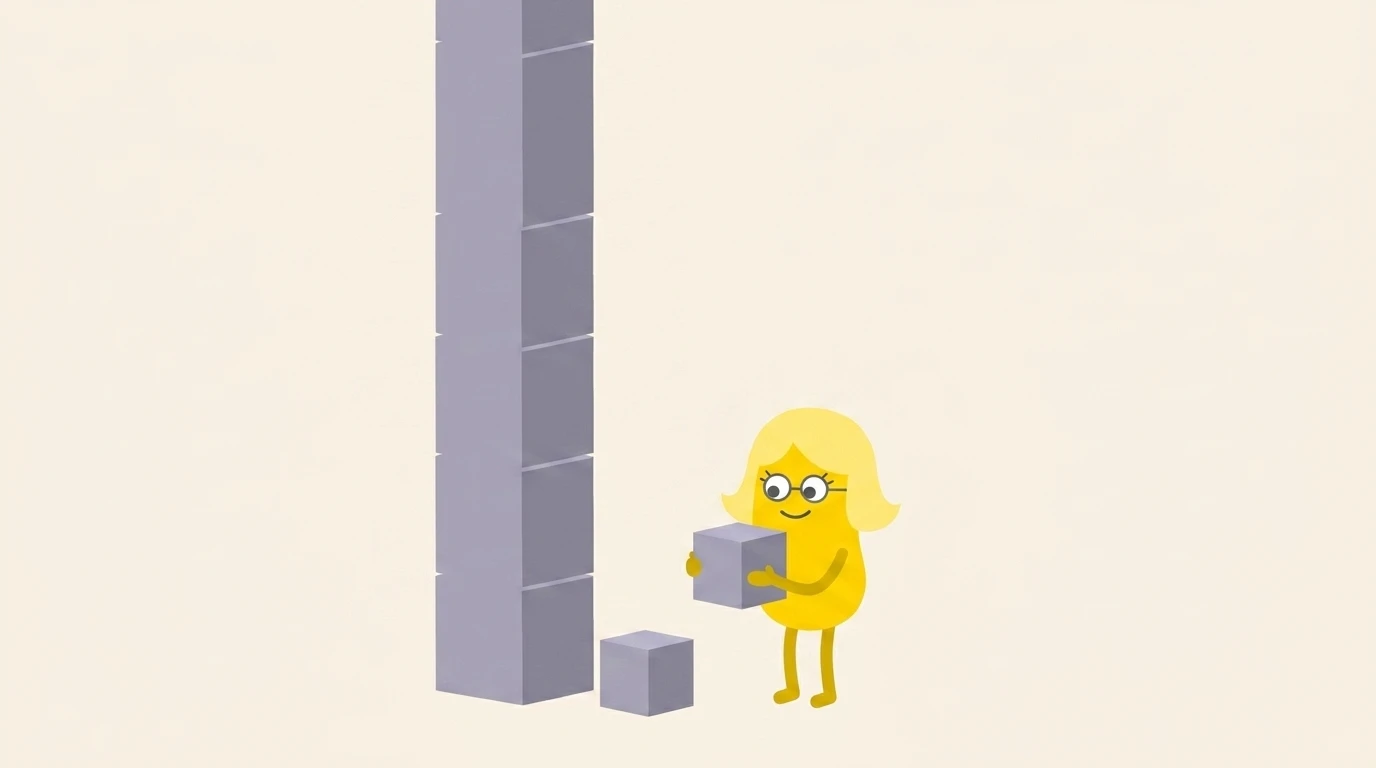
Once you've answered one question correctly, answer a second one. Then move to something slightly harder. You are not tricking yourself. You are rebuilding, one correct answer at a time, the belief that you're capable, which is the exact thing the anxiety had been eroding.

What if I don't understand the material at all

Then start even smaller than a question: read one paragraph and write one sentence about what it said, in your own words. That is not studying the whole chapter. It is proof you can engage with the material without falling apart, and that proof is what your brain is actually asking for before it will let you continue.

If a topic genuinely confuses you, name that specifically instead of avoiding the whole subject. "I don't understand derivatives" is solvable. "I'm bad at math" is not something you can act on, and it's also not what the research shows: procrastination tracks with initiation difficulty and an anxiety-driven confidence gap, not actual ability.

Why does starting with the hardest part backfire

Common advice says to tackle the hardest, most important part first, while you have the most energy. For study procrastination specifically, that advice fights the mechanism causing the avoidance.

If your avoidance is rooted in doubting you can do the work, opening with the part most likely to confirm that doubt is the worst possible entry point. You sit down already anxious, immediately hit the thing you're least confident about, and the session ends before it starts. That failed attempt becomes evidence against the next time you try to sit down.

Starting easy inverts that. You build a short run of small wins before you reach anything that could shake your confidence, so by the time you reach the harder material, you're arriving with evidence you can handle it.

How do I stop procrastinating when I have test anxiety

Test anxiety and study procrastination reinforce each other. Anxiety makes you avoid studying, and avoiding studying leaves you less prepared, which raises the anxiety for the actual test.

Breaking in at the studying stage is more useful than fixing exam-day anxiety directly, because you get more chances to practice it at lower stakes. Every easy-question session where you sit down, answer something correctly, and stop when you planned to is a small rehearsal that you can engage with this subject without it going badly. That rehearsal is what shows up as steadier nerves on test day, because you're walking in with real evidence of competence.

How long should a study session be when I keep avoiding it

Short enough that starting feels survivable. Ten to fifteen minutes, with the easy-question opening, is enough to break the freeze without asking for more willpower than you have on a bad day.

The goal isn't to finish the material. It's to end the session having proven, again, that you can sit down and do this. Stack enough of those and the anxiety that made studying feel impossible has less to stand on.

If fifteen minutes still feels like too much, cut it in half. A five-minute session where you answer three easy questions and stop is a complete win. It counts.

What do I do if I skipped studying for days and I'm behind

Do not open with a review of everything you missed. That's the hardest-part trap again, with extra guilt attached.

Open with one easy question from the earliest material, the stuff you're most likely to still remember. Answer it. Answer another. Let the session be short. Being behind is a scheduling fact, not a verdict on whether you can catch up, and you find out you can catch up by starting, not by calculating how far behind you are.

Start tonight, with the easiest thing you know

Study procrastination is not a discipline failure. It's your brain protecting you from the risk of discovering you can't do the work, by never finding out. The fix is giving it evidence instead of avoidance: start with a question you already know, answer it, and let that small proof carry you into the next one.

Open your notes right now and find the one thing in there you're most sure of. Answer it. Then answer one more.

Sources

Now I feel like I’m going to get to it soon: a brief, scalable intervention for state procrastinationResearch
Anusha Garg et al.
Researchers tested a brief intervention that combines emotional labeling with subtask planning to combat procrastination. The study found that participants who spent about six minutes on these structured prompts felt more motivated and were more likely to intend to complete their tasks. This approach offers a scalable solution for improving productivity through simple cognitive shifts.
Lower metacognitive abilities predict procrastination: a cross-sectional study of a healthy adult sampleResearch
Rannveig Grøm Sæle et al.
A study of 108 healthy adults found that difficulties with task initiation and metacognition are the primary predictors of procrastination. While participants performed well on objective cognitive tests, their self-reported struggles with planning and starting tasks strongly correlated with delay behaviors. These results highlight the importance of addressing real-world metacognitive skills rather than just raw cognitive ability to reduce procrastination.
The impact of trait anxiety on academic procrastination among college students: the mediating role of academic self-efficacy and the moderating role of autonomous learning motivationResearch
Junqiang Fan et al.
This source represents a security interstitial page for PubMed Central (PMC). It informs the user that an automated browser verification process is occurring before they can access the requested research article. The page provides a five-second window for automatic redirection and offers a manual link if the process fails.
The relationship between self-esteem and procrastination among university students: the chain mediating effect of perfectionism and academic motivationResearch
Chunmei Chen et al.
The source text describes a standard security verification process for accessing PubMed Central. It informs the user that their browser is being checked to ensure a secure connection. The process includes an automated redirection that typically occurs within five seconds. A manual link is provided as a fallback if the automatic redirection fails.

Topics

productivitystudyingmotivationmental healthhabit formation

AI-ready summary

You're not avoiding the work. You're avoiding the feeling that you can't do it. Research-backed method: start with the easiest question, not the exam.

Related Challenges & Plans

Lifechallenge

ADHD Sleep Reset

Reset your circadian rhythm in 30 days with a neurobiologically optimized screen shutdown protocol designed for ADHD brains.

GetMotivatedBuddies
Created by GetMotivatedBuddies
10 min3×/week30dL1
Lifechallenge

Clean Any Room in 5 Steps with Ann Russell

Clean any room with Ann Russell’s 5-step method. A direct, realistic 14-day plan for building cleaning habits that actually stick.

Ann Russell
In partnership with Ann Russell · by GetMotivatedBuddies
10 min3×/week14dL1
Learnchallenge

Learn Daily Check-in

Intro challenge with 5-minute daily check-ins. Build consistency with studying, writing, test prep, or creative skills alongside peers.

GetMotivated.ai
Created by GetMotivated.ai
10 min3×/week21dL1
Health & Fitnesschallenge

Health & Fitness Daily Check-In

Intro challenge with 5-min daily check-ins. Build consistency with diet or exercise—alongside peers.

GetMotivatedBuddies
Created by GetMotivatedBuddies
10 min3×/week21dL1

Keep reading

Illustration for the article: How to Stop Procrastinating: What Actually Works When You Can't Start
August 22, 20268 min readHabits & Behavioral Change

How to Stop Procrastinating: What Actually Works When You Can't Start

Procrastination isn't laziness. It's your brain avoiding a bad feeling. Here's the research, and a 10-minute method tested on 1,035 people.

productivitymotivationhabit formationfocus
Rachel SteinRead →
Illustration for the article: Metabolic Psychiatry: The Emerging Science Linking Metabolism and Mental Health
August 10, 202611 min readMental Health

Metabolic Psychiatry: The Emerging Science Linking Metabolism and Mental Health

Metabolic psychiatry studies how metabolism, inflammation, and brain energy production shape mental illness — and how metabolic interventions like ketogenic therapy might help. The evidence is early and promising, not a proven treatment yet.

mental healthneuroscienceketometabolic psychiatry
The GetMotivated.ai TeamRead →
Illustration for the article: ADHD Motivation: Why Interest Moves You When Willpower Doesn't
August 9, 20269 min readADHD & Neurodivergence

ADHD Motivation: Why Interest Moves You When Willpower Doesn't

ADHD motivation runs on interest, autonomy, and connection more than on deadlines or willpower. Here's what the dopamine and self-determination theory research actually shows — and how to use it instead of fighting it.

adhddopaminemotivationself-determination theory
The GetMotivated.ai TeamRead →
GetMotivated.ai

Behavioral health. Built with intention.

Structured support for ADHD, chronic health, recovery, focus, and long-term change.

Stay in the loop

Research, program launches, and behavioral health insights. Only useful updates.

By joining, you agree to receive emails from GetMotivated.ai. Unsubscribe anytime. See our Privacy Policy.

Explore

  • Browse Plans & Challenges
  • ADHD Support
  • Health Support
  • Recovery Support
  • Blog
  • Creators
  • Sources
  • Tools
  • How It Works
  • Pricing

Company

  • About
  • Contact
  • How We Research
  • Our Guarantee
  • Privacy
  • Terms

Work With Us

  • For Organizations
  • For Behavioral Health
  • For Education
  • Careers
  • Affiliates
  • Partners
  • Sponsors
Explore+
  • Browse Plans & Challenges
  • ADHD Support
  • Health Support
  • Recovery Support
  • Blog
  • Creators
  • Sources
  • Tools
  • How It Works
  • Pricing
Company+
  • About
  • Contact
  • How We Research
  • Our Guarantee
  • Privacy
  • Terms
Work With Us+
  • For Organizations
  • For Behavioral Health
  • For Education
  • Careers
  • Affiliates
  • Partners
  • Sponsors

© 2026 GetMotivated.ai. All rights reserved.

PrivacyTerms

Calm structure. Clear next steps. Human accountability.