GetMotivated.ai Logo
How It WorksBlogLog in
  1. Home
  2. /
  3. Blog
  4. /
  5. ADHD Paralysis: Why Your Brain Freezes and How to Break Free
May 29, 20267 min read

ADHD Paralysis: Why Your Brain Freezes and How to Break Free

ADHD paralysis is a state of cognitive overwhelm where the brain's executive functions shut down, making it impossible to start, switch, or complete tasks despite wanting to. This freeze response stems from impaired self-regulation systems, not laziness or lack of motivation.

Dana Kim

Last reviewed: August 2026

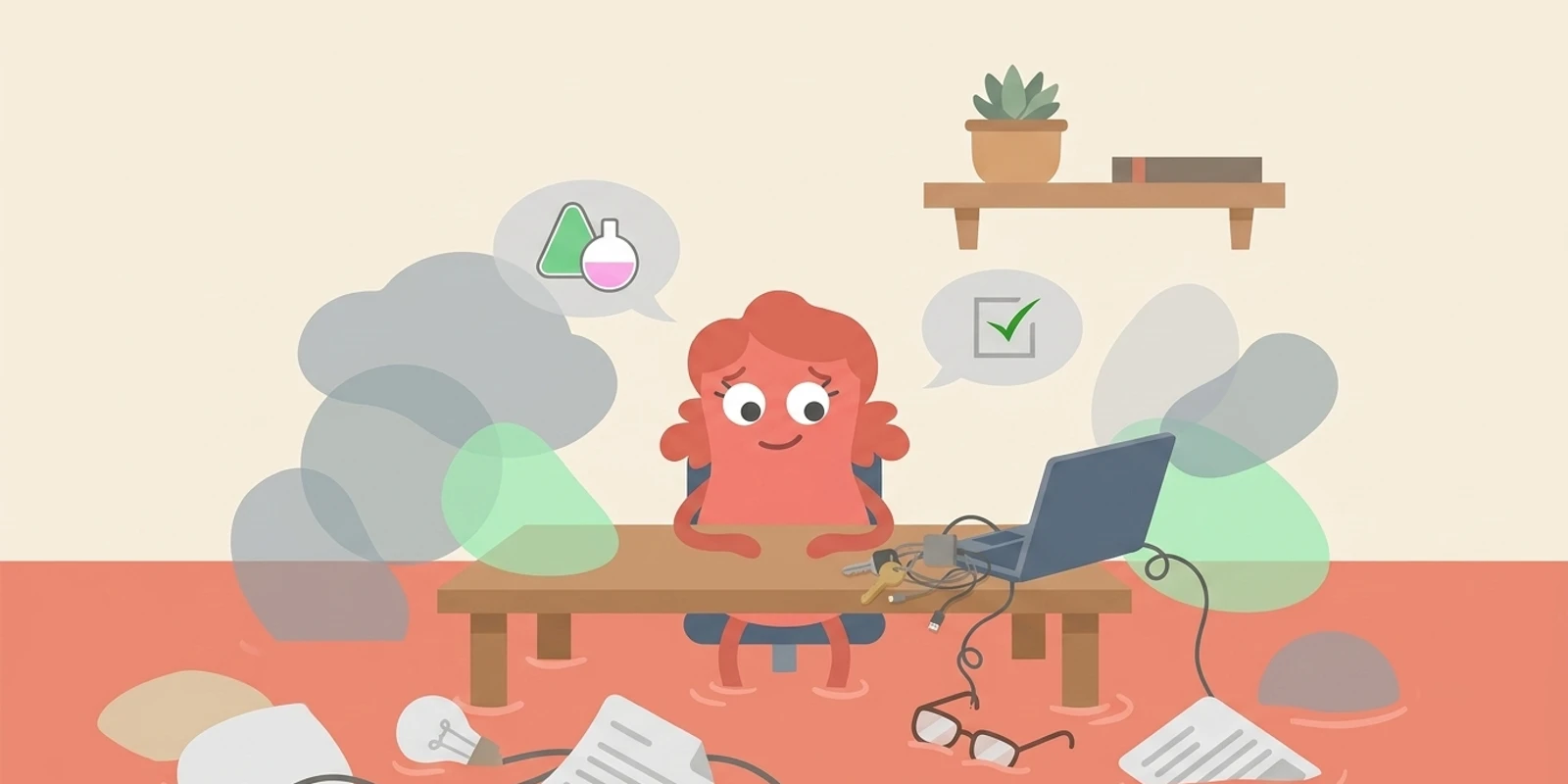
Illustration for the article: ADHD Paralysis: Why Your Brain Freezes and How to Break Free

ADHD paralysis is a neurological freeze state where executive function deficits prevent task initiation, switching, or completion—even when you desperately want to move. It's not procrastination or laziness; it's a temporary shutdown of the brain's self-regulation systems, leaving you stuck despite clear intentions and mounting urgency.

If you've ever sat frozen in front of a to-do list, unable to choose where to start, or felt physically incapable of beginning a task you know is important, you've experienced ADHD paralysis. This article explains the neuroscience behind the freeze, why traditional productivity advice fails, and evidence-based strategies that work with—not against—your ADHD brain.

What Is ADHD Paralysis?

ADHD paralysis is a state of cognitive and physical immobilization triggered by overwhelmed executive functions. Russell Barkley's research defines ADHD as fundamentally a disorder of self-control rooted in impaired behavioral inhibition. When the brain's executive system—responsible for planning, prioritizing, and initiating action—becomes overloaded, it effectively shuts down, creating a paralysis that feels both mental and physical.

This freeze response manifests in three primary forms:

  1. Task initiation paralysis: Unable to start any task, even simple ones
  2. Decision paralysis: Overwhelmed by choices, unable to select a path forward
  3. Transition paralysis: Stuck in one activity, unable to switch to another

Unlike procrastination, which involves active avoidance, ADHD paralysis is a passive state. You're not choosing to delay—your brain has temporarily lost the ability to execute the command to begin.

Why Does ADHD Paralysis Happen?

Executive Function Breakdown

ADHD paralysis stems from impairments in multiple executive functions working simultaneously. Barkley identifies four critical systems that fail during paralysis:

  • Nonverbal working memory: You can't hold task steps in mind long enough to sequence them
  • Internalized speech: The inner voice that guides planning and problem-solving goes silent
  • Emotion regulation: Frustration, anxiety, or shame flood the system, blocking rational thought
  • Reconstitution: The ability to break problems into parts and recombine solutions fails

When these systems crash together, the result is complete cognitive gridlock.

Time Blindness and Urgency Collapse

Adults with ADHD experience significant impairments in time perception. During paralysis, time becomes either invisible (tasks feel like they have infinite runway) or catastrophically compressed (everything feels equally urgent right now). This temporal distortion makes it impossible to prioritize or sequence actions logically.

College students with ADHD report that time management difficulties are their most critical barrier to success, requiring significantly more effort than neurotypical peers to accomplish the same tasks. When every task feels both urgent and impossible to estimate, the brain defaults to freeze.

The Shame Spiral

ADHD paralysis often triggers intense self-criticism: "Why can't I just do this? Everyone else can." This shame response actually deepens the paralysis. Research on self-compassion in ADHD shows that harsh self-judgment impairs problem-solving and persistence, while self-kindness restores cognitive flexibility.

The cycle looks like this:

  1. Executive functions fail → paralysis
  2. Shame and self-criticism flood in
  3. Emotional dysregulation worsens executive function
  4. Paralysis deepens
  5. More shame accumulates

Breaking this cycle requires interrupting the shame response, not just addressing the task itself.

How to Break Through ADHD Paralysis

1. Externalize Everything

Because ADHD paralysis involves internal executive function failure, the most effective interventions provide external structure. Barkley's framework emphasizes that people with ADHD need environmental scaffolding to compensate for impaired self-control.

Practical applications:

  • Use visible timers to make time concrete (not abstract)
  • Write task steps on sticky notes and arrange them physically
  • Set alarms for transitions, not just deadlines
  • Create visual schedules with images, not just text

The goal is to move information from your overloaded working memory into the external environment where it can guide action without requiring internal recall.

Related Challenges & Plans

Lifeplan

10-Day ADHD Habit Reset Plan: Stop the Cycle of Schedule Rebellion

Bypass executive function resistance and stop 'schedule rebellion' with a 10-day plan built specifically for the ADHD brain.

G
GetMotivated.ai
10 min3×/week10dL1
Lifechallenge

ADHD Sleep Reset

Reset your circadian rhythm in 30 days with a neurobiologically optimized screen shutdown protocol designed for ADHD brains.

GetMotivatedBuddies
Created by GetMotivatedBuddies
10 min3×/week30dL1
Lifechallenge

Clean Any Room in 5 Steps with Ann Russell

Clean any room with Ann Russell’s 5-step method. A direct, realistic 14-day plan for building cleaning habits that actually stick.

Ann Russell
In partnership with Ann Russell · by GetMotivatedBuddies
10 min3×/week14dL1
Lifeplan

Master Your Focus: The 14-Day ADHD-Friendly Pomodoro Plan

Stop the procrastination cycle and reclaim your productivity with a 14-day habit plan designed for the ADHD brain.

GetMotivated.ai
Created by GetMotivated.ai
10 min3×/week14dL2

2. Shrink the Task to Absurdly Small

When paralysis hits, the task feels monolithic. Combat this by breaking it into micro-steps so small they feel ridiculous. College students with ADHD report that habit formation and task chunking are among their most effective coping strategies.

Instead of "write report," try:

  1. Open laptop
  2. Open document
  3. Type title
  4. Write one sentence

Each micro-step provides immediate feedback and a small dopamine hit, building momentum. The first step should take less than two minutes and require zero decision-making.

3. Use Body Doubling

Body doubling—working alongside another person, even silently—is one of the most powerful tools for ADHD paralysis. The presence of another person provides external accountability and helps regulate attention without requiring conversation.

This works because:

  • It creates immediate social accountability
  • Another person's activity cues your brain to stay engaged
  • It reduces the isolation that often accompanies paralysis

Body doubling can happen in person, over video call, or through platforms designed for co-working. GetMotivated.ai's buddy matching feature pairs you with an accountability partner automatically, addressing the #1 barrier to recovery (isolation) that research consistently identifies.

4. Move Your Body First

Physical movement can bypass cognitive paralysis. Even five minutes of movement—walking, stretching, dancing—changes your neurochemical state and can restore executive function access.

Research shows exercise significantly improves executive function and emotional regulation in ADHD. You don't need a full workout; brief movement breaks can be enough to shift out of freeze mode.

5. Practice Self-Compassion, Not Self-Criticism

When paralysis hits, your first instinct may be harsh self-talk. Research shows this makes everything worse. Self-compassion, by contrast, improves problem-solving and persistence in ADHD.

Try this three-part practice:

  1. Mindfulness: "I'm stuck right now. This is what paralysis feels like."
  2. Common humanity: "Millions of people with ADHD experience this. I'm not alone or broken."
  3. Self-kindness: "What would I say to a friend in this situation?"

This isn't about lowering standards or avoiding responsibility—it's about creating the psychological safety needed for your executive functions to come back online.

6. Implement Immediate Feedback Loops

ADHD brains struggle with delayed consequences. Create immediate, tangible feedback for task completion. This could be:

  • Checking off a physical list
  • Moving a token from "to-do" to "done"
  • Texting your accountability buddy
  • Giving yourself a small reward (not food-based)

The feedback needs to be instant and concrete, not abstract or delayed.

When ADHD Paralysis Becomes Chronic

If paralysis is happening daily and significantly impacting your life, it may signal that your current ADHD management strategy needs adjustment. Chronic paralysis often indicates:

  • Inadequate external structure in your environment
  • Unaddressed emotional dysregulation or comorbid anxiety/depression
  • Tasks that are genuinely too complex for your current executive function capacity
  • Need for medication evaluation or adjustment

Professional support—whether coaching, therapy, or psychiatric care—can help identify which systems need reinforcement.

ADHD Paralysis vs. Procrastination

It's crucial to distinguish ADHD paralysis from procrastination:

| ADHD Paralysis | Procrastination | |----------------|-----------------| | Passive freeze state | Active avoidance | | Want to start but can't | Don't want to start | | Executive function failure | Emotional regulation issue | | Feels physically stuck | Feels mentally resistant | | No sense of time passing | Aware of time passing |

Understanding this difference helps you choose the right intervention. Procrastination responds to motivation and consequence awareness; paralysis requires executive function support and external scaffolding.

Building Long-Term Resilience

While acute strategies help in the moment, building resilience against future paralysis requires systemic changes:

  1. Design your environment for ADHD: Minimize decision points, maximize visual cues, reduce friction for desired behaviors
  2. Establish non-negotiable routines: Morning and evening routines that don't require decision-making
  3. Build a support network: Regular check-ins with accountability partners or coaches
  4. Track patterns: Notice when paralysis hits most often and proactively address those contexts
  5. Prioritize sleep and exercise: Both significantly impact executive function availability

Platforms like GetMotivated.ai combine structured 30-day challenges with accountability buddy matching—because real behavior change needs both tools AND social support. While apps like One Sec create friction for unwanted behaviors, GetMotivated.ai provides the positive structure and community that help you build new patterns.

Key Takeaways

  • ADHD paralysis is a neurological freeze response, not a character flaw or laziness
  • It results from overwhelmed executive functions, particularly working memory and behavioral inhibition
  • External scaffolding (timers, visual cues, body doubling) compensates for internal regulation deficits
  • Self-compassion is a clinical intervention, not self-indulgence—it restores cognitive flexibility
  • Micro-steps and immediate feedback loops bypass the brain's inability to sequence complex tasks
  • Chronic paralysis signals the need for environmental redesign or professional support

ADHD paralysis feels insurmountable in the moment, but it's a temporary state, not a permanent condition. With the right external supports and self-compassion practices, you can break through the freeze and regain agency over your actions.

---

Frequently Asked Questions

How long does ADHD paralysis typically last? ADHD paralysis episodes can last anywhere from minutes to hours, or in severe cases, days. Duration depends on the complexity of the triggering task, your current stress level, and whether you have effective intervention strategies. Most episodes resolve within 1-3 hours once you implement external scaffolding or movement-based interventions.

Is ADHD paralysis the same as executive dysfunction? ADHD paralysis is a specific manifestation of executive dysfunction—it's what happens when multiple executive functions fail simultaneously under cognitive load. Executive dysfunction is the broader term describing impairments in planning, organization, and self-regulation, while paralysis is the acute freeze state that results.

Can medication help with ADHD paralysis? Stimulant and non-stimulant ADHD medications can reduce the frequency and severity of paralysis episodes by improving baseline executive function. However, medication alone rarely eliminates paralysis entirely—it works best combined with environmental modifications and skill-building strategies.

Why does ADHD paralysis happen even with tasks I enjoy? Enjoyment doesn't override executive function requirements. Even pleasurable tasks require initiation, sequencing, and sustained attention. When your executive system is overwhelmed, it shuts down regardless of the task's emotional valence. This is why you might freeze even when trying to start a hobby you love.

How is ADHD paralysis different from depression-related inertia? While both involve difficulty initiating action, ADHD paralysis is specific to executive function overload and often resolves quickly with external scaffolding. Depression-related inertia is more pervasive, affects motivation globally, and doesn't respond as readily to task-chunking or body doubling. However, the two can co-occur and compound each other.

---

Sources

ADHD and the Nature of Self-ControlBook
Russell A. Barkley
A seminal exploration of ADHD as a disorder of self-control, offering a neuropsychological framework for understanding executive dysfunction and its practical management.
The Important Role of Executive Functioning and Self-Regulation in ADHDArticle
russellbarkley.org · Russell A. Barkley, Ph.D.
ADHD is characterized by deficits in self-regulation and executive functioning, which are closely related. Effective management involves externalizing internal information and motivation, providing immediate rewards, and using medication to address underlying neurological issues, as traditional appr
Self-Compassion: The New ADHD TreatmentArticle
additudemag.com · Kristin Neff
This article explores how self-compassion builds resilience in adults with ADHD by replacing self-criticism with a mindfulness-based practice of self-kindness and shared humanity.
Self-Compassion: The Proven Power of Being Kind to YourselfBook
Kristin Neff
Kristin Neff explores self-compassion as a transformative tool for mental health, offering a practical framework based on self-kindness, mindfulness, and our shared human experience.
Clinical Implications of the Perception of Time in Attention Deficit Hyperactivity Disorder (ADHD): A ReviewResearch
Ptacek
This paper explores the relationship between ADHD and time perception impairments, emphasizing the clinical need to address temporal processing deficits in diagnosis and treatment.
Strategies for Coping with Time-Related and Productivity Challenges of Young People with Learning Disabilities and Attention-Deficit/Hyperactivity DisorderResearch
Consuelo M Kreider et al.
This qualitative study examines how college students with learning disabilities and ADHD manage time and productivity challenges. It identifies a multidimensional mix of cognitive, behavioral, and environmental strategies, such as habit formation and reframing, used to navigate academic and daily life demands.

Topics

adhdexecutive functionmental healthneuroscienceself-compassionproductivitytime management

AI-ready summary

ADHD paralysis occurs when executive function deficits overwhelm the brain's ability to initiate or sustain action. Research shows this freeze state involves impaired behavioral inhibition, working memory, and time perception. Evidence-based interventions include external scaffolding, task chunking, body doubling, and self-compassion practices that reduce shame and restore agency.

Key takeaways

  • ADHD paralysis is a neurological freeze response caused by executive dysfunction, not willpower failure
  • Time blindness and impaired working memory make tasks feel impossibly large or urgent simultaneously
  • External structure—timers, body doubling, and physical movement—can bypass internal regulation deficits
  • Self-compassion reduces the shame spiral that deepens paralysis and blocks problem-solving
  • Breaking tasks into micro-steps and using immediate feedback loops restore momentum

Related Challenges & Plans

Lifeplan

10-Day ADHD Habit Reset Plan: Stop the Cycle of Schedule Rebellion

Bypass executive function resistance and stop 'schedule rebellion' with a 10-day plan built specifically for the ADHD brain.

G
GetMotivated.ai
10 min3×/week10dL1
Lifechallenge

ADHD Sleep Reset

Reset your circadian rhythm in 30 days with a neurobiologically optimized screen shutdown protocol designed for ADHD brains.

GetMotivatedBuddies
Created by GetMotivatedBuddies
10 min3×/week30dL1
Lifechallenge

Clean Any Room in 5 Steps with Ann Russell

Clean any room with Ann Russell’s 5-step method. A direct, realistic 14-day plan for building cleaning habits that actually stick.

Ann Russell
In partnership with Ann Russell · by GetMotivatedBuddies
10 min3×/week14dL1
Lifeplan

Master Your Focus: The 14-Day ADHD-Friendly Pomodoro Plan

Stop the procrastination cycle and reclaim your productivity with a 14-day habit plan designed for the ADHD brain.

GetMotivated.ai
Created by GetMotivated.ai
10 min3×/week14dL2

Keep reading

Illustration for the article: How to Stop Procrastinating on Studying (Start With the Easy Question)
August 23, 20268 min readHabits & Behavioral Change

How to Stop Procrastinating on Studying (Start With the Easy Question)

You're not avoiding the work. You're avoiding the feeling that you can't do it. Research-backed method: start with the easiest question, not the exam.

productivitystudyingmotivationmental health
Rachel SteinRead →
Illustration for the article: How to Stop Procrastinating: What Actually Works When You Can't Start
August 22, 20268 min readHabits & Behavioral Change

How to Stop Procrastinating: What Actually Works When You Can't Start

Procrastination isn't laziness. It's your brain avoiding a bad feeling. Here's the research, and a 10-minute method tested on 1,035 people.

productivitymotivationhabit formationfocus
Rachel SteinRead →
Illustration for the article: Metabolic Psychiatry: The Emerging Science Linking Metabolism and Mental Health
August 10, 202611 min readMental Health

Metabolic Psychiatry: The Emerging Science Linking Metabolism and Mental Health

Metabolic psychiatry studies how metabolism, inflammation, and brain energy production shape mental illness — and how metabolic interventions like ketogenic therapy might help. The evidence is early and promising, not a proven treatment yet.

mental healthneuroscienceketometabolic psychiatry
The GetMotivated.ai TeamRead →
GetMotivated.ai

Behavioral health. Built with intention.

Structured support for ADHD, chronic health, recovery, focus, and long-term change.

Stay in the loop

Research, program launches, and behavioral health insights. Only useful updates.

By joining, you agree to receive emails from GetMotivated.ai. Unsubscribe anytime. See our Privacy Policy.

Explore

  • Browse Plans & Challenges
  • ADHD Support
  • Health Support
  • Recovery Support
  • Blog
  • Creators
  • Sources
  • Tools
  • How It Works
  • Pricing

Company

  • About
  • Contact
  • How We Research
  • Our Guarantee
  • Privacy
  • Terms

Work With Us

  • For Organizations
  • For Behavioral Health
  • For Education
  • Careers
  • Affiliates
  • Partners
  • Sponsors
Explore+
  • Browse Plans & Challenges
  • ADHD Support
  • Health Support
  • Recovery Support
  • Blog
  • Creators
  • Sources
  • Tools
  • How It Works
  • Pricing
Company+
  • About
  • Contact
  • How We Research
  • Our Guarantee
  • Privacy
  • Terms
Work With Us+
  • For Organizations
  • For Behavioral Health
  • For Education
  • Careers
  • Affiliates
  • Partners
  • Sponsors

© 2026 GetMotivated.ai. All rights reserved.

PrivacyTerms

Calm structure. Clear next steps. Human accountability.