Racing Thoughts at Bedtime
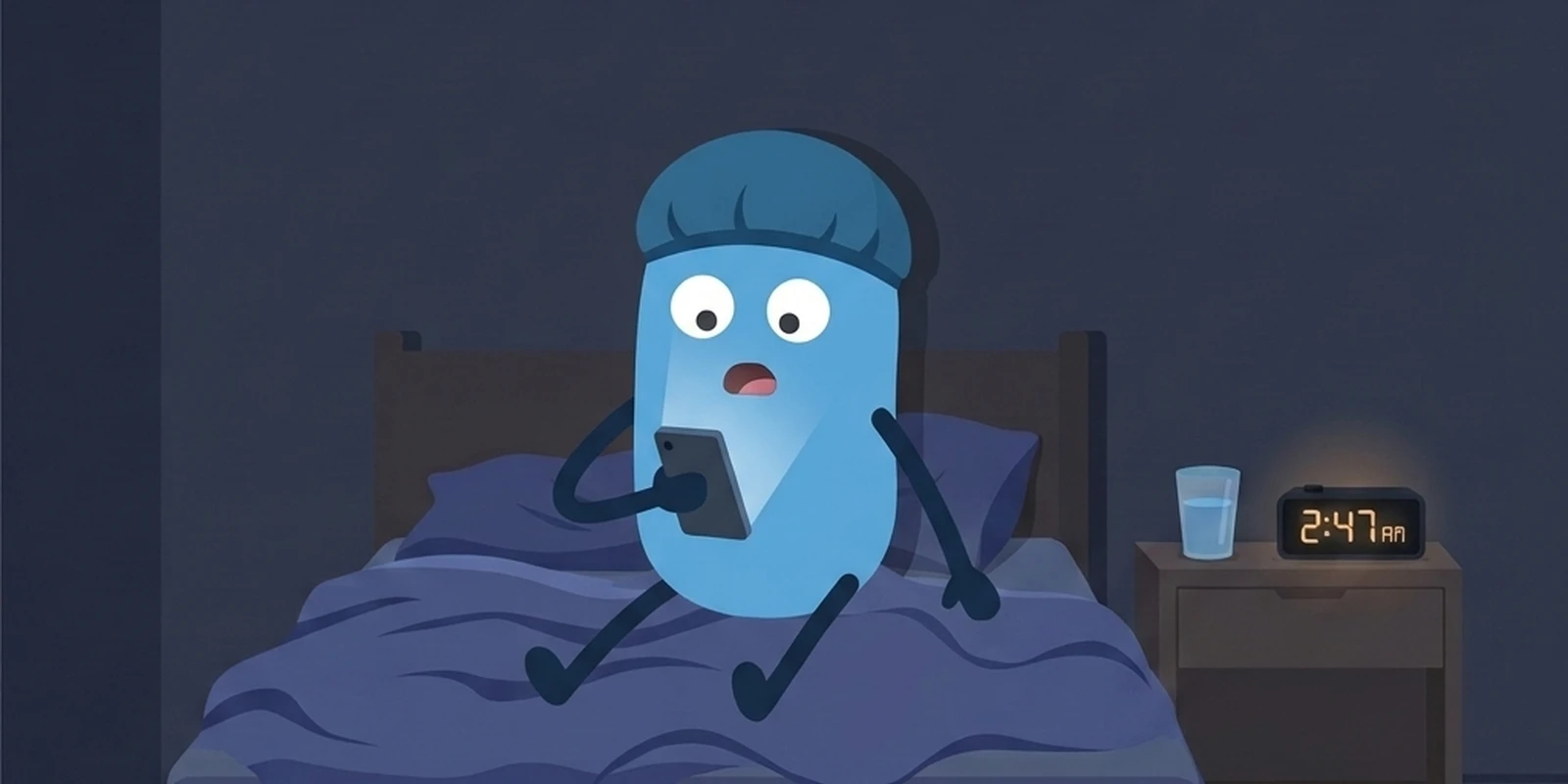
Lying down removes the last layer of external stimulation. For the ADHD brain, which often uses busyness to manage mental noise, stillness creates the opposite of calm.
Thoughts that were outrun all day — unfinished tasks, social worries, plans that didn't happen, things said wrong — surface in the quiet. This isn't anxiety disorder territory for most people with ADHD. It's the predictable result of a brain that regulates attention through stimulation suddenly having none.
What Actually Helps: Evidence-Based ADHD Sleep Strategies
Consistent Sleep and Wake Times (The Non-Negotiable)
The strongest evidence for ADHD sleep improvement isn't a supplement or a sleep app — it's consistency. Research from Virring et al. on CBT-based sleep interventions for ADHD found that fixed wake times, maintained even on weekends, produced the most durable improvement in sleep quality.
The mechanism: consistent wake times anchor the circadian rhythm. Even if sleep onset is delayed, a reliable wake time trains the body to build sleep pressure at predictable intervals.
The ADHD challenge: This is an executive function problem disguised as a sleep problem. Maintaining a consistent wake time requires overriding your in-the-moment impulse — exactly what ADHD makes difficult. External accountability matters here more than willpower.
Structured Wind-Down Windows
A 30-60 minute wind-down window that removes decision-making and bright screens gives the delayed melatonin signal room to work. The specifics matter less than the consistency.
Effective wind-down elements for ADHD:
• Low-stimulation, familiar content (re-reading a known book, a podcast you've heard before)
• Dim or warm lighting — blue light from screens actively suppresses melatonin
• A concrete "last thing" that signals the end of the active day (the same task done the same way each night)
• Physical temperature drop — a cool shower or dropping the room temperature a few degrees accelerates sleep onset
Working with Medication Timing
If stimulant rebound is disrupting evening sleep, the solution is usually a medication timing adjustment — not a sleep medication. A smaller booster dose taken in the afternoon can smooth the drop-off rather than allowing the sharp rebound that activates the evening brain. This requires a conversation with a prescribing doctor, but it's one of the highest-leverage interventions available.
What Doesn't Work as Well as Advertised
Melatonin alone: Melatonin can shift sleep timing, but it doesn't address the ADHD-specific restlessness, racing thoughts, or revenge bedtime drive. It's a timing tool, not a calming tool.
Sleep hygiene lectures: Generic sleep hygiene advice (no screens, consistent times, comfortable environment) is correct but incomplete. It doesn't address the self-regulation gap. Knowing the right thing and doing it are different problems for ADHD brains.
Willpower-based approaches: "Just make yourself go to bed" fails for the same reason most willpower strategies fail for ADHD — it assumes a regulatory system that ADHD affects directly.
How GetMotivated.ai Can Help Bridge the Accountability Gap
Apps like Calm, Headspace, and Sleep Cycle offer guided meditations, sleep sounds, and sleep tracking. They're useful tools for the sleep phase itself — but they don't address the problem that precedes it: actually closing the laptop, putting down the phone, and starting the wind-down routine.
That's an accountability and habit structure problem, not an audio content problem.
GetMotivated.ai addresses the upstream gap:
• Buddy check-ins create an external accountability signal that the ADHD brain responds to when self-generated motivation fails. A wind-down partner who sends a check-in at 10 PM isn't annoying — it's the external cue that bridges the gap between knowing you should stop and actually stopping.
• Structured challenges for sleep routine building provide the scaffolding that disappears when the workday ends. A 30-day sleep routine challenge gives your evening structure it wouldn't otherwise have, with daily accountability built in.
• AI coaching helps identify your specific ADHD sleep pattern — whether the core issue is revenge bedtime procrastination, stimulant rebound, racing thoughts, or delayed sleep phase — and builds a response plan around your actual schedule rather than generic advice.
While Rise tracks your sleep debt and Sleep Cycle monitors your sleep cycles, GetMotivated.ai focuses on the behavior that determines whether you're in bed to begin with. The two approaches complement each other.
The Bigger Picture: Sleep Debt and ADHD Function
Poor sleep doesn't just make ADHD symptoms worse the next day — it compounds them in ways that are measurable. A 2018 meta-analysis found that sleep deprivation produces attention and impulsivity deficits in neurotypical adults that closely resemble ADHD symptoms. In someone who already has ADHD, sleep deprivation stacks on top of existing deficits.
The practical implication: improving sleep by even one hour of quality sleep per night can produce meaningful improvements in focus, emotional regulation, and executive function the next day — sometimes more noticeably than other ADHD interventions.
This is why sleep isn't a "nice to have" for ADHD management. It's foundational. And the approach to improving it needs to account for the specific ways ADHD makes sleep difficult — not just repeat advice designed for people without ADHD.