Alcohol and the 4 AM Wake-Up: Why Drinking Destroys Your Sleep
Alcohol sedates you but doesn't produce sleep — it produces a neurologically different state that suppresses REM sleep, causes rebound arousal at 3-4 AM, and leaves you more tired than if you hadn't drunk at all. Here's the science and what to do instead.
The GetMotivated.ai Team
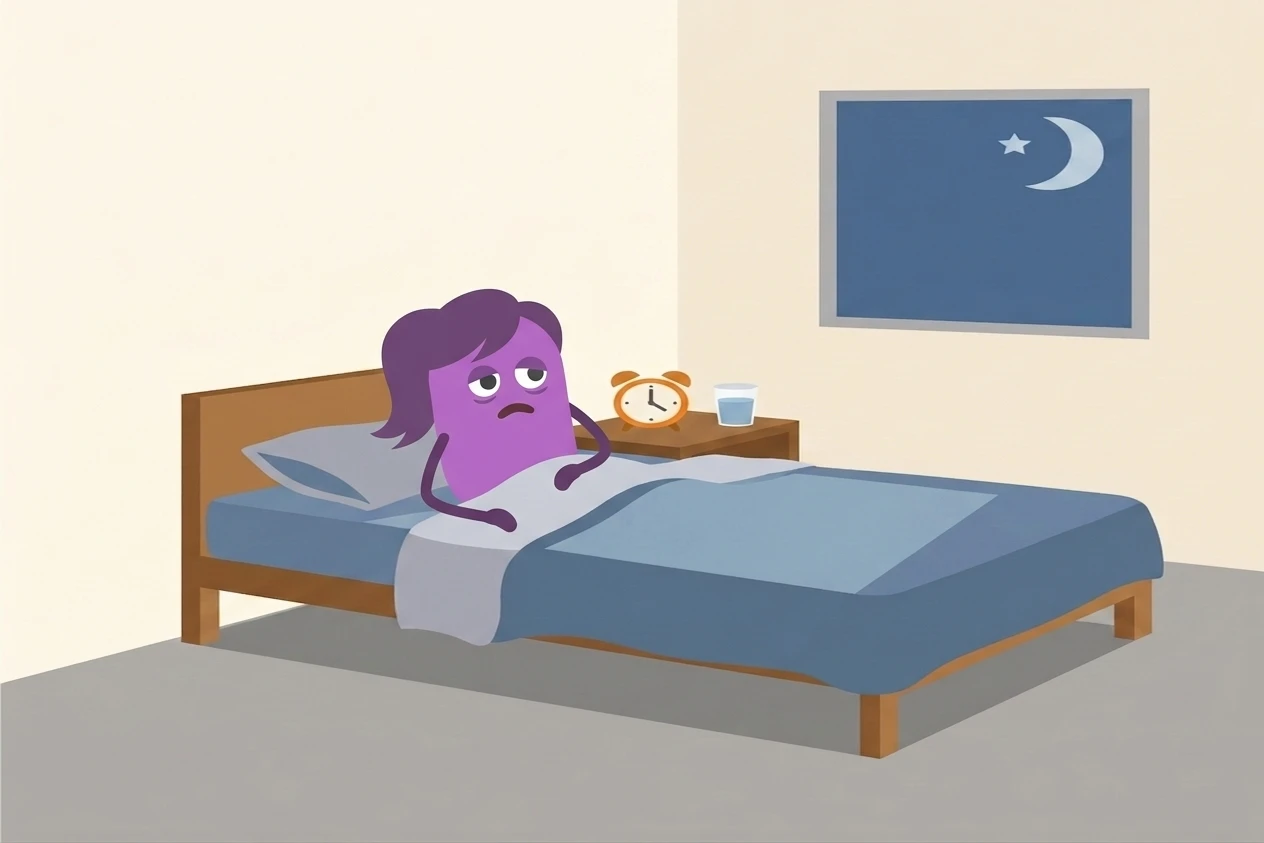
Alcohol is one of the most widely used sleep aids in the world and one of the most effective ways to make your sleep worse. It helps you fall asleep faster — that part is real. But the sleep it produces is neurologically different from natural sleep, and worse by every measure that matters: less restorative, more fragmented, and followed by the characteristic 3-4 AM awakening that leaves you staring at the ceiling wondering why you're more tired than when you went to bed.
Understanding the mechanism explains why this happens — and why sleep disruption is one of the most underestimated challenges in alcohol recovery.
What Alcohol Actually Does to Your Brain During Sleep
Sleep is not a uniform state. It cycles through distinct stages approximately every 90 minutes — light sleep, deep slow-wave sleep, and REM (rapid eye movement) sleep. Each stage serves different functions, and the ratio between them matters enormously for how rested you feel and how your brain processes memory and emotion.
Alcohol is a central nervous system depressant. It works by enhancing the effect of GABA, the brain's primary inhibitory neurotransmitter, while suppressing glutamate, the primary excitatory one. This produces sedation — which feels like sleep, but isn't the same thing neurologically.
The First Half of the Night: Suppressed REM
In the first 4-5 hours after drinking, alcohol's sedative effect is active. During this period, it dramatically suppresses REM sleep — the stage critical for emotional processing, memory consolidation, and cognitive restoration.
A foundational sleep laboratory study by Rundell and colleagues, replicated many times since, established this: alcohol increases slow-wave sleep in the first half of the night while significantly reducing REM sleep. The brain gets more of what looks like deep sleep on the surface, and less of what it actually needs.
Dr. Matthew Walker, a neuroscientist and sleep researcher at UC Berkeley, explains the distinction plainly in his book "Why We Sleep": "Alcohol is not a sleep aid. It is a sedative, and sedation is not sleep."
Alcohol suppresses REM sleep in the first half of the night through its sedative effect, then causes rebound arousal in the second half as the body metabolizes it — producing the characteristic 3-4 AM wake-up. Even moderate alcohol consumption measurably degrades sleep quality. Sleep begins improving within days of stopping alcohol, with full REM normalization typically occurring within 1-2 weeks of abstinence. Sleep disruption is also a significant trigger for alcohol relapse in early recovery.
Key takeaways
Alcohol suppresses REM sleep in the first half of the night and causes rebound arousal in the second half, explaining the characteristic 3-4 AM wake-up.
Even one to two drinks reduces sleep quality by approximately 9.3% according to research published in JMIR Mental Health.
Sleep disruption is among the strongest predictors of alcohol relapse in early recovery — addressing sleep is not optional, it's essential.
REM sleep begins recovering within 1 week of abstinence; full normalization typically occurs within 1-2 weeks for moderate drinkers.
The belief that alcohol helps sleep is extremely common and extremely wrong — it helps you fall asleep faster but produces significantly worse sleep overall.
FAQs
Why does alcohol make you wake up at 3 or 4 AM?
Alcohol is metabolized in approximately 4-5 hours. As it clears, the sedative effect reverses and causes rebound arousal — your nervous system bounces back to an activated state. This typically happens in the second half of the night, producing the characteristic 3-4 AM wake-up with difficulty returning to sleep.
Does alcohol help you sleep?
Alcohol helps you fall asleep faster by acting as a sedative, but the overall sleep it produces is significantly worse than natural sleep. It suppresses REM sleep, increases sleep fragmentation, and causes rebound arousal — leaving most people more fatigued in the morning than they would be without alcohol.
How long after quitting alcohol does sleep improve?
Sleep begins improving within the first week of abstinence for most people. REM sleep normalizes within 1-2 weeks for moderate drinkers. For heavy, long-term drinkers, full sleep architecture normalization can take several months, with disruption peaking in the first 1-2 weeks of withdrawal.
What helps with sleep during alcohol withdrawal?
Medical supervision is essential for alcohol withdrawal, as severe withdrawal can be dangerous. For sleep specifically, evidence-supported strategies include: keeping a consistent sleep schedule, avoiding screens before bed, using relaxation techniques, and melatonin (low-dose, 0.5-1mg). Prescription sleep aids should be used cautiously as some carry their own dependence risk.
Is insomnia common in early alcohol recovery?
Yes. Sleep disruption is one of the most common and most challenging symptoms of early alcohol recovery. Alcohol withdrawal insomnia can last weeks to months, particularly for heavy long-term drinkers. This is a major contributor to relapse — people often return to drinking specifically to sleep.
Gambling addiction hijacks the brain's reward prediction system so completely that 'one more bet' genuinely feels like the logical choice. Understanding the neuroscience explains why willpower alone fails — and what actually breaks the cycle.
The liver metabolizes alcohol at approximately one standard drink per hour. By the second half of a typical night's sleep — usually around 3-5 AM — the alcohol has largely cleared the system. The brain, which had its inhibitory GABA system artificially enhanced all night, experiences a rebound effect: GABA activity drops and glutamate activity surges.
This neurological reversal produces arousal. The nervous system swings from artificially suppressed to more activated than baseline. Sleep becomes fragmented, light, and populated with vivid or disturbing dreams (rebound REM) as the brain tries to compensate for the REM it missed in the first half.
The result: you wake up at 3 or 4 AM, often with a racing heart, a sense of vague anxiety, and an inability to return to quality sleep.
Key Stat: A systematic review by Ebrahim and colleagues found that even low alcohol doses reduce REM sleep by an average of 9.3% in the first sleep cycle, with high doses reducing it by 39.2% — and all doses produce compensatory REM rebound in the second half of the night. — Source: Alcoholism: Clinical and Experimental Research
Does "Just One Drink" Affect Sleep?
The cultural assumption is that one or two drinks before bed is harmless — a wind-down ritual that helps you relax. The research says otherwise.
A 2018 study published in JMIR Mental Health by Pietilä and colleagues used wearable monitoring devices to measure real-world sleep quality in participants who consumed varying amounts of alcohol. The findings:
• One drink reduced sleep quality by approximately 9.3%
• Two drinks reduced it by approximately 24%
• High doses reduced it by approximately 39.2%
These effects are dose-dependent but not threshold-dependent. There is no established "safe" amount of alcohol for sleep quality. Even single-drink consumption before bed measurably degrades the physiological markers of sleep quality.
The reason people don't feel this subjectively is straightforward: you don't experience the quality of your sleep while you're having it. You only experience the consequences — fatigue, difficulty concentrating, emotional reactivity — the next day, and those are easy to attribute to other causes.
Why Alcohol and Sleep Problems Escalate Over Time
The most dangerous pattern in alcohol-sleep interactions develops gradually.
Stage 1: Person has trouble sleeping → uses alcohol to fall asleep → works initially → sleep quality degrades but falling asleep is easier → reinforced habit.
Stage 2: Tolerance develops → more alcohol needed to achieve the same sedative effect → more alcohol = worse rebound arousal → worse second-half sleep quality → greater fatigue.
Stage 3: Person attributes morning fatigue to insufficient sleep → drinks more the next night to compensate → cycle accelerates.
Stage 4: Without alcohol, sleep becomes nearly impossible — not because alcohol has improved sleep, but because the brain has adapted to the artificial GABA enhancement and now can't produce normal sleep without it. This is alcohol-dependent insomnia.
This progression is one of the primary mechanisms by which moderate drinking escalates to dependence in people who use alcohol primarily as a sleep aid rather than for social or taste reasons.
Sleep Disruption in Alcohol Recovery: The Crisis No One Warns About
When someone stops drinking, they expect to feel better. What most people are not warned about is that sleep often gets dramatically worse before it gets better.
In the acute withdrawal phase (roughly the first 72 hours), the brain's glutamate/GABA imbalance that alcohol maintained inverts. Without alcohol's GABA enhancement, glutamate activity surges, producing anxiety, restlessness, and profound insomnia — sometimes for days at a time.
This is a medical situation. Severe alcohol withdrawal can produce seizures and is potentially life-threatening. Anyone attempting to stop heavy, long-term drinking should consult a physician before doing so.
Beyond acute withdrawal, sleep disruption continues into what researchers call "post-acute withdrawal syndrome" (PAWS): insomnia, fragmented sleep, and vivid dreams can persist for weeks to months as the brain recalibrates.
Key Stat: Research by Brower and Perron found that insomnia during alcohol recovery is one of the strongest predictors of relapse — significantly more predictive than craving, stress levels, or social triggers. Approximately 61% of people who relapse in early recovery report sleep problems as a primary contributing factor. — Source: Alcoholism: Clinical and Experimental Research
This is one of the most important facts in addiction medicine: people return to drinking specifically to sleep. Not because they want to drink. Because the insomnia of early recovery becomes unbearable, and alcohol is the tool they know works — even knowing the damage it causes.
Treating sleep disruption in early recovery is not optional. It is a core part of relapse prevention.
When Does Sleep Improve After Quitting Alcohol?
The timeline varies significantly with consumption history, but research provides useful benchmarks:
Days 1-3: Sleep is often at its worst. Acute withdrawal produces profound insomnia, restlessness, and anxiety.
Days 4-7: Acute symptoms begin to resolve. Total sleep time may increase, though sleep architecture remains abnormal. Many people experience highly vivid, emotionally intense dreams during rebound REM.
Weeks 2-4: Significant improvement for most moderate drinkers. REM sleep begins normalizing. Morning fatigue decreases. Sleep fragmentation reduces.
Months 2-6: For heavy, long-term drinkers, full normalization of sleep architecture can take this long. Subjective sleep quality often continues improving throughout the first year of abstinence.
The key message: the improvement happens, but it takes time. Understanding the timeline prevents people from interpreting the sleep disruption of early recovery as evidence that they "can't sleep without alcohol" — the most dangerous narrative in recovery.
Evidence-Based Strategies for Sleep in Recovery
Sleep Hygiene (More Effective Than It Sounds)
Standard sleep hygiene recommendations — consistent wake time, no screens before bed, cool and dark room, avoiding caffeine after noon — are more impactful during recovery than at other times. The recovering brain is trying to rebuild natural sleep rhythms from scratch. Environmental consistency accelerates this process.
The single most effective sleep hygiene practice for recovery: keep a consistent wake time regardless of how poorly you slept. This anchors circadian rhythm and accelerates sleep architecture normalization.
Cognitive Behavioral Therapy for Insomnia (CBT-I)
CBT-I is the gold-standard treatment for chronic insomnia with a stronger evidence base than sleep medication for long-term outcomes. It includes sleep restriction therapy, stimulus control, and cognitive restructuring of sleep anxiety. Several studies have specifically validated CBT-I for insomnia in alcohol recovery.
Apps like Sleepio deliver CBT-I digitally. In-person therapy is more effective but less accessible.
What About Medication?
Sleep medication use in early recovery requires caution. Benzodiazepines (common sleep medications) carry their own dependence risk. Melatonin at low doses (0.5-1mg, not the standard 10mg supplements) can help reset circadian rhythm without dependence risk. Non-benzodiazepine sleep medications should be used only under medical supervision and typically for short periods.
The Accountability Gap in Recovery Sleep
The hardest nights in early alcohol recovery are the nights when sleep won't come — when you're lying in the dark at 2 AM knowing alcohol would fix this immediately, with nothing but your own determination between you and the relapse.
This is where isolation in recovery is most dangerous. Apps like Reframe and I Am Sober provide tracking and motivation, but they're passive — they don't check in with you at 2 AM. Sober Grid connects you with peers, but it's not structured around your specific recovery goals.
GetMotivated.ai's buddy matching creates an active accountability relationship — someone who knows your recovery goals and checks in consistently, including through the difficult first weeks when sleep disruption peaks. The structured challenge format provides daily touchpoints that interrupt the isolation that makes 2 AM feel so impossible.
The AI coaching feature helps people in recovery build specific sleep plans before they're in the middle of a bad night — identifying the 3 AM triggers, planning concrete responses, and removing the need to make good decisions under severe sleep deprivation.

The Effect of Alcohol on Sleep Quality: A Systematic ReviewResearch
Pietilä et al.
JMIR study using wearable devices showing even low-to-moderate alcohol use reduces sleep quality by 9.3% (one drink) to 39.2% (high dose)
Sugar addiction is a real neurological phenomenon — not a lack of willpower. Research shows sugar triggers the same dopamine reward pathways as addictive drugs. Here's what the science says and what actually helps you quit the cycle.
Accountability partners increase addiction recovery success rates by up to 95% according to research. Structured social support — not willpower alone — is what separates sustained recovery from repeated relapse cycles.