
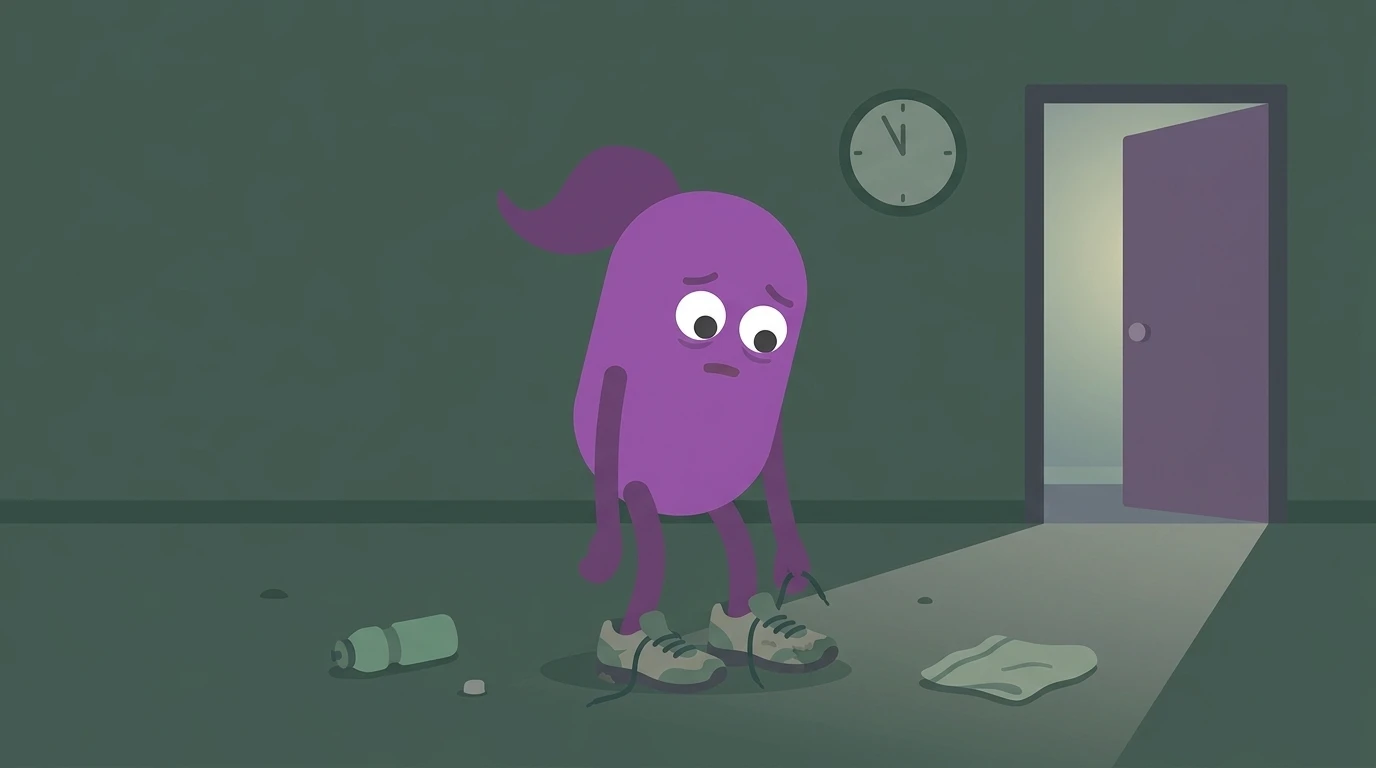
Exercise reduces depression symptoms as effectively as antidepressants in mild-to-moderate cases — but when depression removes the motivation to move, that fact is nearly useless on its own. The research is unambiguous: physical activity changes brain chemistry in measurable ways that rival pharmaceutical intervention. The real question isn't whether exercise helps depression. It's how to start when your brain is working against you.
This article covers what the clinical evidence actually shows, which types of exercise have the strongest antidepressant effects, why motivation is the wrong target, and what approaches work when standard advice has failed.
Does Exercise Really Help with Depression?
The evidence is stronger than most people realize. A 2024 meta-analysis published in the BMJ — one of the largest ever conducted on this topic — analyzed 218 randomized controlled trials involving 14,170 participants. Lead author Michael Noetel and colleagues found that exercise was as effective as antidepressants and psychotherapy for reducing depression symptoms, with aerobic exercise, strength training, and yoga all showing clinically significant effects.
This isn't a new finding. The 2000 Duke University study by Blumenthal et al. is a landmark in this research: they randomized 156 adults with major depressive disorder to either exercise alone, sertraline (Zoloft) alone, or combined treatment. After 16 weeks, all three groups showed statistically equivalent improvements. At 10-month follow-up, the exercise-only group had lower relapse rates than the medication group.
The mechanism is well-established. Exercise increases brain-derived neurotrophic factor (BDNF), a protein that promotes neuron growth in the hippocampus — a brain region that physically shrinks under chronic depression. It also increases serotonin, norepinephrine, and dopamine levels. Dr. John Ratey, Harvard Medical School psychiatrist and author of Spark: The Revolutionary New Science of Exercise and the Brain, describes exercise as "Miracle-Gro for the brain" — not metaphorically, but based on direct neuroimaging evidence.
Key Stat: A longitudinal study of 33,908 Norwegian adults (Harvey et al., 2018) found that one hour of exercise per week — regardless of intensity — was associated with a 12% reduction in future depression. No exercise threshold was required to see benefit.
How Much Exercise Is Needed for Depression?
The most common misconception is that you need to reach a "full workout" before exercise produces mental health benefits. The research doesn't support this.
A single 10-minute walk produces a measurable mood improvement. A 30-minute session of moderate aerobic activity produces effects that last up to 12 hours. The dose-response curve for exercise and depression is real but reaches meaningful effect sizes at lower doses than most people assume.
Current evidence-based recommendations for depression:
• Minimum effective dose: 10-30 minutes of moderate activity, 3 times per week
• Optimal dose: 150 minutes of moderate aerobic activity per week (aligns with general physical health guidelines)
• Type: Aerobic exercise has the strongest evidence base, but the 2024 Noetel meta-analysis found strength training and yoga both produce significant antidepressant effects
What counts as moderate activity? A brisk walk where you can talk but not sing. Cycling at a comfortable pace. Swimming. Dancing. Anything that raises your heart rate to 50-70% of maximum. You do not need a gym membership.
Exercise and Depression vs Anxiety: Does It Help Both?
Yes. The same neurobiological mechanisms that reduce depressive symptoms — BDNF production, neurotransmitter regulation, HPA axis normalization — also reduce anxiety symptoms. Research on "exercise and depression and anxiety" consistently shows dual benefits. Aerobic exercise in particular reduces cortisol over time, which is the primary stress hormone driving anxiety symptoms.