Help-avoidance
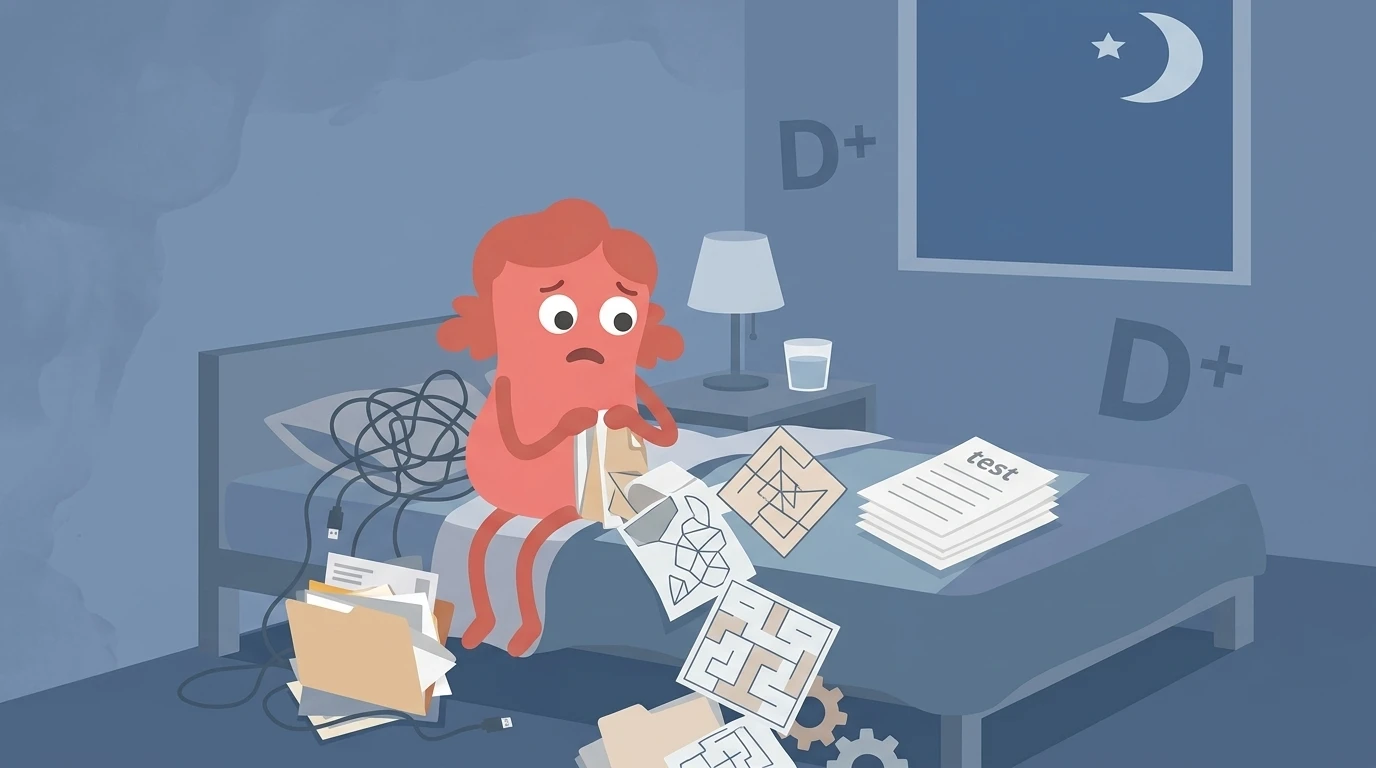
Asking for help requires admitting you need it. For someone with a deep shame foundation, this feels like offering evidence for the prosecution. "If I ask for an extension, they'll know I couldn't handle it." The result: people with ADHD often struggle alone far longer than necessary, letting situations deteriorate rather than risk the perceived shame of disclosure.
Key Stat: Faraone et al.'s meta-analysis on emotional dysregulation in ADHD found that emotional impulsivity — including shame-triggered reactivity — was present in over 70% of adults with ADHD and significantly predicted occupational and social impairment beyond the core attention symptoms.
What Actually Breaks the Cycle
Treating the ADHD directly
The shame cycle cannot be broken by shame management alone if the executive dysfunction that keeps generating failures goes untreated. Medication, behavioral strategies, and ADHD-specific therapy reduce the frequency and severity of the failures that fuel shame. Less fuel, less fire. This is often the most underemphasized piece: people spend years in shame therapy without addressing the neurological source.
Self-compassion as a neurological intervention
The evidence for self-compassion in ADHD is not soft or intuitive — it's neurological. Dr. Neff's research shows that self-compassion activates the brain's mammalian care system rather than its threat system. When you treat yourself with the warmth you'd offer a struggling friend, cortisol levels drop, the amygdala quiets, and prefrontal cortex access is restored.
This is not positive self-talk. Self-compassion is specifically: acknowledging the difficulty of your situation honestly, recognizing that suffering and failure are universal human experiences (not uniquely yours), and offering kindness to yourself in that moment. The order matters. Bypassing the honest acknowledgment to go straight to "I'm great" is toxic positivity, not self-compassion, and it doesn't produce the neurological effect.
A practical entry point: when you notice the shame voice — "I can't believe you forgot again" — try the substitution test. Would you say this to a close friend who had ADHD and forgot something? If not, the self-talk is shame, not useful self-correction.
External accountability as a structural bypass
Here is the practical insight that most shame-cycle content misses: willpower cannot break a shame cycle because shame is what's impairing the willpower. The person caught in an active shame spiral doesn't need more motivation. They need a structural alternative to self-regulation — something external that operates independently of how the internal system is functioning that day.
This is why accountability partnerships consistently outperform solo effort for ADHD adults in behavioral research. An accountability partner doesn't fix your executive function. They provide a second, external system that creates gentle pressure and follow-through regardless of how active your shame spiral is internally. When the internal system fails, the external one holds.
Key Stat: A 2019 study on accountability partnerships and goal attainment found that people with an accountability partner were 65% more likely to complete a goal than those working alone — and this effect was amplified in populations with executive function challenges.
How GetMotivated.ai Addresses the Shame Cycle
Most ADHD apps — Inflow, Focusmate, How to ADHD's resource library — focus on productivity strategies and information delivery. These are valuable, but they address the cognitive layer of ADHD without directly engaging the shame layer.
The shame cycle breaks when two things happen simultaneously: the failures decrease (ADHD treatment and skill-building) and the isolation that amplifies shame is replaced by structured connection.
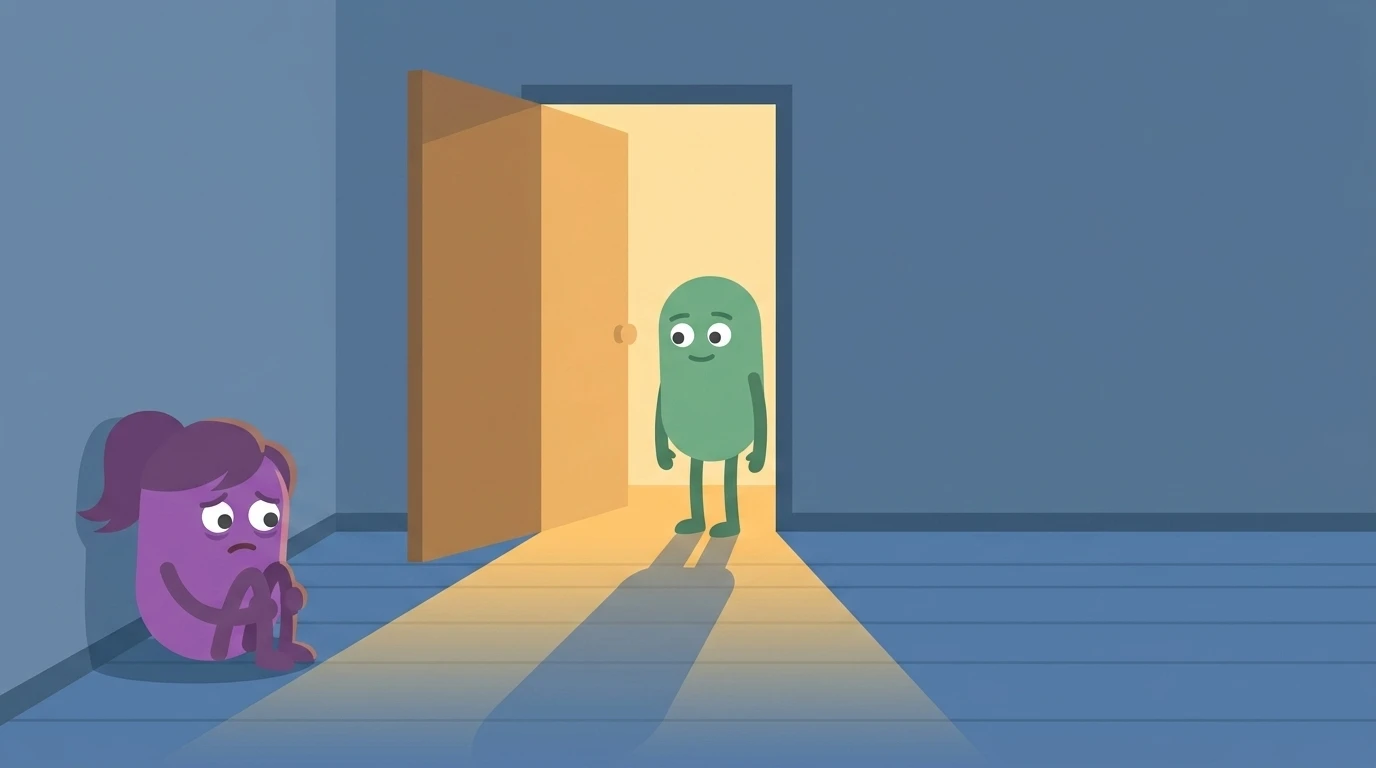
GetMotivated.ai builds programs specifically around this combination. The buddy matching system pairs you with someone working on the same challenge — not a random forum contact, but a consistent partner who checks in with you. For people in active shame cycles, knowing someone expects to hear from you — without judgment, because they're in the same boat — does something forums and apps can't: it makes showing up feel safe.
The group challenge structure normalizes struggle by design. When everyone in your cohort reports their week honestly, the person who failed at their habit goal isn't the outlier — they're doing exactly what the program expects. Honesty stops feeling like evidence of inadequacy and starts feeling like participation. This is the shame-breaking environment that research supports: normalizing imperfection while maintaining the external accountability structure.
Self-compassion challenges on the platform are built directly from the evidence base — not as motivational content but as structured daily practices that train the neurological response over time, not just in crisis moments.
The Late Diagnosis Turning Point
For adults who receive an ADHD diagnosis after years or decades without one, there is typically a before-and-after quality to the shame experience.
Before diagnosis: the evidence of inadequacy accumulated without explanation. Every failure confirmed the shame story. The narrative was: "I know what I should do. I don't do it. Therefore I am fundamentally lacking."
After diagnosis: the same evidence reattributes to neurology rather than character. The narrative shifts: "I have a brain that works differently. I have been failing at neurotypical tasks with an ADHD brain, while being told I was simply not trying hard enough."
This reattribution is not a magic fix. The decades of accumulated shame don't evaporate. But it opens the possibility of rebuilding self-concept on accurate foundations — and it changes the shame cycle's trigger logic. When you understand that the next forgotten deadline is a symptom, not a character verdict, the shame response loses some of its authority.
Many adults describe this as the first moment they felt compassion for themselves — not because anything changed in their behavior, but because the interpretive framework finally fit reality.
Building a Life Outside the Cycle
Breaking the ADHD shame cycle is not a single intervention. It's a restructuring project — neurological, psychological, and environmental.
The neurological layer: treat the ADHD. Reduce the frequency of the failures that generate shame. Medication, behavioral strategies, and ADHD-specific coaching all contribute.
The psychological layer: replace the shame identity with accurate self-knowledge. Therapy — particularly ACT (Acceptance and Commitment Therapy) and CBT adapted for ADHD — builds this directly. Self-compassion practices do it daily.
The environmental layer: this is where most ADHD support fails to go far enough. Changing how you think about yourself is insufficient if you're still operating alone in an environment that punishes executive dysfunction without providing structural support. External accountability, community, and shame-reducing social structures aren't nice-to-haves — they're the scaffold that holds the psychological work in place while the neurological work takes effect.
The shame cycle took years to build. Breaking it is not a weekend project. But it is a system — and systems can be changed when you understand the mechanism.